Lorri marz (Լոռի մարզ) – where the animals run the show

I was trying to get into the mood to write and share something with my readers that would have an interesting, cohesive element. I have lived in the Czech Republic for almost 26 years now and just got back from a sabbatical in Armenia. When I write I like to think of things about both countries that are similar to, and which in some ways remind me of, my childhood in Missouri. The answer was animals.

I grew up in a rural community in northern Missouri. Although I didn’t live on a farm, most of my younger life was farm-adjacent. My maternal grandfather and his brothers grew angus cattle; my paternal grandmother kept a small number of animals in her backyard farm; and my dad raised cattle, sheep, or what have you on land he rented. It always surprises my friends from the city, when I tell them stories of how I spent the late springtime of my pre-teen years plucking chickens or how, as an even younger child, I helped my dad and his friends butcher cattle or pigs. I never had big jobs, mind you; I usually just stirred the pork fat so that it didn’t scald or burn OR I helped feed chunks of beef into the meat-grinder.

That said, my stay in Armenia often brought back memories of my rural childhood and farm-adjacent life. One occurrence that always made me smile was the work of local shepherds. On occasion I would run into them on hikes. But even more amusing was when they were moving animals to new pastures or mountain fields and the cattle “would come to town.” It didn’t happen that often, but it was always entertaining to watch the disinterested bovines wander through the streets of Vanadzor: rarely in a hurry to get anywhere and giving curious looks when drivers would become irate at the animals’ lack of urgency.

Other times, I would meet some smaller animals in the park. Usually, the sheep or goats showed up during a sunny afternoon when I went to the Sayat Nova այգի to read. As the bushes swished behind my bench, I assumed that either squirrels or birds were foraging. But no, it was the “children“ of a local shepherd who had come to dine on overgrown grass or on the tasty leaves of the abundant shrubbery.

As I watched them, it came to mind that domesticated animals are a unifying force across the world. In almost any country, you can wake up to the crows of an early-rising rooster. Or you can slalom on your bike as curious hens scurry across roads or field paths in search of bugs for their lunch. In Armenia, I most loved the proximity of the animals; for it took me back to my childhood. A time when I knew the provenance of the meat and dairy products we put on our table; also an age when I had a love-hate relationship with chores related to caring for livestock. These days though, the animals of the Czech countryside and Armenia’s Lorri region bring back fond memories: of driving with my late dad to check his cattle, of working with my grandma to gather eggs or feed her hens. So many nights my parents spent worrying about whether the “cattle were out.” My dad would surely chuckle if he saw that the cows of Armenia certainly are out: AND they rule the roads.
Tasting Armenia

Since I was a child, I’ve loved gardening. At times it was a chore, when I had to go pick green beans in 30°+ C heat or if I had to weed through rows of carrots. But most of the time it was a way to escape: school life, family disputes or just the general noise of the world. Spending time with families in south central Armenia’s Ararat region, and in the northern Lori region, took me back to those childhood memories; specifically, I had the chance to help harvest an abundance of herbs that I would learn were essential staples in Armenia’s cooking vocabulary.

Dill / Սամիթ

This is one of my favorite herbs. Although, I find it to be quite divisive when it comes to people’s culinary tastes. Most of my friends either LOVE it, or they HATE it. I belong to the former group and was always delighted when my host family would send me back to my home in the north with a sack full of dill. It’s great for salads and soups. Or it’s nice for flavoring dishes like boiled potatoes (which I saw and tasted a lot when visiting southern Poland during the time I lived in the neighboring Czech Republic). I love that many countries seem to have their different takes on how to use dill. Whereas the Armenians would often use it to flavor carrot, cucumber or lentil salads, the Czechs use it as the base for a wonderful white sauce served with braised beef koprovka or as the main herb in a potato-mushroom soup called kulajda.

Coriander / Համեմ ու Գինձ

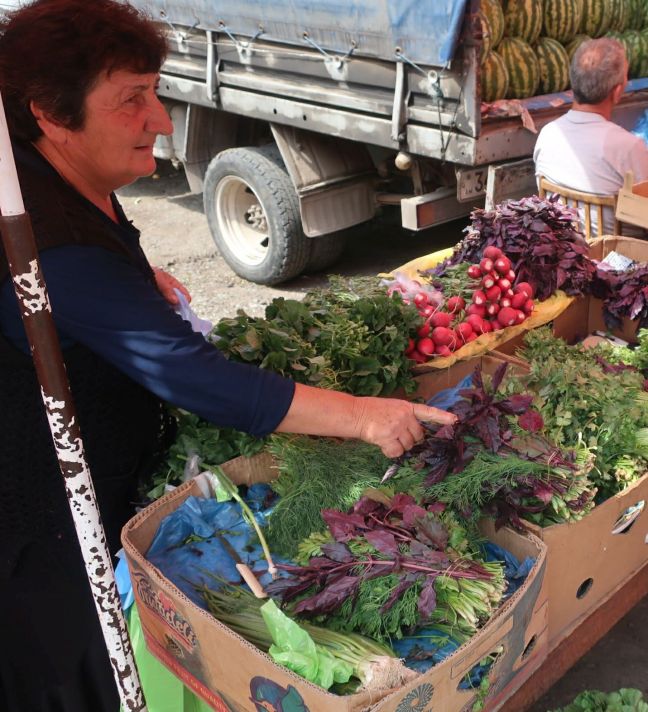
This is another herb that tends to polarize. I usually can’t get enough of it and I was delighted to find it in abundance in the gardens and markets of Armenia. It is interesting that the locals tend to use herbs in two specific ways when cooking, and you would often see them eat coriander in such fashion. There is the traditional method of chopping the herb and integrating it into salads, sauces or soups. However, Armenians also tend to serve a plate of kanachi (կանաչի), the general term for greens, with most of their meals. It is common to take fresh herbs from this plate: coriander, dill, tarragon, green onion or purple basil and work that into rolled up “sandwich” of sorts made with their traditional bread lavash (լավաշ).

Tarragon / Թարխուն

I never really saw tarragon used other than it being chomped on while raw, e.g. taken from the kanachi plate. I found it enjoyable in small doses; specifically, for its peppery-, anise- or licorice-like flavor. It was a nice addition to a sandwich made during khorovats (խորոված), the Armenian version of barbeque. Plus, it was interesting to see that someone somewhere had come up with the idea to make tarragon soda pop. The bright green color was equal parts intriguing and scary, while the soda was refreshing: again in small doses.

Purple Basil / Ռեհան

I never quite found a suitable use for this herb. We had it in heaps in my childhood gardens and flower beds in northern Missouri. However, I find it to be more assertive than sweet green basil, and thus more difficult to cook with. Most of the time, I took this colorful herb and chopped it up for use fresh garden salads I would make; also using it in sparing quantities.

Mountain Thyme / Լեռնային ուրց

This is one of the sweetest surprises to be found during hikes along the mountain ridges in the Lori region where I lived. It’s a cute, unassuming plant and, when the wind is right, it sweetens the air of the peaks and valleys as you meander through the passes along Armenia’s northern mountains. There, mountain thyme is abundant and it’s always tempting to grab a couple of handfuls to take home to dry: for later use in flavoring meats and various baked vegetable dishes.

Finding peace and gratitude along the Vltava

I realized after writing my last blog entry that perhaps my words had been too aggressive. Most likely in a time of crisis few readers cared to hear my complaints about being lost in the quarantined world of Prague after leaving the Peace Corps. Those words did not come from a place of anger though: more of frustration because I had not yet been able to see friends I was missing for over a year. So that’s why I put my butt on a train and headed up the Vltava River.

It’s hard to explain the Vltava. It’s like the spinal cord of Bohemia or the Czech lands. It was on the hills above the river that Libuše had her vision of a city whose glory and light would shine for thousands of years. That city being Prague of course. It is where, per local legend, Horymír, atop his horse Šemík, jumped the waterway and fled en route to Neumětely. Along this river vagabond-hikers set up camps and spent their weekends in nature, or southern Bohemians first brewed the original Budvar (today’s Budweiser) in České Budějovice. But for me, the Vltava River represents calm. It represents continuity and simple beauty. It’s a river that runs from an unassuming source in the mountains and hills of the Šumava and carries its natural sustenance and history all the way to the Czech capital and beyond.

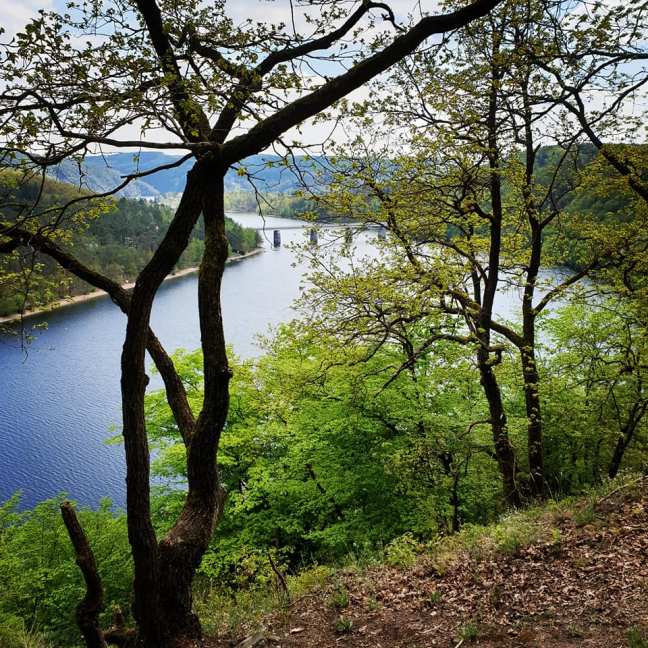
During the past week, I took a couple of short trips along the river, south of Prague (just under an hour away by car or train). Once at my destination, I either hiked my way back toward the city or did a forest circuit. My Tuesday hike was a celebration of spring. As I tromped up the hill away from the banks of the Vltava, I reveled in the embrace of fruit trees’ hugging branches as they shadowed the forest paths and ancient roads. The melodious hum of bees and wasps busy at work accompanied me along rows of cherry, apple and apricot trees in full bloom. As the sun shone and warmed the road, for the first time since returning home, I felt at peace. It was the peace at spring: of the healing sun and nature’s rebirth. Because of current restrictions, I was one of few people in the forest. Still, that made me all the more aware of how grateful I should be. I advanced along the path to reach the tops of bluffs along the river. There, I found the remains of campfires local villagers had enjoyed and later extinguished; I saw the view of the railroad bridge over the Vltava that I had travelled across only moments before. In a brisk wind looking down at Bohemia’s natural life source, I imagined all those who had come before me. How emperors and kings had traveled that river in the age of the Holy Roman Empire or Austria-Hungary. Or how the labors of loggers in the southern forests had sent wood down elaborate canal systems and into the river so that it could float to Prague for use on major construction projects of the day.

And on my trip yesterday, I saw a river full of hope. It was a Vltava that was enjoying a break from the busy swarms of Prague residents who rush to its banks as soon as warm weather allows. The river was calm, but it was ready… for people to return. That’s when I felt the most gratitude: as I watched random boats laze on the water floating around the area stilled by the Slapy dam. I was grateful for the river and the stories she knows: the stories she tells. I was grateful for the sustenance she brings in nourishment for the fruit trees and berry bushes along her banks. I was thankful for the livelihoods she supports as tourists and locals visit her to swim in her refreshing waters and relax over a half-liter of Bohemia’s most famous golden lagers. Yes, the river is my constant – a source of relaxation, beauty, learning and life. As long as she flows, I will live happily and delight in returning to hear her tales and will remain forever grateful for them.

Back to what?

It’s now been a month since I returned from Armenia.  During that time, I’ve tried to keep busy. Mostly though, it seems like I’ve done (or been doing) so with a laundry list of absurd tasks. Perhaps the strangest of these is trying to find a job in an economy that’s put out a “no vacancies” sign. Otherwise, I’ve filled my days with the administrative work related to wrapping up my Peace Corps service and fulfilling all my reporting duties.

However, life here in Prague one month in is just plain odd. Multiple times I’ve heard the question: “How does it feel to be back?” And the simple answers are either It doesn’t. or Weird. Perhaps it’s odd to say that I don’t feel, but honestly it seems that way. The return to a past life in the new corona world is complicated. For two weeks after getting back, all past tangible, physical relationships became virtual. Luckily, I knew and could see all my closest friends were safe and healthy, but they were just images in devices. That then brings us to the weirdness of a few encounters with friends (limited ones) that I’ve been fortunate to have had post-quarantine: ones where elbow bumps replace hugging. I think that practice for me is the oddest of all. For someone who has lived a world away from his family for most of his adult life AND who is not tactile at all, I really did miss hugging my friends back into my world. There’s just the surrealness of those looks upon meeting: both of us thinking – how do we do this? Is the elbow touch OK? Embraces are off limits, right?  But we do have our masks on, so would a quick hug be safe?

After the initial awkwardness of our new corona greetings, conversation does begin to flow and with the few friends I’ve met we do catch up and I get to share (as much as my feelings let me) what my life has been like over the past whirlwind of a year.  Generally, it’s a combination of wistfulness and gratitude. But mainly gratitude … with statements or thoughts similar to those below:

  1. I’m not done. I know that somehow I will find my way back to Armenia one day. I’m not sure in what capacity, but I want to spend more time in the country. And next time I hope to be able to say good-bye on my own terms.
  2. I miss Armenian hospitality and thankfulness. I am, and was, always touched by how communities that might not have a lot, compared to what we call the West, in material terms are so consistently gracious in sharing what they do have. You will never leave an Armenian home hungry or thirsty.
  3. It’s weird not to have that daily embrace of the mountains in the Lori region. I became so spoiled by the vistas of the snow-capped peaks to which I woke every morning. The ridges that encircled and protected Spitak and Lernapat to the west; and which walled us off from Georgia to the north.
  4. Life is strange without the celebrity of being “the volunteer.” Walks around my city Vanadzor were always amusing in that most of the time people knew of you before you knew them. “Oh, you’re the volunteer. Aren’t you?” was a common phrase and it always made me feel special.
  5. My colleagues’ warnings were true. Returning from volunteer service is a weird process because of the singular experience that Peace Corps offers and creates. It’s difficult to tell people who haven’t lived the process just what service meant to me and why it was so touching and profound. Still, I’m working on doing so and, hopefully, one day I will get better at it.

All those unfinished plans …

It feels like last week was the moment reality set in. After having had to leave northern Armenia suddenly because of the situation with COVID-19 and the realities of the new corona world, just 5 days ago I realized I had so much unfinished business in and around my adopted city of Vanadzor.

Of late, I like to blame Facebook for my melancholy. Well, not Facebook as such; instead that gosh darn “memories” function. That little tool contains a whole lot of bittersweet. Mind you, I don’t want to use my blogging to whine. My colleagues and I who left Armenia are well aware that there are persons in the world with bigger concerns and who are living in much more dire situations.

At the moment, my funk stems from having missed out on my/our (I usually speak of my time in Armenia as a joint adventure embarked upon by myself and 34 other American volunteers) first independent spring. By “independent” I mean that most of us had become adjusted to the towns and villages where we served, and we had plans for big adventures that warmer weather would allow. Mine included getting to the top of Maymekh mountain, finding that spot somewhere near Aragats where the water “flows upside down” and planning a long-anticipated visited to the “stans” with Ree jan and Natalie.

Now, it’s clear that those plans won’t soon happen, and I’ll need to make new ones. So I’ve thrown myself into a job search and doing some career analysis to see what the next chapter of my career involves. I’m not 100% sure of the answer yet, but I do know it will likely involve more adventure. My decision to travel to Armenia was one based on a need for change, a need to get away from the virtual world of marketing and communications for awhile, and a thirst for finding an experience that was genuine.

When the world re-opens and travel resumes, I encourage my readers to go enjoy, if they have the chance, a few sites I missed in Armenia and which I hope to one day see …

  • Surb Sargis mountain and its odd boat (between Vardablur and Kurtan in northern Armenia’s Lorri region)
  • Mount Aragats – the tallest mountain in today’s Armenia
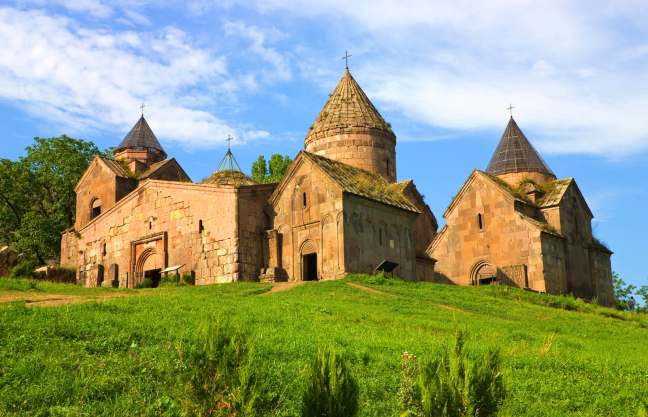
  • Parz Lake and the nearby monastery in Gosh
  • Sanahin and Haghpat monasteries (UNESCO heritage sites) near Alaverdi

I realize my words today aren’t particularly inspiring or fascinating. But this is the spot in which I find myself at the moment. I’m a little bit nostalgic, a tad bitter, but a whole lot of hopeful. For as the Armenians of the diaspora know all too well, I will one day find my way back home.

Main image courtesy of http://www.itinari.com blog.

Making my way through the market (memories from life in Vanadzor)

Some of my favorite memories of life in Armenia relate to food.  Armenians are a wonderfully hospitable people and anywhere you go, you will be offered something to eat and drink.  For me, personally, my best memories relate to trying to wind my way through the long market streets to pick up supplies for my weekend cooking.

Armenian outdoor markets come to life especially on weekends, but they are equally busy during weekdays.  In my city, Vanadzor, the market often seemed to spill out on to the main street and fruit and vegetable vendors popped up wherever the sidewalks offered space. I tended to be a big fan of the local greens. Never in my life had I seen such variety and freshness. My typical shopping basket included fresh spinach, cilantro, dill, basil (usually the purple variety, as sweet basil was not as common), romaine lettuce, bib lettuce, tarragon and green onions. I generally tried to spread my shopping across multiple vendors: this allowed me to get to know different people working in the markets and also to test the quality of different goods.

One of my guilty pleasures, when doing my market shopping, was picking up some fresh button mushrooms for later use in garden salads or for making omelets.  I have no idea where the local farmers grow their mushrooms, but they had such a wonderful aroma and flavor.  Sometimes I questioned whether I had been shopping in the wrong markets in Europe (I had lived in Prague prior to traveling to work in Armenia), or whether Armenians simply had a magic touch in growing my favorite fungi.

Another joy of my market days was using my shopping time to get to know vendors.  Usually, they addressed me in Russian because at 6’4” (194 cm) in height and with fairly pale skin, they knew immediately I wasn’t from their area.  So after a few words in Armenian and convincing them that we’d understand each other better in their language as opposed to the Soviet import, we quickly began our taste-testing and language learning sessions.  The fun of the whole process was trying to decide afterwards whether I’d indeed learned new Armenian words or if some Russian had perhaps slipped in.  I’m pretty sure that terms like malina (raspberry), boloki (radish) and jemish (cantaloupe/honeydew melon) are not 100% Armenian.

I will always treasure recollections of my time wandering through the Vanadzor shuka (market – շուկա). Taking a few extra moments to talk with the stall owners always led to small joys like better prices on meat or samples of different fruits. Also, once I had become a regular customer to a handful of street vendors, I would sometimes get an extra potato or two with my purchase or get some extra apricots for the fruit bowl on my living room table.

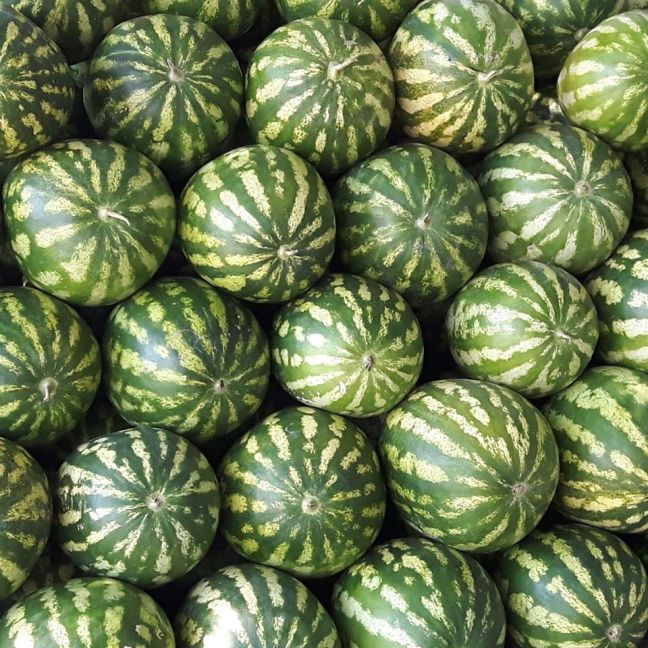
I highly recommend dropping by an outdoor market if you find yourself travelling through Armenia. If you make the summer season, make sure you load up on the super-delicious tsiran / ծիրան (apricots), dzmeruk / ձմերուկ (watermelon), and my personal favorites: purple or green tooz / թուզ (figs).

How I gained a new family (Pt. 1)

I woke up this morning in a state of denial and confusion.  It’s hard to say if I’m really happy or sad.  When the corona virus started to put into question the future of my Peace Corps service in Armenia, I wasn’t sure how severe the situation was.  Our group had been put on stand-by and was ready to evacuate if need be. In the end we did.  For me, that day was 18 March 2020.

So now I am on my couch, the morning after arriving back to Prague (the place I’d called home for 25 years prior to applying to Peace Corps), and I am trying to sort through feelings.  For the moment, it all feels like a weird dream.  But the most urgent thing I want to write about, or the thing that constantly comes to mind, is the feeling of family.  After just one year in Armenia, I feel that I have been separated from part of my family (my fellow volunteers who have gone back to their homes in the USA) and have left another family behind (all the Armenians with whom I had the good fortune to work and collaborate during that short year in their country).

Prior to leaving Armenia, I took part in a TV interview to speak about my service in the north central part of the country.  Since I attempted to brave that process while speaking in my pigeon Armenian, I found it difficult at times to say eloquently just how much the chance at experiencing life there meant to me. I had arrived there a burnt out PR/marketing manager and had no idea what I sought from my service experience.  I only knew I needed change and wanted to do something a bit more meaningful personally; something that would hopefully make other people’s lives better.  Right now, it’s too soon to say for certain, if that happened.  However, based on the constant pain this separation has caused in my heart, I think I can say some change happened.

Firstly, I would like to speak to the change a small family in southern Armenia caused in my life and hopefully I in theirs.  It’s important to know that I was an “odd man out”-type volunteers. At 47, I was twice the age of most of my other fellow volunteers and that was, I believe, a bit odd for the host families. These Armenian families are so gracious, and they take you into their homes not having any clue what sort of situation they will find themselves in.  From my end, I am older and never had a family of my own. I had lived alone for most of my adult life.  Suddenly, I was living in a family with three daughters, mom and dad, and a grandfather.  I had my own room, but it was clear the impositions that I was putting on the family.  All the daughters had to pick up camp and move to another bedroom shared with their parents: all because of me.  It was only over time that I came to realize this, and it touched my heart how much space this family was willing to give up take me in and learn what life in America was like.

That said, I was concerned that I had failed them on that count as well.  I used to joke with them that they ordered a US Peace Corps volunteer but ended up getting a “fake” one.  I make this comment, because I didn’t check all the boxes for what most families expected.  As said above, I was older. I didn’t have much immediate experience on what life was currently like in the USA, because I had only been travelling there for work or family visits over the past 20+ years. Then, add to that the fact that when I reverted to my previous daily language I was speaking in Czech: an idiom that had been my daily go-to for the past 20 years. It made my family laugh when I kept explaining that the filler words I would slip into sentences, mostly unwittingly, were Czech … not my mother tongue, English.  We just agreed I was weird and laughed.  Yet it did help us mark some progress, when I went from saying moment (the Czech term for asking someone to “wait a minute”) and advancing to mi rope / մի րոպե: the proper Armenian expression.

With my abrupt departure from Armenia, it was painful not to get to see my first host family in person one last time.  Although I know we will meet again soon after the world heals itself and the corona virus comes under control.  However, there is solace in the fact that the weird, old volunteer that I am is now forever irrevocably bound to an Armenian family: and not just one.  As my hopes for this family’s future diminish my temporary sorrows. I left behind what might be a future educator, a future artist or a future actress. I can’t wait to see all the good things that Ema, Lilit and Eva will do with their lives.  And that hope keeps my current pain at bay.

Note: there are lot of thoughts going through my head at the moment (post-service), and I will write one or two more comments on my connections and shared experiences with Armenian families in my future blog updates.

Disclaimer:  This blog is used to express my own thoughts and feelings. My comments are purely my own and do not reflect any official views or opinions of the US Peace Corps or the US government. Likewise, the US Peace Corps bears no liability for any of the content I post.  


Solace in the hills (how I fell in love with northern Armenia)

I became enamored with the mostly barren mountains of Armenia’s Lori region the first time my marshutni (minibus used for public transport) crossed over the mountain pass that enters the area just south of Spitak.  After a half-hour of travelling the road that lies in the shadow of Mt. Aragats northern side, the winding descent into Lori left my mouth gaping.

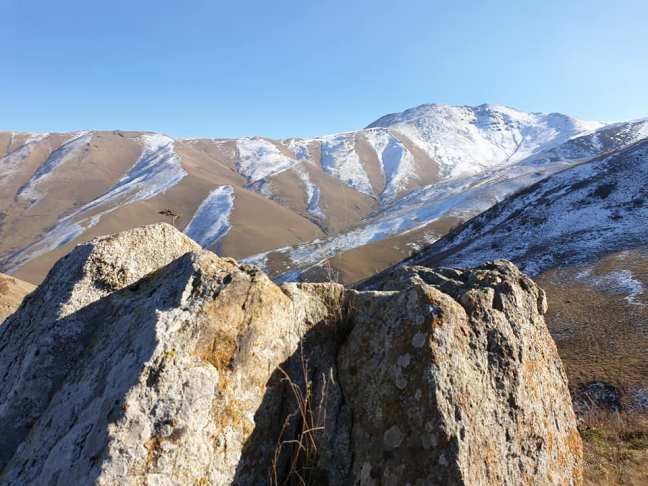
It’s hard to describe. There are the colors: the multiple shades of tan, brown and gray that make up the hillsides; tones which juxtapose nicely with the blotches of alabaster snow scattered on the mountaintops and the various shades of pale blue that tint the local skies.

The mountains of the Lori region are like a mother’s embrace. They fold over on you and welcome you each time you venture out to explore them.  Plus, there is a certain mysticism you feel as you climb each hill and arrive at increasingly better vantage points from which to look at nearby cities and villages.  The peaks of Lori offer a bird’s eye view of Armenia’s third-largest city Vanadzor or further west you can look down and take in the sprawl of Spitak, the town at the epicenter of the earthquake that hit Armenia in 1988.

Yet what’s even more special about the mountains of northern Armenia is the solitude they offer.  So many conversations I’ve had with local city-dwellers or even villagers begin with the question: why do you need to climb a mountain?  And my response, which is invariably the same, goes like this: to see if I can.  Each time I embark on a hike through the hills of Lori, I gain so much more than just a good workout. There is an opportunity to take in the silence, to revel in the ancientness of the land and to surmise what nomads or tradesman might have wandered these peaks and valley centuries ago as they made their way from Asia to Europe.

Perhaps my biggest joy derived from running to the hills nearby my beloved Vanadzor is knowing that, most likely, the journey will involve just me, my thoughts and the random shepherds I happen upon during my walk.  I recall a funny conversation I had with a shepherd one Saturday as plodded my way up Karmirsar (Red Mountain).  “Why are you here?”, the shepherd asked.  I shrugged and replied, “To enjoy the mountains and to imagine their history.” He offered a confused look and went on guiding his cattle down the hillside.  To be honest, I didn’t really know why I was there, except perhaps to enjoy the beautiful views and to soak in the warmth of the autumn sun.  But the truth is the hills of the Lori region have a very specific energy.  So, maybe I was just there to recharge.

Using a midlife crisis to help others (26 years after Middlebury)

Deciding to write this blurb was definitely nerve-wracking. We have so many amazing students and alumni doing great, indeed exceptional, things at Middlebury that I really doubted my decision to join the US Peace Corps at the age of 47 could be truly newsworthy.  But that’s what I’ve been doing over the past year. After just over twenty years working in public relations and public affairs in the Czech Republic, I decided to turn my life upside down. I wanted to see if some of the skills I had acquired working in the NGO, and later the private, sector in Prague could be put to good use helping others.

So somewhere around the start of 2018 I applied to join the Peace Corps in Armenia.  That whole process of completing the application, doing the Skype interviews, getting medical clearance and taking online language courses in Eastern Armenian now seems like the distant past. In fact, it all wrapped up just over a year ago.

Having been in Armenia for almost a year now, there are so many emotions and thoughts that cross my mind. First, I can say yes the experience so far has met, and even exceeded, my expectations. I am amazed on a daily basis how much joy the smallest of interactions with the residents of my town, Vanadzor, bring. They are so kind when I make efforts to speak to them in their language, and they are patient when letting me try to find words. I love to see them smile when they realize how much effort we, as volunteers, put into learning to converse. They laugh when I tell them “No Russian. I can understand some Russian, but we are in Armenia, so let’s speak Armenian.” However, there are times when Russian does bridge gaps: I don’t speak Russian per se, but some words are similar enough to Czech, which I’ve been speaking daily for over 25 years. At times, that Czech-Russian-Armenian bridge is a godsend.

When it comes to work, my service with Peace Dialogue NGO in northern Armenia has been a blessing. I have a wonderful team of colleagues, and our daily interactions have shown me many times that we have so much to teach each other. The slower pace of life in the southern Caucasus region has allowed me to take stock of what I’ve been doing for the past two decades of my adult life. Having jumped out of the rat race for a couple of years, I can more clearly see that I do have something to offer my local peers.  In just over 9 months, we’ve had many a debate about organizational structuring and planning HR decisions; we’ve worked our way through numerous trouble-shooting sessions for grant applications and chats on how to plan purposeful funding searches; and we’ve learned the immense value of learning to delegate project tasks and to take time to listen and reflect on each others’ discussion inputs.

Our program leader here often reminds us of his perspective on how we should view our Peace Corps service. He is always reminding us of the mantra “you are planting the seeds of a tree under whose shade you may never sit”. Yet, even if it has perhaps become cliché to many of us, the saying does have some validity.

All the wonderful individuals, I have met, taught and worked with so far in Armenia have gifted me with wealth and happiness I never could have obtained otherwise.  I sincerely doubt any spiritual retreat or spontaneous purchase of a luxury item could have filled my heart the way seeing Ema and Eva perform at their dance recitals did.  Or the way seeing Lilit reap so many academic awards for her hard work studying did.

My time in Armenia has been a slow walk to self-fulfillment and contentedness.  Each day brings a new, yet touching, measure of success.  Perhaps Agnesa has translated her favorite Armenian song into English for our evening language class; or maybe Armine has brought me a jar of fresh apricot jam made from the tasty fruits of her backyard garden. Or it may be that the potato salesman at the outdoor markets recognizes me during my weekend shopping and offers me potatoes from his “high quality” stash.

It’s hard to say what actually brought me to the Peace Corps. But I feel that it was, in part, Middlebury-inspired. One thing I remember from my graduation on that sunny May day is that I didn’t feel the ceremony to be an ending. I was scared and confused, but I wasn’t sad.  I felt that Middlebury was about to be a beginning to a lifetime of learning.  So, for now, my classroom is Armenia.

Go live in an (Italian) cave

One Italian city that definitely merits a visit is Matera (in the region of Basilicata in the South of the country).  The city/town was quite impoverished up until the formation of the European Coal and Steel Community (ECSC), the first incarnation of today’s EU, in 1957.  When Italy joined that group, broader efforts to modernize the country began and residents of Matera, who in many cases had been cave-dwellers, were moved into improved housing.  However, today those old caves have been cleaned up and renovated and incorporated into apartments and also hotels and bed and breakfasts for visitors.

These cave-dwellings are just part of part of Matera’s charm. The city sits atop a canyon/gorge carved by the Gravina River.  The real joy of visiting Matera, besides enjoying great Italian food, is getting lost in the city’s winding streets and stairways.  For those of you who like to hike, touring the city on foot offers a fun adventure full of climbs from hill to hill and admiring the local architecture from dozens of perspectives.   Note: it’s well worth your while to descend the hill on the side the main city sits on and cross over to the opposite side and visit the many abandoned caves that remain there. You then have access to magnificent vistas of Matera proper.


I chose to visit Matera during the July-August, which provided the opportunity to also view local religious festivals.  One included the Festival of the Madonna, replete with streets strewn with colored lights, a handful of local marching bands and young churchgoers carrying a statue of the Madonna through the city.  I also learned the following:  do not get in the line of sight of a smaller Italian with strong religious convictions.  I did and my friend and I ended up having a heated discussion with a local named, Franca.  In any case, we learned a usedful Italian word “calma.”