
A couple of weekends ago, a friend and I boarded a train and head for Graz, the main city of Austria’s Styria region. The train ride is just over 7 hours but takes you through some beautiful countryside in the wine regions along the Czech-Austrian border and in the mini-mountains as it nears Graz. The railway serpentines around Semmering-Kurort are lovely as you swoosh from tunnel to tunnel and get glimpses of colourful rock formations bedecked this time of year with fall foliage.
Upon arrival in Graz, you descend into a quiet-bustling regional city with the bahnhof life loud and hopping and a fitness centre right there to greet you. Our stroll from rail station to hotel took us down a busy thoroughfare to the bank of the Mur River, where the modern-ly fun and imposing Kunsthaus told us our accommodation was nearby.
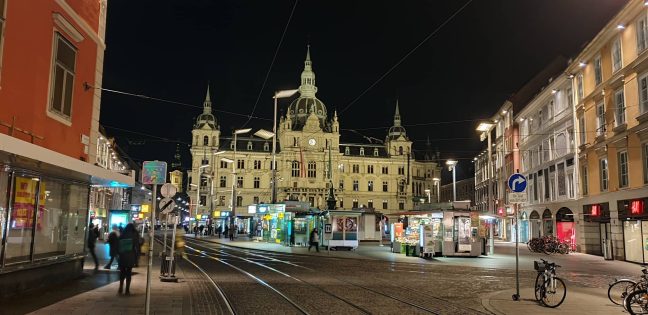
Although slightly tired from the long trip, we only took a few minutes to get settled and then rushed to the city centre to see a few sights before dusk quickly arrived. Walking over one of the many bridges that provide connection to the Innere Stadt, we soon found ourselves in a maze of cute streets with an array of architectural styles that each, in their own way, explained the city’s history. After some wandering around we settled on a café that offered a great blend of coffee which I elected to sip with an accompaniment of apple strudel and vanilla ice cream. The coffee provided some warmth as we rested our feet and contemplated the words of Kurdish refugees who had assembled in front of the Graz City Hall to voice their discontent with the dire situation of their peoples in Eastern Turkey.
As we took in the city sparkling in the sunset, we also plotted our evening meal. Nothing says “I need more food.” like a huge piece of strudel and ice cream. We eventually settled on a Bierstube off the main streetcar (tram) route the runs under the Castle Hill, where we indulged in some regional draft beer (Grössl?) and delicious Käsespätzle. I also pigged out on a lovely pumpkin soup as an appetizer. After that, it was time to walk off the meal; enjoying a bit of night-time Graz and discovering sites like the local theatre, some baroque churches, local parks and bustling boulevards.
Our Saturday, as forecasted, was filled with rain. We grabbed breakfast on the opposite end of the main square, prior to walking the tram road over to where we estimated the streets leading up to the remains of the castle on the Schlossberg would be. On a tiny square below the hill, we noticed a formidable set of stairs that I pondered a few seconds before deciding that this was our way to the top: no funicular, no mountain rail. And so we began our ascent, a few steps at a time. I just focused on my breathing and in no time we got where we needed to be: greeted by the clock tower that looks out on Graz and shares the time with all people in view. Armed with our umbrellas, we moved around the hill top, snapping pics of various skyline views and looking out on the city we’d just begun to discover. The Castle Hill is today sans castle, since the fortress that once protected the city was destroyed during the Napoleonic Wars at the start of the 19th century. So with no monument in sight, it became our duty to enjoy and take in the autumnal colours: happy yellows, blazing oranges and fiery reds. We observed them all as we meandered down the back side of the hill winding down to the city centre below. Then more wandering and enjoying the city: the lovely theatre square in daylight, the beautifully carved woodwork adorning a local pharmacy, the delicious and appetizing farmers market, and interesting blips of modern architecture speckled across the cityscape. All that walking was rewarded with an amazing pork schnitzel (tenderloin) and delicious roasted potatoes. And of course some more local beer to wash it all down.
After lunch, the foodie trekking would pause, as we decided to take in the current exhibit at the Kunsthaus and enjoy the modern pieces there focused on branding and commercialism/consumerism. An abrupt return to the struggles of today’s world which we had temporarily forgotten while immersed in 16th and 17th century architecture and our passion for good food. By evening our tourist adventure was slowly winding down. We had had our fill of local food and accidentally stepped into a cute Mexican restaurant. Filled with a great mood and the lovely songs of guest singers, we enjoyed an array of folk songs, while munching on tacos, quesadillas and other culinary goodies.
Graz, you were a wonderful respite from the stress of the working world. And you’re an excellent place for a weekend get-away: filled with tasty food and architectural pleasures. Not least of all the “Mussel” building that sits in the middle of the Mur. Auf wiedersehen.

 hiddenspacesblog