Paths through ponds of history in the Třeboň region

As sleep eludes me on a humid summer night, my thoughts wander to last weekend’s trekking through the Třeboň nature preserve in South Bohemia. This region of the Czech Republic takes you back in time, at least in your imagination, to the lives of peasants and farm workers of medieval days who first built these ponds for the fishing of carp and possibly catfish. 

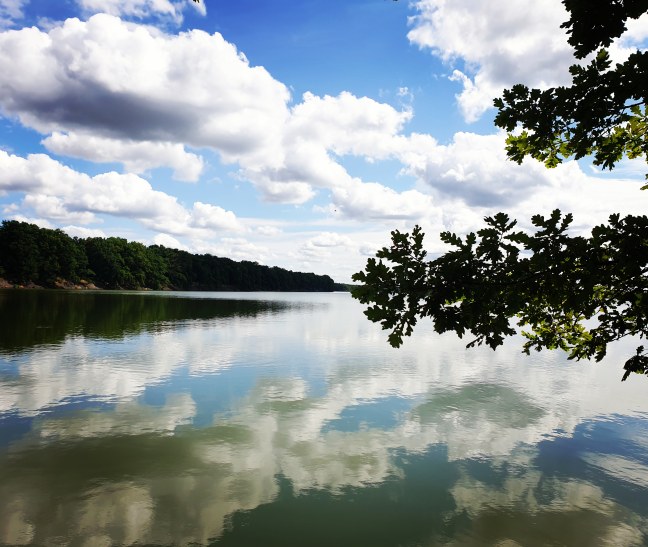
Carp is a fish traditionally associated with Christmas holidays in the Czech lands. But to meet modern consumer demand, the fish have to be raised somewhere. And where better than the murky waters of hundreds of ponds that dot the landscape along the Czech-Austrian border glimmering like numerous shards of a broken mirror whose pieces have fallen to the ground. The surfaces of the pond reflecting and taunting the clouds which will soon gather the precipitation to keep their water stocks aplenty.

The paths through this pond (or lake) district are fairly even, changing from asphalt to gravel and sometimes the plush comfort of earth and pine needles. The scent of the pine trees wafts in the air and rejuvenates your spirit in those special moments when you walk the paths alone, having found a detour void of road cyclists and tourist families out on bike journeys in the area … just because the terrain is fairly flat. Pleasant for both children wary of long adventures and parents who may have been locked in their offices too long, away from the physical conditioning offered by the Great Outdoors.

As you walk the trails, you revel in the sunshine (when available) and gawk at the many waterfowl who inhabit the lakes. No worries. They gawk right back at you: swans, mallard ducks, perhaps a few geese and here and there storks or herons who frequent the ponds from their nearby nests.

Another enchanting feature of the realm is the biodiversity of the local trees. While in most Czech forests you will find spruce, larch and pine trees interspersed with beeches and birches. The woodlands of the Třeboň area are rife with oak trees which also, in their own way, add to one’s mental image-making of long-ago medieval or renaissance times when perhaps the Czech counterpart of Robin of Sherwood or per chance one of Jan Žižka’s men rode these trails travelling to war camps or to pass a message to local nobility. It’s hard to say what might have transpired amongst these tall arboreal stands but it’s clear they have seen their fare share of history.

Most who go to the Třeboň area will want to visit the town proper and walk through its castle park. Or walk along the levees that form the ponds’ borders heading over to the Schwarzenberg family tomb or north to Rožmberk to take in the expansive surface of one of the area’s biggest bodies of water. Others will make their way eastward to visit the Czech Canada region, working their way through villages like Landštejn or Klaštér to visit castle ruins and historic monasteries on their way to the breathtaking renaissance village of Slavonice.

There is plenty to do while wandering among the ponds of South Bohemia. But the most rewarding activity is to absorb the serenity of this unassuming nature, make a small feast of the woodlands’ summer blueberry crop, and inhale the scent of the elder pine forests. They know and have seen much in their extended lifetimes. If you listen, perhaps they will share their stories.

Praha through Ree jan’s eyes

Author’s note/warning: This text is written with a good dose of sarcasm and self-deprecation. Ree assured me she had a great time during her visit to Prague. I just tend to make light of my tics and idiosyncrasies when serving in the role of tour guide.

Living in one of Europe’s most beautiful capitals can make you jaded in some ways. After 25+ years living in a city I thought I would stay in for 2-3 years max, I tend to just always look at the city’s beautiful monuments, smile, nod and make a mental check. Prague Castle – still there; the Charles Bridge – still there; National Theatre – still … well, you get the gist.

But in January I had the privilege of welcoming a good friend and fellow returned Peace Corps volunteer Ree to my adopted home town. And it gave me time to get to know the city all over again. I also quickly realised what an annoying tour guide I am. On most days I couldn’t tell you my own name but, sadly, for those brave enough to tour the city with me, every building, monument, sidewalk, street crossing, subway station and tram stop comes with a short story.

There’s a lot to do and see in Prague in less than a week. However, fortunately, Ree is a chill traveller. She endured and survived (and I think enjoyed) the wild life of southern Armenia (except for being over-potatoed) and so I was certain she would survive all I had to tell her about the Golden City or the City of Many Spires, as the Czech capital is often called. It’s also good that Ree’s a walker. That bode well for her being able to tolerate my aversion to public transport and enjoy the pedestrian life. So just to sum up a few highlights of her stay.

First stop – Vyšehrad

The Vyšehrad Hill and fortress is the site of (I think) the first permanent settlement in Prague. It offers splendid views of the Vltava River and looks at Hradčany (the location of Prague Castle) and Malá Strana where the kings and emperors who ruled the city lived for centuries. It’s also the spot where, according to legend, the Celtic queen Libuše proclaimed that a city would form here with a fame and prosperity that would last for thousands of years. I think it’s also the hill that Horymír and his trusted steed Šemík jumped from on their flight from the city before Šemík succumbed to fatigue in Neumětely (just west of Prague). I think my diatribe on the Prague skyline quickly exhausted Ree: she hadn’t counted on there being so many spires … so somewhere between the Žižkov TV tower and the Petřín Hill “Eiffel Tower” she lost track and a glazed look spread over face.

Walking through the New Town to the Old Town (also TMD – too much data)

The best part of starting a tour with Vyšehrad is that you get to descend the winding stairs down to the river and take your pick of which river bank to meander along. Now, I forget if we went to the Smíchov side or wandered up the right bank to the National Theatre. However, I’m pretty sure we stopped for a hot drink (cocoa for me, mulled wine for Ree jan) and enjoyed Prague’s plentiful medieval and baroque vistas. I’m not sure on what day or in what order, but I do know that we stopped at one of my new favourite pubs in the New Town and ordered a proper ½ litre Plzeň (Pilsner beer) for each with us and a nakládaný hermelín (a pickled cheese that is camembert adjacent); this one served with cranberry jam and walnuts. I think Ree liked it.

A day at the National Museum

I think our museum visit turned out to be a special treat for both of us. In 28 or so years, I had never taken the time to visit the monument. Mind you, I only live 10 minutes away and walk by it almost every other day. But having Ree in town was just the right occasion to test-drive the newly-refurbished building and visit its exhibits. And I can now tell you, it is worth the 10 bucks or so that you pay for the entrance fee. You have two buildings to explore: the more historic building, the National Museum proper, and several exhibits housed in the more modern (in my opinion uglier) building that used to be home to the Czechoslovak Federal Assembly. There is much to see: from displays on minerals and geology, to exhibits on prehistory – a woolly mammoth included, on to audio-visual time travel through the history of 20th century Czechoslovakia and the 30+ year-old Czech Republic.

I could recount more, but I’ve hit the one-page mark. I can just say it was an honour to share my city with Ree. It was great to revisit Prague’s history, show her my hood, and also to treat her and my friends to some rounds of the Phase 10 card game that ended up with all of us being given the bird by Jakub … but in an artistic, pretty way. Hopefully, there will be more visits in the future.

Almost there – reflections on a continuing journey

A year and a half since I opened my eyes

Learning to breathe and re-learning to see

I got a second chance

But how to use it?

Reassessed, re-aware…

At almost fifty I was finally learning

The importance of love, the treasure of friends

The luck in knowing someone was there…

To hold my hand

I had to extend it

Had to admit this man is NOT an island

In time the water eventually recedes

And connects us to the main

With my new eyes and engine

I could discern – what was vital and what was nonsense

Watching all the chasing

The inebriation of ambition

Each new dawn, every additional mountain climbed

That was my high

The crutches were gone

But the nervousness wasn’t

Learning to breathe again steadied me

The power of NO saved me

It was time to be selfish

Accepting that unhappy me could not bring joy to others

Reading in the park

Watching the kids become adults

Switching off the devices

All that got me to here

And soon a new chapter opens

Time to leave the sounds

Reroute them to the periphery

Accept my new opportunities and seize them

I will be fine … the tests say so

So now I will move on

Embrace each day as a gift

No tomorrow is guaranteed

But as I advance on this journey

I know how to fill each day

And who will hold my hand along the way

Breathe.

Train to the past present – back to Žďár

A trip through memories from the start of my life in the Czech Republic

Traditionally this blog space is meant for my thoughts on travel abroad and, when possible, going to fun, exciting destinations. The pandemic and personal health issues have slowed all that down for me over the past two years (as with everyone). But recovery is in full force and I had what I will call the surprising good fortune to have my train re-directed on a route through my past during my recent trip to meet up with friends in the charming wine village of Valtice

Since Czech Railways is repairing part of their northern corridor, I quickly found out that my journey would take me through the southern route crossing the Czech-Moravian Highlands (the Vysočina region) and small part of my past. It did seem odd getting on the train and looking at an itinerary that skipped from Kolín (in Central Bohemia) on to Brno (what I call the capital of Moravia). But the diversion brought back so many memories as it crossed through the towns where I spent my first years of my sojourn (now life) in the Czech Republic. 

As the morning sun stretched across the landscape, I saw the names of familiar towns pass quickly by my window: Kutná Hora (home to the beautiful St. Barbara’s Cathedral and former mining town), Čáslav (home to a military air base and easily recognisable with the bell tower that stands watch over the town centre) and then Světlá nad Sázavou, a quiet town on the Sázava River, famous for its glass-making. I had the privilege of working many times, in my later career, with a local glassworks firm and both their products and customer service were flawless.

Soon though, we would arrive at the eastern frontier of Bohemia where it disappears into Moravia. That’s when I saw it: the blue and white sign announcing our passage through Havlíčkův Brod. This was one of my main weekend haunts in the early 1990s when a 22-year-old, naïve young man from Missouri had taken on a teaching job in nearby Žďár nad Sázavou (already in Moravia) and would travel to Havlíčkův Brod to spend weekends with teacher-friends in our small expats-meet-locals community. From the window of the train I could smell the memory of a tasty soup Jodi had just made on a snowy winter Saturday, or smoking Sparta’s or “Startky” or whatever was available during pub debates with fellow Missouran, Matt from St. Louis. With Matt, Jodi and guitarist Vojta or whomever else joined our crew, we were likely drinking a Rebel or a Ježek from one of the nearby regional breweries. Quickly though my view of Havlíčkův Brod faded from sight and I began trying to remember the names of villages the local train (Os – osobák; what we dubbed the “oh so slow me” train because that sort of rhymed with the official Czech name osobní) passed through before hitting Žďár. The only ones I recalled were Přibyslav and Veselí. 

And then I saw it on the horizon, the arrival of Žďár. The first glimpse includes the garden communities on the west end of town and then the rail line widens to service incoming and outgoing freight to the largest local enterprise, Žďás. I think at one time it may have employed over half the town. Although not visible from the train, I wondered how many of my old haunts, stores, schools and restaurants were still around. I know the White Lion Hotel (Hotel Bílý lev or Bílého lva) no longer exists. I assume my place of employment, the Škola ekonomiky a cestovního ruchu and its administrators the Holemářovi are still doing fine. But what of the grocery store Mana (by now it’s likely a Lidl or Albert) and the department store we called Papír, hračky, sport (Paper, Toys, Sport)? Because that what was written of on the windows of each floor when viewed from outside. Or what became of Süssův hostinec, the pub that was so local that we foreigners were scared to enter, but which somehow became super friendly once its beer garden opened in the summer? At the time, I spoke perhaps 8 words of Czech and didn’t have the gumption to ask the locals if our entourage could “přisednout” (i.e., join their table provided chairs were available).

Of course, the train moved on quickly towards my destination of Břeclav. But my mind remained stuck at the Žďár train station. What had become of all those students from so long ago. I know Jirka Filippi is a successful corporate manager; Petr Váněk, a good friend of Jirka’s whom I once told in a moment of frustration that his English was subpar and asked what he was going to do when Jirka wasn’t there to speak for him? Well, Petr has since proven to me that perhaps it was the teacher, not the student. He’s become a successful actor and has gone on to play not only roles in Czech movies, TV shows and commercials, but also in English-language films as well. Simply put, he showed me. And I’m so proud he did. So many more names came to mind as the train progressed toward Brno: what of Marek Pospíšil, of Lenka, or Renata or Vít (I hope I have his name right: he was a young, blond, bespectacled student from Havlíčkův Brod who studied in Žďár and invited me one Saturday to meet his mother … how we had any type of conversation in Czech is beyond me; I am guessing Vít was a good interpreter).

Needless to say, I made it to Břeclav and caught my connection to Valtice, where I caught up with the Hradec crew and watched them taste (sample) more wine than any of them can possibly remember. But děkuji (thank you) to Czech Railways for those rail repairs. You took me back to a place in time where both my students and I had our futures still before us. For that I am grateful.

Would this be my last trip?

I’ve been silent for a few months. But that’s because I had some travelling to do. Plans began in March when the bookings agent called me up in the form of weird pains in my arms and a tingling in the back of my head. I was pretty sure it wasn’t Mr. Infarct ringing, nor Ms. Stroke. But as I sat in my Prague 2 flat by myself wondering what to do, I wasn’t sure what to make of things. The Michelin Guide that is Google MD gave me some solace as I tested possible signs of what could be a heart attack or anything stroke-adjacent. Ultimately, the forecast just showed signs of high blood pressure and a call for a visit to my GP and many specialists. 

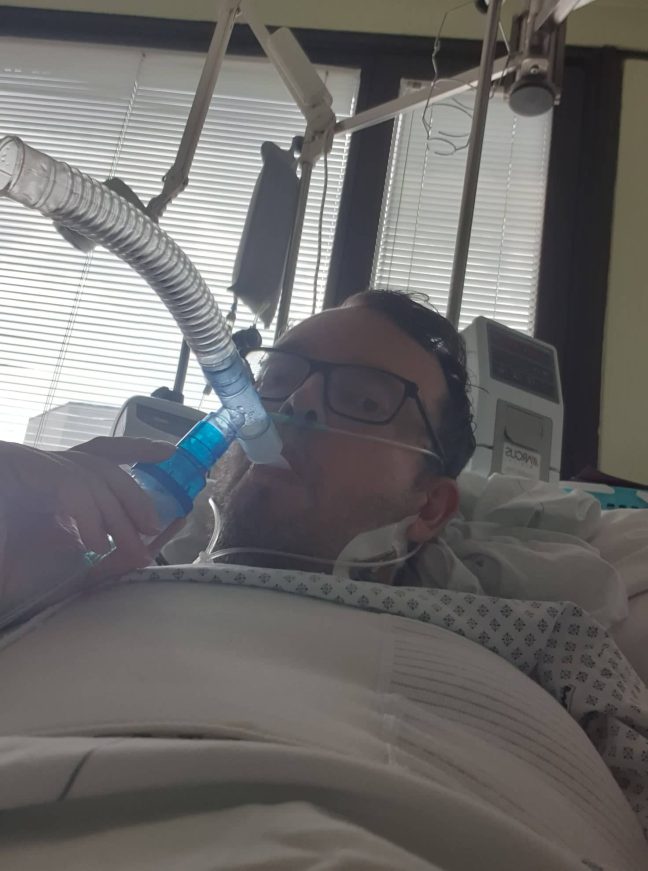
Flash-forward to mid-July and the trip that took months of planning had begun. I lay there in a skimpy grey gown, fearing my derriere (or lack thereof) was exposed to the world and I had no idea where my trip would end … would I get to my destination? All my “travel agents” were the epitome of professionalism and kindness, making me laugh as they helped plan my “flight” …

This trip has changed me more than any other. In planning the journey, I found out that I had a bicuspid valve or something similar thereto in my aorta. That’s why I had to make this trip and fly immediately. I was born with a congenital defect and my aortic valves (what my doctors referred to as the Mercedes symbol) had been deformed all my life. As you can imagine, for someone who’s been travelling in the same “aircraft” for nearly 50 years, this was a shock: how had I run track in middle school, how had I danced like an insane dervish for hours on end in multiple European clubs, how had I managed 150km-a-day bike rides or climbed so many mountains? How had I not known?

I didn’t see any signs along any of my earlier flightpaths. I had just felt I was tired or slightly more winded than usual when climbing new peaks during the most recent months of my travels. One thing was certain though, it was time to go on an adventure with the country’s, if not the region’s, best pilot. And that is what I did on that mild July morning. I don’t remember much about the flight. I just recall waking up in my destination; I even arrived speaking the local language in lieu of my native English. I was glad for that because I had been studying Czech (the language of the country I woke up in) for over two decades.

I am still processing my recent travels. Indeed, I am still on my journey. My life will never be the same and I will have to use special fuel since my plane had to have its “engine” partially replaced. Maintenance also looks to be a challenge: no more fueling up with cheap petrol products; no more low-quality motor oil or used parts. My newly refurbished aircraft will require a lot of care. That said, I have everything in the world to be grateful for and happy about. I had dozens of friends who came to visit me while I was away and so many more rallied to greet me at the airport upon my return. I am elated my plane’s engine is working at close to full speed once again. 

I’ve been blessed to have had so many opportunities to see the world in my previous aircraft. I’ve climbed the peaks of northern Armenia, I’ve watched the sun set from the coast of Portugal and even fell asleep to the lapping waves on the beaches of St. Croix in the US Virgin Islands. I tortured and tested myself on climbs in the Šumava mountains or on long bike treks over the Brdy highlands between Prague and Plzeň. And with my new plane, I have so much more I wish to do: from visits to Samarkand and Buchara, to walking the dunes of the Moroccan deserts to wading in the waters off the coast of Mauritius. I am eternally grateful to all the aerospace technicians and mechanics at Na Homolce who repaired me; to their support teams who assisted in the process; to all the fellow passengers (among them my closest friends) who cheered me on. I don’t know how many more miles I have on my current vessel, but you can be certain that I see each and every one of them as a blessing. To any and all readers: get your “planes” checked and serviced regularly and travel safely as you continue your journeys through life.

Autumn Lockdown

Walking from coffee, 
In anticipation of rain.
Thoughts like leaves, 
Flutter through my brain.

Could I make it to the river,
Without getting wet.
To guesstimate Prague weather,
Would be a fool's bet.

The day was so indifferent,
A sky of pinks and grays.
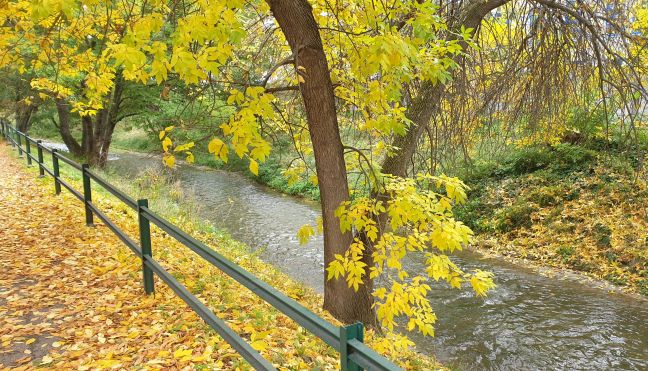
Colored leaves squealed the end of autumn,
Through a milky, sun-tinged haze.

I thought of coming seasons,
As I climbed the Kinský garden hills.
A virus has imprisoned us,
I fear a new year void of thrills.

So now I sit by the wading pond,
As dogs circle my legs.
One dashes into the water,
While the other nears me to beg.

Soon I will rise,
For to Malá Strana I descend.
My fall stroll will finish,
Having more coffee with friends.

Wandering Lužnice (Pt. 2)

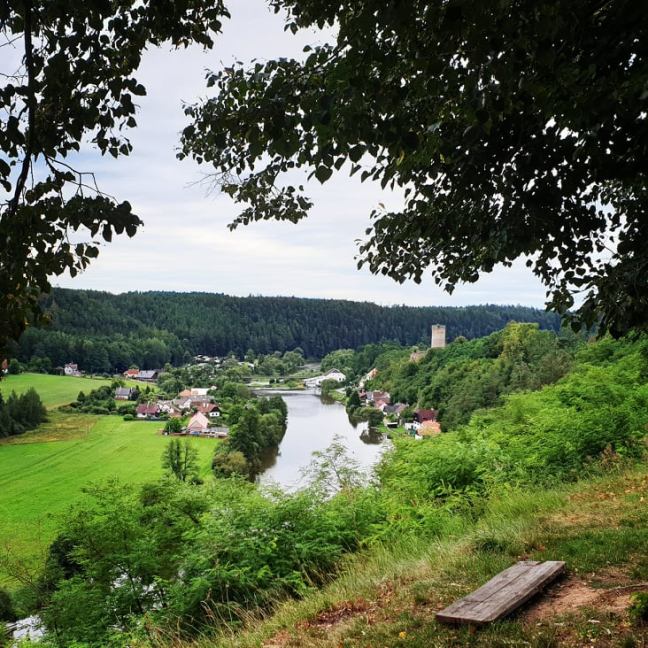
When finishing my previous post on hiking the Lužnice River trail in southern Bohemia, my friends and I had just arrived to the picturesque village of Dobronice u Bechyně. The hike into Dobronice was a tiring, but visually-pleasing finale to a long day of walking. As you approach the village, the path veers away from the river up a fairly steep hill that offers specials vistas of the Lužnice River from above. You see the water wind its way around the village below where small mills hug the right bank and the clackety-clack of the village’s single wooden bridge echoes up from the valley below. 

As you hike to the village center you first pass a look-out point just next to the Church of the Assumption of the Blessed Virgin, which sits in serene isolation at the village’s eastern edge. The marked footpath takes hikers back down to the river, while guiding them alongside the entry to the ruins of what was once Dobronice castle. The castle’s one remaining tower can be seen from the walking path and also from several points along the river below. 

We stayed overnight at a local bed and breakfast and gobbled up the tasty traditional Czech food that the innkeeper prepared. There was sumptuous roast pig, traditional beef goulash and also typical fried edam cheese (that’s the option I chose, because I hadn’t had any in a good while). The bed breakfast/inn offered nice views of the river and I fell asleep that night to the sound of stray cars clanking across the nearby bridge. 

Waking up the next day, we had a special visual treat in the fog lifting off the river and clouding the air around us as we enjoyed our breakfast. It was a quick meal, as we still had about 15 km before us and wanted to get an early start to our final destination of Bechyně. The start of the path was merciful: it began with roughly 3-4 km of tromping over footpaths through dew-covered meadows before once again returning to the mud/rock combo paths they we had regularly encountered the day before. 

It was during this segment of our hike that we got to enjoy the serenity of the Lužnice. Not many rafters and kayakers were out on the water yet, so we took advantage of the morning sun and sitting on the boulders that lay along the riverbanks. The large flat rocks offered the perfect place for sunbathing or for jumping into the refreshing water. Unfortunately though, we were short on time, so we quickly carried on along the riverside path that would intermittently offer sections of marsh where we would hop from one wood plank to the next or sections of rugged cliffs facing the river. These fascinating rock formations were frequently laden with ferns and lush moss.  

Slowly, our river path gave way to gravel roads that led to a series of small cottages that are part of the village Senožaty. I later learned that a friend of mine from East Bohemia has a cottage there where he and his family often stay in summer months. After that, our path would once again pull us away from the river rising into dense beech, pine and spruce forests that would lead to the edge of Bechyně. The forests smelled of pine needles and were just damp enough to offer prime growing conditions for the various types of mushrooms that are found throughout the Czech Republic. We even came across some chanterelles; yet not enough to pick for a good sauce to accompany our dinner.

Within 15 minutes or so, we were out of the forest and walking a field path that would lead us into Bechyně. The smells of autumn surrounded us: fields had been harvested and local apple trees had begun to shed their fruit. We stopped for a last group photo by the sign marking the town limits and then walked into the center to enjoy our “victory coffee”.  With my feet starting to protest a little too much, I left my friends to explore the beautiful chateau in Bechyně and to look at its lovely gardens. I, on the other hand, slowly began my way back to the local rail station and took in views of the public park that surrounds the town’s local spas. It was a wonderful end to the weekend: enjoyed with last-minute photos on Bechyně’s main square and catching glimpses of the town’s “rainbow bridge” as we took the train back to Tábor where we would pick up our car. It took my feet 3-4 days to forgive me for our weekend sojourn, but it was well worth it in the end.

Wandering Lužnice (Pt. 1)

It was a couple weeks ago that two friends and I went hiking along the Lužnice River in southern Bohemia. The Lužnice (called the Lainsitz in German) originates in Austria and we decided to walk the stretch from Planá nad Lužnicí to Běchyně. This portion features serene, mildly-flowing waters that attract swimmers, cyclists, rafters, and hikers like ourselves.

Our first afternoon, a roughly 17km trek, had us walking through various towns and villages just south of the larger town/city, Tábor. It’s an area full of small cottages and well-kept gardens, where local residents use the path along the river to make their trips to visit friends or to their local grocers more pleasant. The first part of the route was rendered more enjoyable by the cool breeze flowing up off the water and the views of gardens that townsfolk seemingly attend to with great care. The river path is brightened with the radiant yellow of sunflowers, the blazing reds of dahlias and cosmos, and the regal purply-blues of late-summer asters.

As we neared the first crossing to head up into the forests south of Tábor, my friends decided to take a dip in the river and to enjoy the refreshing chill of the water. Such a treat was much needed in the sweltering heat of that Friday’s 36-37°C sun. After taking some time to rest and dry off, we stopped for a quick beer in Sezimovo Ústí and then crossed the pedestrian bridge into the forests and glades on the opposite side. The welcome shade cooled us off as we made our way to the Tábor Zoo in the village, Větrovy. By the time we neared the village, the forest had given way and the late afternoon sun was punishing. As we neared the center of the village, we quickly acquiesced to the bidding of a local ice cream salesman, whose wares we hadn’t realized we so sorely needed. It would be his vanilla/pistachio soft-serve that sustained us all the way down the hill into Tábor. In roughly an hour, we descended into the city; via the quiet villages of Horky and Čelkovice. That night the beers served with dinner never tasted better. Then we capped of the evening with a brief tasting of Romanian wines that my friends would later bring back to Prague in ample supply.

The second day, after a night of troubled sleep in a mistakenly-booked B&B that turned out to be a hostel, saw us up early to get a quick start at the 20+ km that lie before us. This was admittedly the most beautiful part of our hike as we set out from Tábor with riverside views of First Republic villas and once active mills that had previously ground grain for nearby villagers and Tábor residents. It was during this portion of our hike that we met our first rafters and kayakers who had chosen to spend their weekend “taming” the Lužnice. Our path and the terrain along it varied repeatedly: with different segments of asphalt road amendable to cyclists interspersed with muddy marshlands and sometimes precariously placed boulders. Here, the river twists and turns until you get to the highly anticipated points that the Toulavá Lužnice website describes in its path highlights: the cliff tunnel after the Breda path intersection and the hanging boardwalk that takes you around the bend right to the Příběnice camping area. It was in Příběnice where a belated lunch (coupled with slower-than-average service and a missing Wi-Fi connection) sent one of my friends into a panic.

But luckily abundant beer would soothe his nerves. Once again, the Czech tradition of generously placing pubs along bike routes and hiking paths did not disappoint. And soon we were fortified with the golden treasure that is Pilsner beer. A second pitstop at the nearby campsite close to the Lužničanka settlement would fortify us even more. Soon we would be nearing the Empire-style bridge below Stadlec after braving the muddy, uneven path that would become slightly more treacherous as we ceded way to families of cyclists who hadn’t anticipated the difficult terrain. Many of them would find themselves faced with the repeated choice: ride and risk flying into the water or just carry their bicycles a good part of the way. It was under the Stadlec Bridge where we would take some extra time to rest our weary feet and enjoy the coolness of the Lužnice’s now rapid-flowing waters. Swimming and soaking our sore limbs, we admired the rafters as they worked to negotiate the sluices below the bridge.

Soon, we reluctantly shoed back up and embarked on the last part of our journey for that day: heading to our accommodation in Dobronice. It was that early evening segment of the Lužnice path that tested our mettle. With the final few kilometers making the whole day’s pedestrian (meant here in the hiking sense) efforts all worthwhile. We pushed our way up the final ascent just before Dobronice where we got our first views of the winding waterway from up above. We took a short pause at the Chapel of the Assumption of the Blessed Virgin to get some glimpses of the sunset and to admire the mills along the river below, near which we would soon be having dinner and getting a good night’s sleep.

Living in three spaces

I haven’t felt like blogging for a while. Or perhaps it’s more that I didn’t know where to go with my writing. It’s been half a year now since I returned (unexpectedly) from northern Armenia.  Now is the moment where the change starts to gel or solidify. I realize that, while I can still hold a conversation in հայերեն, it’s more difficult to recall words that used to be commonplace.  Memories are beginning to fade, and moments of daily life are more distant … saying hello to Manvel who lived in the first floor of my building. He knew three sentences in English, but he greeted me religiously every time I walked by. Always reminding me that I was welcome in Vanadzor and in Armenia in general.  I miss the moments spent persuading fruit and veg vendors that Russian wasn’t my native tongue, and that I could get through a conversation in my pigeon Armenian. I miss the lady from my “beer garden” in Tigran Mets Avenue, who gradually got used to my arriving mid-afternoon on Saturdays after a hike: book in hand, just me, myself and I … ready for a cold draught beer. 

Now as the Czech summer ends and I watch videos, listen to songs, or browse through photos so I can cling to the recollections of my Armenian adventure, I gradually merge the similarities of three specific places I once called home. 

I’m a rural person at heart. I spent my childhood wanting to escape small town life. My dad had aspirations that I would become a farmer and work with animals: as had been his dream. But my hopes went farther. I’m not sure if it was the genetics of my ever-moving paternal grandmother or the travel tales recounted by my very wise neighbor. But I knew I wanted life beyond any local farm. Funny thing is though: despite becoming a city-slicker, I never forsook my rural upbringing or time spent working with my dad, uncles and grandmother. It is the long thread of rural life that, for me, binds Missouri with rural Bohemia and the pastures of Armenia’s Lorri region. In the fields of all those lands, I see and feel the memory of my dad and his dreams; secretly hoping that some of my life’s adventures have made him proud.

Good people are worth listening to. Something inside me tends to be averse to seeking out conversation. However, many places I have lived so easily lent themselves to impromptu chats and discussion. Whether it be the doorways of stores on Brookfield’s Main Street, the garden pub of a Czech village along a random bike route, or the encounters with shepherds as they moved their herds between northern Armenia’s lush, green hills. They all began as strangers to me, yet we ended with many bonds: some had family that had emigrated, others had seen American TV shows or had travelled to Prague on a family holiday. It was my wary, skeptical entries into these numerous, ad hoc chats that confirmed to me that as citizens of the world we are all ostensibly different but very much still the same in our curiosity and desire to learn about and connect with others.

The women of my past prepared me for my future.  Then there’s the W factor. As mentioned above, it was the women of my childhood who told me of the world outside my hometown. They assured me that studying and hard work would give me access to that world. And as the years prove them right, I remember and channel their spirits as I mull new adventures and live new experiences. In my mind, I talked to Elsie as I admired the gardens of many an Armenian grandmother. I give thanks to Louise and Mildred for their nurturing my interest in languages and travel and for helping make possible my first TWA flight to Paris. I summon the courage of Jacqueline anytime I’m not sure I have what it takes to defend myself and fight for what is just in the world. How she so nonchalantly stated in that Parisian tailor’s shop: I survived the Nazis; I’m hardly going to cower to a greedy, deceitful clothing store owner.

It’s been a difficult summer reminiscing about my homes old and new. But I am forever grateful for the lessons they taught me and the people from those places who enriched my spirit more than I ever could have imagined.   

Go to Prčice …

Do Prčic … it’s a funny phrase you learn when you first explore the Czech language. It essentially works out to mean “Oh crap”, “gosh darn it”, or “F*(k” in English. But it literally means “go to Prčice” a small village in the southeastern part of Central Bohemia. Besides being the namesake of a crazy, fun, torturous hike from Prague that takes place about this time in May every year, the area around Prčice is fun for day-walking and exploring.

I was just there last weekend and got to wear out my legs and take in springtime in the rolling hills of this area. It offers everything from sweet-smelling apple groves, to overabundant fields of rapeseed plants, on to nonplussed herds of cattle (Herefords, Charolais and Simmentals) grazing in newly vernal pastures. I love the area because it offers quiet, beautiful walks through fields and forests that are interspersed with ponds and lakes and sometimes the occasional horse farm.

The area is also beautiful because of the varied sites the villages have to offer: the colorful facades of homes and farms decorated in the village baroque (selské baroko) style or the animals, usually chickens, ducks or geese, who come to greet you as you pass the gates to their yards. Oftentimes tourist paths lead you alongside cool, babbling streams where frogs sing and make their homes or where ducks have recently begun to raise their young.

In the fields near Prčice, Javorová skála and Vojkov/Podolí, you can sometimes catch sight of deer as they make their way to the fields to seek food at dusk. Or, if you walk quietly, in the adjacent forests, you might happen across a random doe or buck, as they return to their herds in the nearby fields. Other times, you come across discoveries that can be less pleasant for certain hikers: like a mother garter snake protecting her nest of babies.

My favorite sites in the Prčice area include the climb up to Javorová skála to see the old post office that someone transplanted from the Czech Republic’s highest peak Sněžka to this random hilltop in Central Bohemia. Of, if you go a little farther, you can climb on top of Čertovo břemeno (which translates as the devil’s burden/load) which is rumored to be a huge boulder that that devil had been carrying to drop atop, and destroy, a newly-built village church before it’s consecration. Luckily, the devil was late in his mission and the church was consecrated before he could destroy it. So, he dropped the boulder in shock (or perhaps disappointment), leaving it perched atop a nearby hill.

Most recently, I took time during a hike to enjoy the teaching trail (naučná stezka in Czech) that is named after Sidonie Nadherná of Borotín, a Bohemian baroness who is famous for hosting literary salons and is known to have corresponded with German poet Rainer Rilke. The trail takes you through a newly-restored horse farm and riding school in another village called Podolí. It’s such a beautiful area, I took the opportunity to each my lunch under a lovely oak grove while I watched the farm’s owners lead their horses to and from the fields and exercise them. There are so many hidden gems in villages of Central Bohemia, so I as close this text, I can definitely advise … go to Prčice (or any of the villages nearby).