Lorri marz (Լոռի մարզ) – where the animals run the show

I was trying to get into the mood to write and share something with my readers that would have an interesting, cohesive element. I have lived in the Czech Republic for almost 26 years now and just got back from a sabbatical in Armenia. When I write I like to think of things about both countries that are similar to, and which in some ways remind me of, my childhood in Missouri. The answer was animals.

I grew up in a rural community in northern Missouri. Although I didn’t live on a farm, most of my younger life was farm-adjacent. My maternal grandfather and his brothers grew angus cattle; my paternal grandmother kept a small number of animals in her backyard farm; and my dad raised cattle, sheep, or what have you on land he rented. It always surprises my friends from the city, when I tell them stories of how I spent the late springtime of my pre-teen years plucking chickens or how, as an even younger child, I helped my dad and his friends butcher cattle or pigs. I never had big jobs, mind you; I usually just stirred the pork fat so that it didn’t scald or burn OR I helped feed chunks of beef into the meat-grinder.

That said, my stay in Armenia often brought back memories of my rural childhood and farm-adjacent life. One occurrence that always made me smile was the work of local shepherds. On occasion I would run into them on hikes. But even more amusing was when they were moving animals to new pastures or mountain fields and the cattle “would come to town.” It didn’t happen that often, but it was always entertaining to watch the disinterested bovines wander through the streets of Vanadzor: rarely in a hurry to get anywhere and giving curious looks when drivers would become irate at the animals’ lack of urgency.

Other times, I would meet some smaller animals in the park. Usually, the sheep or goats showed up during a sunny afternoon when I went to the Sayat Nova այգի to read. As the bushes swished behind my bench, I assumed that either squirrels or birds were foraging. But no, it was the “children“ of a local shepherd who had come to dine on overgrown grass or on the tasty leaves of the abundant shrubbery.

As I watched them, it came to mind that domesticated animals are a unifying force across the world. In almost any country, you can wake up to the crows of an early-rising rooster. Or you can slalom on your bike as curious hens scurry across roads or field paths in search of bugs for their lunch. In Armenia, I most loved the proximity of the animals; for it took me back to my childhood. A time when I knew the provenance of the meat and dairy products we put on our table; also an age when I had a love-hate relationship with chores related to caring for livestock. These days though, the animals of the Czech countryside and Armenia’s Lorri region bring back fond memories: of driving with my late dad to check his cattle, of working with my grandma to gather eggs or feed her hens. So many nights my parents spent worrying about whether the “cattle were out.” My dad would surely chuckle if he saw that the cows of Armenia certainly are out: AND they rule the roads.
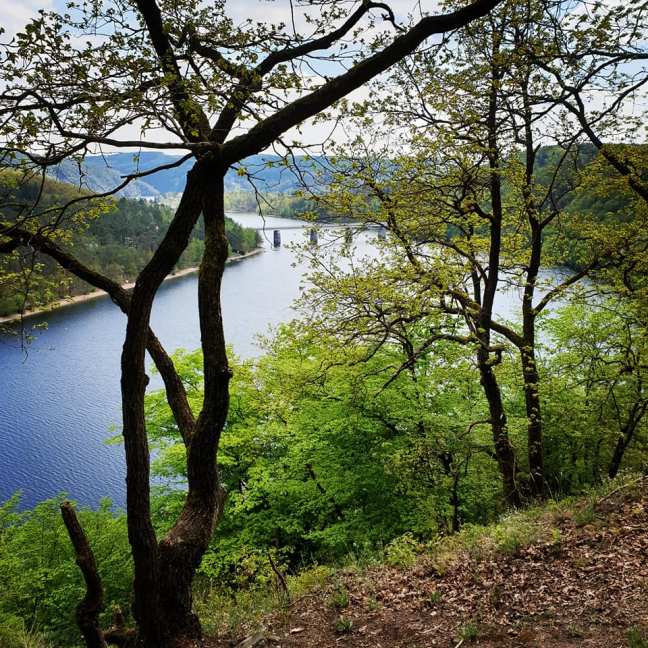
Finding peace and gratitude along the Vltava

I realized after writing my last blog entry that perhaps my words had been too aggressive. Most likely in a time of crisis few readers cared to hear my complaints about being lost in the quarantined world of Prague after leaving the Peace Corps. Those words did not come from a place of anger though: more of frustration because I had not yet been able to see friends I was missing for over a year. So that’s why I put my butt on a train and headed up the Vltava River.

It’s hard to explain the Vltava. It’s like the spinal cord of Bohemia or the Czech lands. It was on the hills above the river that Libuše had her vision of a city whose glory and light would shine for thousands of years. That city being Prague of course. It is where, per local legend, Horymír, atop his horse Šemík, jumped the waterway and fled en route to Neumětely. Along this river vagabond-hikers set up camps and spent their weekends in nature, or southern Bohemians first brewed the original Budvar (today’s Budweiser) in České Budějovice. But for me, the Vltava River represents calm. It represents continuity and simple beauty. It’s a river that runs from an unassuming source in the mountains and hills of the Šumava and carries its natural sustenance and history all the way to the Czech capital and beyond.

During the past week, I took a couple of short trips along the river, south of Prague (just under an hour away by car or train). Once at my destination, I either hiked my way back toward the city or did a forest circuit. My Tuesday hike was a celebration of spring. As I tromped up the hill away from the banks of the Vltava, I reveled in the embrace of fruit trees’ hugging branches as they shadowed the forest paths and ancient roads. The melodious hum of bees and wasps busy at work accompanied me along rows of cherry, apple and apricot trees in full bloom. As the sun shone and warmed the road, for the first time since returning home, I felt at peace. It was the peace at spring: of the healing sun and nature’s rebirth. Because of current restrictions, I was one of few people in the forest. Still, that made me all the more aware of how grateful I should be. I advanced along the path to reach the tops of bluffs along the river. There, I found the remains of campfires local villagers had enjoyed and later extinguished; I saw the view of the railroad bridge over the Vltava that I had travelled across only moments before. In a brisk wind looking down at Bohemia’s natural life source, I imagined all those who had come before me. How emperors and kings had traveled that river in the age of the Holy Roman Empire or Austria-Hungary. Or how the labors of loggers in the southern forests had sent wood down elaborate canal systems and into the river so that it could float to Prague for use on major construction projects of the day.

And on my trip yesterday, I saw a river full of hope. It was a Vltava that was enjoying a break from the busy swarms of Prague residents who rush to its banks as soon as warm weather allows. The river was calm, but it was ready… for people to return. That’s when I felt the most gratitude: as I watched random boats laze on the water floating around the area stilled by the Slapy dam. I was grateful for the river and the stories she knows: the stories she tells. I was grateful for the sustenance she brings in nourishment for the fruit trees and berry bushes along her banks. I was thankful for the livelihoods she supports as tourists and locals visit her to swim in her refreshing waters and relax over a half-liter of Bohemia’s most famous golden lagers. Yes, the river is my constant – a source of relaxation, beauty, learning and life. As long as she flows, I will live happily and delight in returning to hear her tales and will remain forever grateful for them.