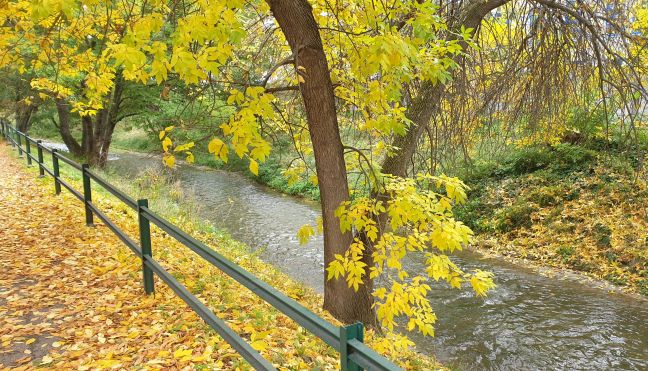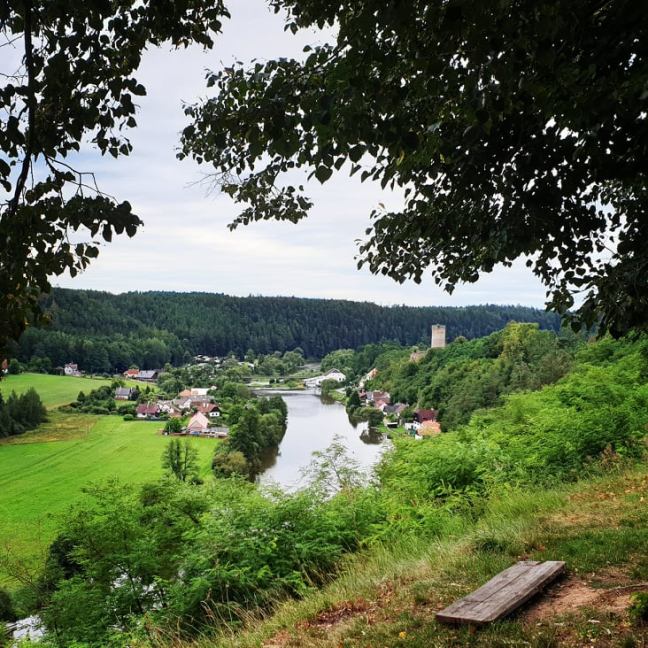
Paths through ponds of history in the Třeboň region

As sleep eludes me on a humid summer night, my thoughts wander to last weekend’s trekking through the Třeboň nature preserve in South Bohemia. This region of the Czech Republic takes you back in time, at least in your imagination, to the lives of peasants and farm workers of medieval days who first built these ponds for the fishing of carp and possibly catfish. 

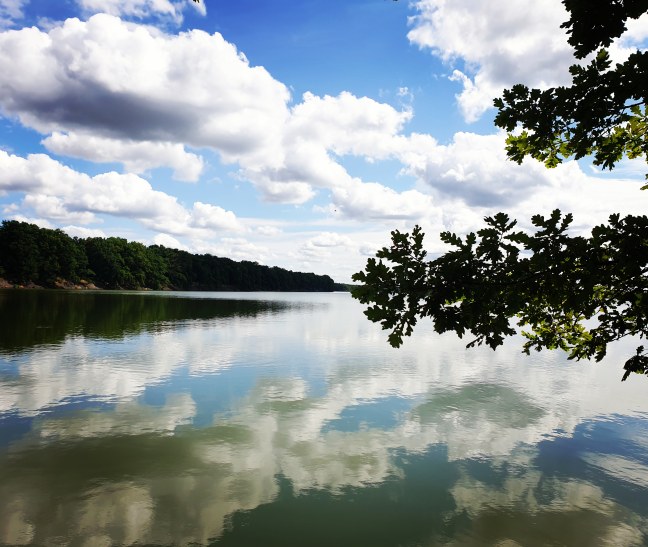
Carp is a fish traditionally associated with Christmas holidays in the Czech lands. But to meet modern consumer demand, the fish have to be raised somewhere. And where better than the murky waters of hundreds of ponds that dot the landscape along the Czech-Austrian border glimmering like numerous shards of a broken mirror whose pieces have fallen to the ground. The surfaces of the pond reflecting and taunting the clouds which will soon gather the precipitation to keep their water stocks aplenty.

The paths through this pond (or lake) district are fairly even, changing from asphalt to gravel and sometimes the plush comfort of earth and pine needles. The scent of the pine trees wafts in the air and rejuvenates your spirit in those special moments when you walk the paths alone, having found a detour void of road cyclists and tourist families out on bike journeys in the area … just because the terrain is fairly flat. Pleasant for both children wary of long adventures and parents who may have been locked in their offices too long, away from the physical conditioning offered by the Great Outdoors.

As you walk the trails, you revel in the sunshine (when available) and gawk at the many waterfowl who inhabit the lakes. No worries. They gawk right back at you: swans, mallard ducks, perhaps a few geese and here and there storks or herons who frequent the ponds from their nearby nests.

Another enchanting feature of the realm is the biodiversity of the local trees. While in most Czech forests you will find spruce, larch and pine trees interspersed with beeches and birches. The woodlands of the Třeboň area are rife with oak trees which also, in their own way, add to one’s mental image-making of long-ago medieval or renaissance times when perhaps the Czech counterpart of Robin of Sherwood or per chance one of Jan Žižka’s men rode these trails travelling to war camps or to pass a message to local nobility. It’s hard to say what might have transpired amongst these tall arboreal stands but it’s clear they have seen their fare share of history.

Most who go to the Třeboň area will want to visit the town proper and walk through its castle park. Or walk along the levees that form the ponds’ borders heading over to the Schwarzenberg family tomb or north to Rožmberk to take in the expansive surface of one of the area’s biggest bodies of water. Others will make their way eastward to visit the Czech Canada region, working their way through villages like Landštejn or Klaštér to visit castle ruins and historic monasteries on their way to the breathtaking renaissance village of Slavonice.

There is plenty to do while wandering among the ponds of South Bohemia. But the most rewarding activity is to absorb the serenity of this unassuming nature, make a small feast of the woodlands’ summer blueberry crop, and inhale the scent of the elder pine forests. They know and have seen much in their extended lifetimes. If you listen, perhaps they will share their stories.

Returning to my other HOME

Three years after Covid forced me out and a major heart surgery threw a wrench in my travel plans, I finally made it back to Armenia last weekend. It was amazing how quickly the warmth of Armenians and reconnecting with old friends melted away the anxiousness I had about travelling to the southern Caucasus region. My worries were never of the normal kind, i.e., would people and places still be as I remembered? Would there still be a connection to, and love for, the communities where I trained and worked. I was more concerned about being fit enough for the journey.  

My current adventure began with new target destinations: to see parts of the country I had not yet visited; and this thanks to having a good rental car at my disposal.  Of course, driving also made me a little anxious but having a great, funny, supportive team of fellow travellers (Jesus and Ani from Peace Corps’ A27 cohort and our new friend Marietta) made my first trip to the Vayots Dzor region perfectly enjoyable. Our journey took us to the spa town of Jermuk, or what I call Armenian Karlovy Vary (Carlsbad for German or English speakers). This small, unassuming town nestled in between cliffs and canyon made for a nice respite from the stress of air travel. It also filled me with hope for all that tourism can, and hopefully will one day, offer local and regional businesses in Armenia. Although the dominant buildings in Jermuk are large therapy and rehabilitation facilities as well as a couple of resort hotels, the town’s charm, at least for me, derives from the nature that envelops it. There are the cliffs west of the town centre formed from volcanic activity and “tubes” of basalt. These geographic features always make me think of Superman’s Fortress of Solitude. Then, as you meander to the north end of Jermuk’s “Main Street”, you will find a sign pointing you to stairs that take you down to a beautiful, breath-taking gorge or canyon and the gurgling river that soothes even the most exhausted traveller’s nerves. 

As you walk along the canyon path, you are surrounded by beautiful flora – wild roses greet you at every turn along with other colourful flowering plants (I couldn’t tell you their names for the life of me) that jump out in shades of pink, blue, yellow and purple. The trail also offers a break from the intense summer sun that warms all of southern Armenia. Cliff overhangs and large boulders (even a rock arch) cool the canyon and make the hike all the more pleasant. Finally, when you reach the river’s edge, it only takes a few more steps before you hear that a wonderful surprise awaits. The sound of rushing water shushing eager hikers soon reveals itself to be an amazing waterfall towering from the hilltop above. It carries the cool, refreshing Jermuk waters down to the river so they can travel further south to Armenia’s Syunik region.

Many travellers will journey to Jermuk to enjoy the curative spring waters, to relax or to seek rehabilitation. Odd traveller that I am, I went there to be hugged by the hillsides, calmed by the canyon river and streams and to listen to nature telling me to slow down. There is so much energy bursting in this beautiful landscape that I can’t wait to return one day: to hike more in the sun-drenched golden mountains; to watch local beekeepers as they gather their honey; to observe the farmers as they cut, mow and rake their hay into small bales; and mainly to enjoy the serenity that is, and always has been, the mountains, gorges and canyons of Armenia.

It felt good to be back in those Armenian mountains; it felt good to be back in, and embraced by, one of the lands I now call home.  

Floral Time Travel

Lockdown in Prague is slowly ending and we have been blessed with quite a few sunny, if not exceedingly warm, spring days. Since I have not been able to travel in recent months, I was having difficulty coming up with a topic for my blog. Yet, in recent days, my mind has kept wandering back to my hometown in northern Missouri and the first enchanted garden I came to know in the 800 block of Hansen Avenue.

I was an awkward kid who grew into an awkward adult. But one thing I always recall when spring arrives each year in the escape provide by gardening in my yard and improving my flower beds using skills learned from my neighbor Elsie. Spring was always a time of cleaning: raking leaves out of flower beds, weeding around bulbs that were sure to soon send up their first shoots and trimming the borders of various garden areas and shoring up the rocks and railroad ties that formed them.

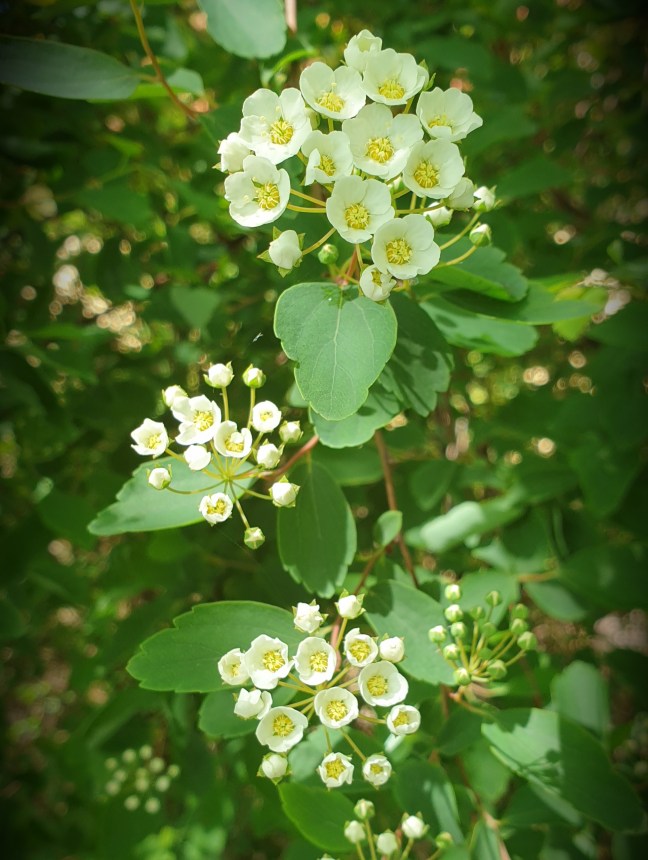
As my mind walks through that garden of some 35 years ago, my first thought it of coreopsis and black-eyed susans. Those vibrant yellow flowers in a circular bed near the street curb  welcomed all those who walked up my neighbor’s driveway. From that small patch, interspersed with irises of different shades, we would walk along the row of bridal’s wreath spirea that provided a nice, natural foundation to the front of the house. The spirea was also a lovely, mid-spring bloom that cast long fountains of ivory flowers downward toward a lawn filled with sheep’s sorrel – which I quickly learned had a tangy, lemony taste. Then, moving the right of the house and walking toward the back lot, there was just a tiny strip of mums and succulents that did their best to thrive in the overly-shaded side yard more or less hidden by the house next door. Only when one arrived toward the back porch did more colorful shrubs (lilacs, quince and wild roses) and bunches of peonies begin to fill the landscape with lush green leaves. Peonies of every hue imaginable: deep purples or violets, crisp whites and soft, pastel pinks that announced to all visitors that spring was out in full force.

The path to the back of the yard was lined with an ample hedge of both white and purple lilacs, along with a deeper purple bloom that Elsie called French lilac. They had an equally lovely scent as that of traditional lilacs, albeit with smaller, more delicate and darker flowers. Those purple sprays then gave way to a number of quince bushes which sat, as did the lilacs, under an immense persimmon tree. It was toward the back of the garden that many of the spring flowers ceded place to plants that would bloom in early or late summer: asters, Jerusalem artichokes (what we also called Missouri sunflower) and various sets of roses (both wild and cultivated). As the garden soil progressed into a rockier, rougher terrain toward the back alley of the lot, more roses peaked out through spaces they carved out for themselves in a lush bed of vinca minor (which we usually called periwinkle).

It was the repetition of this garden tour that taught me all about the therapy offered by gardening. I learned when and how to plant specific varieties and to save transplanting peonies till late summer – right after the gladiola had bloomed. It was transplanting time that would become a favorite moment in my year, where I would proudly bring my neighbor a shade of iris I knew she did not have; or she would provide me roots for peonies in new colors that would add to the alleys of those flowers at the back of our family’s lot.

So many years ago, but I still travel (in my mind) back to Hansen Avenue every spring. I remind myself of the flower names and types that Elsie so carefully planted in my head: Hosta, sempervirens, Solomon’s seal and more. Although that garden no longer stands, it blooms in my heart each spring: as I see the first flowers on the lily of the valley, or notice the lush pink of the bleeding hearts and the faded yellow of the forsythia flowers that have run their course. With all those colors, scents and memories of floral names, my heart becomes full and I appreciate the repetition of these memory-travels. Although I will never likely return in person, my mind always has a ticket those gardens of my childhood and their announcement of spring.

Seeking Serenity in the Orbe Valley (Pt. 2)

In my last post, I spoke of my holiday hiking with friends met in Prague who now live in Lausanne. We decided that in today’s Covid-impacted world the best spiritual rejuvenation would come from getting out of the city and back to nature. Luckily, some of Switzerland’s most interesting and intriguing natural sites are to be found at the foot of the Jura mountains: not far from our home base in Lausanne. Our preferred destination is Les Clées (reached easily by car). Our first hike this season, a new one to me, was a footpath heading west of Les Clées village: in direction of the French border. 

I have to admit that his hike was not full-on serene for me. The nature was amazing and beautiful, but the precarious path and the threat of a possible fall off a steep incline down into the Orbe River had me a bit ill-at-ease at times. Initially, the route is wider and you focus more on questioning why you had such a big breakfast OR you wish you’d had more to eat. You need a good store of energy to push yourself up the constantly ascending path. However, quickly the route narrows and you look at the rushing Orbe below and wonder how rapidly you might plummet down to the water.

As with all things Swiss, this path is impeccably organized. Should you happen on an outshoot of rock: no worries. The locals long ago carved a tunnel into the grey-white rock so that hikers can easily navigate through the mountainside when need be. Likewise, this section of the Orbe River Path also has ample swells of fresh-water springs that trickle slowly to the rapids down below. In the winter season, these water flows offer an additional, amazing spectacle: icicle cascades. Passages through the rock tunnels along the route have an almost 2m tall person like myself dodging a number of frozen-water daggers: a) so as not to hit my head, b) in order to preserve the beauty the icicles contribute to this magical, wintertime, natural kingdom.

The hike provides ample amounts of calm and solace, with the only creatures interrupting our thoughts being Izzi our Vizsla canine companion (she’s afraid of the icy footbridges) and our Jack Russell named Poppy, who shoots up and down the path and sometimes along the icy cliffside without thought for potential consequences. Ultimately though, there is an incredible reward toward the end of the trail. These are the Le Day waterfalls (the Saut du Day) which tower over you as you reach a broadening of the Orbe River where it shallows out and serves up rocky sandbars that are perfect for a picnic. It was at the waterfalls that we went crazy with our cameras and took multiple pics of our beautiful surroundings. We let the dogs test the icy waters and run to their hearts’ content. Plus, it was there that we came across our first humans: other locals on holiday, who also apparently needed to escape their isolating in place for just an hour or two.

I am thankful to have spent a part of my holidays admiring the Orbe River and the gorge through which it passes. It is a calming, fascinating place where I never cease to be in awe of how the water swiftly flows, sharing its gurgles with the random hikers who pass alongside it. I give thanks to the Swiss people who look after the nearby paths and make such wonderful views of nature accessible to all who journey to the area for a walk. As I sit here in Day 4 of my post-holiday quarantine, I can still hear the river calling me. Come back one day. I’ll be waiting. And surely I will return: for a future dose of much needed and appreciated serenity.       

Autumn Lockdown

Walking from coffee, 
In anticipation of rain.
Thoughts like leaves, 
Flutter through my brain.

Could I make it to the river,
Without getting wet.
To guesstimate Prague weather,
Would be a fool's bet.

The day was so indifferent,
A sky of pinks and grays.
Colored leaves squealed the end of autumn,
Through a milky, sun-tinged haze.

I thought of coming seasons,
As I climbed the Kinský garden hills.
A virus has imprisoned us,
I fear a new year void of thrills.

So now I sit by the wading pond,
As dogs circle my legs.
One dashes into the water,
While the other nears me to beg.

Soon I will rise,
For to Malá Strana I descend.
My fall stroll will finish,
Having more coffee with friends.

Wandering Lužnice (Pt. 2)

When finishing my previous post on hiking the Lužnice River trail in southern Bohemia, my friends and I had just arrived to the picturesque village of Dobronice u Bechyně. The hike into Dobronice was a tiring, but visually-pleasing finale to a long day of walking. As you approach the village, the path veers away from the river up a fairly steep hill that offers specials vistas of the Lužnice River from above. You see the water wind its way around the village below where small mills hug the right bank and the clackety-clack of the village’s single wooden bridge echoes up from the valley below. 

As you hike to the village center you first pass a look-out point just next to the Church of the Assumption of the Blessed Virgin, which sits in serene isolation at the village’s eastern edge. The marked footpath takes hikers back down to the river, while guiding them alongside the entry to the ruins of what was once Dobronice castle. The castle’s one remaining tower can be seen from the walking path and also from several points along the river below. 

We stayed overnight at a local bed and breakfast and gobbled up the tasty traditional Czech food that the innkeeper prepared. There was sumptuous roast pig, traditional beef goulash and also typical fried edam cheese (that’s the option I chose, because I hadn’t had any in a good while). The bed breakfast/inn offered nice views of the river and I fell asleep that night to the sound of stray cars clanking across the nearby bridge. 

Waking up the next day, we had a special visual treat in the fog lifting off the river and clouding the air around us as we enjoyed our breakfast. It was a quick meal, as we still had about 15 km before us and wanted to get an early start to our final destination of Bechyně. The start of the path was merciful: it began with roughly 3-4 km of tromping over footpaths through dew-covered meadows before once again returning to the mud/rock combo paths they we had regularly encountered the day before. 

It was during this segment of our hike that we got to enjoy the serenity of the Lužnice. Not many rafters and kayakers were out on the water yet, so we took advantage of the morning sun and sitting on the boulders that lay along the riverbanks. The large flat rocks offered the perfect place for sunbathing or for jumping into the refreshing water. Unfortunately though, we were short on time, so we quickly carried on along the riverside path that would intermittently offer sections of marsh where we would hop from one wood plank to the next or sections of rugged cliffs facing the river. These fascinating rock formations were frequently laden with ferns and lush moss.  

Slowly, our river path gave way to gravel roads that led to a series of small cottages that are part of the village Senožaty. I later learned that a friend of mine from East Bohemia has a cottage there where he and his family often stay in summer months. After that, our path would once again pull us away from the river rising into dense beech, pine and spruce forests that would lead to the edge of Bechyně. The forests smelled of pine needles and were just damp enough to offer prime growing conditions for the various types of mushrooms that are found throughout the Czech Republic. We even came across some chanterelles; yet not enough to pick for a good sauce to accompany our dinner.

Within 15 minutes or so, we were out of the forest and walking a field path that would lead us into Bechyně. The smells of autumn surrounded us: fields had been harvested and local apple trees had begun to shed their fruit. We stopped for a last group photo by the sign marking the town limits and then walked into the center to enjoy our “victory coffee”.  With my feet starting to protest a little too much, I left my friends to explore the beautiful chateau in Bechyně and to look at its lovely gardens. I, on the other hand, slowly began my way back to the local rail station and took in views of the public park that surrounds the town’s local spas. It was a wonderful end to the weekend: enjoyed with last-minute photos on Bechyně’s main square and catching glimpses of the town’s “rainbow bridge” as we took the train back to Tábor where we would pick up our car. It took my feet 3-4 days to forgive me for our weekend sojourn, but it was well worth it in the end.

Wandering Lužnice (Pt. 1)

It was a couple weeks ago that two friends and I went hiking along the Lužnice River in southern Bohemia. The Lužnice (called the Lainsitz in German) originates in Austria and we decided to walk the stretch from Planá nad Lužnicí to Běchyně. This portion features serene, mildly-flowing waters that attract swimmers, cyclists, rafters, and hikers like ourselves.

Our first afternoon, a roughly 17km trek, had us walking through various towns and villages just south of the larger town/city, Tábor. It’s an area full of small cottages and well-kept gardens, where local residents use the path along the river to make their trips to visit friends or to their local grocers more pleasant. The first part of the route was rendered more enjoyable by the cool breeze flowing up off the water and the views of gardens that townsfolk seemingly attend to with great care. The river path is brightened with the radiant yellow of sunflowers, the blazing reds of dahlias and cosmos, and the regal purply-blues of late-summer asters.

As we neared the first crossing to head up into the forests south of Tábor, my friends decided to take a dip in the river and to enjoy the refreshing chill of the water. Such a treat was much needed in the sweltering heat of that Friday’s 36-37°C sun. After taking some time to rest and dry off, we stopped for a quick beer in Sezimovo Ústí and then crossed the pedestrian bridge into the forests and glades on the opposite side. The welcome shade cooled us off as we made our way to the Tábor Zoo in the village, Větrovy. By the time we neared the village, the forest had given way and the late afternoon sun was punishing. As we neared the center of the village, we quickly acquiesced to the bidding of a local ice cream salesman, whose wares we hadn’t realized we so sorely needed. It would be his vanilla/pistachio soft-serve that sustained us all the way down the hill into Tábor. In roughly an hour, we descended into the city; via the quiet villages of Horky and Čelkovice. That night the beers served with dinner never tasted better. Then we capped of the evening with a brief tasting of Romanian wines that my friends would later bring back to Prague in ample supply.

The second day, after a night of troubled sleep in a mistakenly-booked B&B that turned out to be a hostel, saw us up early to get a quick start at the 20+ km that lie before us. This was admittedly the most beautiful part of our hike as we set out from Tábor with riverside views of First Republic villas and once active mills that had previously ground grain for nearby villagers and Tábor residents. It was during this portion of our hike that we met our first rafters and kayakers who had chosen to spend their weekend “taming” the Lužnice. Our path and the terrain along it varied repeatedly: with different segments of asphalt road amendable to cyclists interspersed with muddy marshlands and sometimes precariously placed boulders. Here, the river twists and turns until you get to the highly anticipated points that the Toulavá Lužnice website describes in its path highlights: the cliff tunnel after the Breda path intersection and the hanging boardwalk that takes you around the bend right to the Příběnice camping area. It was in Příběnice where a belated lunch (coupled with slower-than-average service and a missing Wi-Fi connection) sent one of my friends into a panic.

But luckily abundant beer would soothe his nerves. Once again, the Czech tradition of generously placing pubs along bike routes and hiking paths did not disappoint. And soon we were fortified with the golden treasure that is Pilsner beer. A second pitstop at the nearby campsite close to the Lužničanka settlement would fortify us even more. Soon we would be nearing the Empire-style bridge below Stadlec after braving the muddy, uneven path that would become slightly more treacherous as we ceded way to families of cyclists who hadn’t anticipated the difficult terrain. Many of them would find themselves faced with the repeated choice: ride and risk flying into the water or just carry their bicycles a good part of the way. It was under the Stadlec Bridge where we would take some extra time to rest our weary feet and enjoy the coolness of the Lužnice’s now rapid-flowing waters. Swimming and soaking our sore limbs, we admired the rafters as they worked to negotiate the sluices below the bridge.

Soon, we reluctantly shoed back up and embarked on the last part of our journey for that day: heading to our accommodation in Dobronice. It was that early evening segment of the Lužnice path that tested our mettle. With the final few kilometers making the whole day’s pedestrian (meant here in the hiking sense) efforts all worthwhile. We pushed our way up the final ascent just before Dobronice where we got our first views of the winding waterway from up above. We took a short pause at the Chapel of the Assumption of the Blessed Virgin to get some glimpses of the sunset and to admire the mills along the river below, near which we would soon be having dinner and getting a good night’s sleep.

The (Swiss) hills are alive …

It’s been awhile since I’ve added to this blog. That’s mainly because the past few months have been about readjusting to life in Central Europe and trying to get things organized in my business. However, I recently had the good fortune, once Europe re-opened its borders, to go spend two weeks hiding out with some very special friends, Pete and Laura, at their home in St. Sulpice, Switzerland.  It’s a cute little town/village/suburb on the outskirts of Lausanne, and it must be said … they have an awesome view of Lac Léman (Lake Geneva). 

One of my favorite take-aways from my time there was all the gorgeous vistas around the lake; with mountains on every side and the confusing geography that always has you wondering: am I looking at France? Or am I looking at Switzerland.  In any case, there was so much beautiful nature to take in; including the calm waters of Lac Léman, the moody storm clouds rolling in from the Alps or creeping in from the Jura. There was also the morning songs (and sometimes cackles) from the birds who lived near the lake.  When I think back on my visit, I reckon these are some of my favorite memories…

The incessant ringing of the mountains

When we took a Sunday hike in the mountains north of Gland/Arzier, it became immediately apparent that each cow/bull has a bell. And those bells clang non-stop as the animals graze in their alpine pastures and wander to find new meadows unexplored. The sounds give the hills an almost church-like atmosphere where the carillons of cow bells call you to nature’s cathedral and invite you to commune in the lush fields and enjoy the soothing, warm winds that pass through the forests. 

The tangy taste of Gruyère cheese

This was one of my favorite moments during my visit. Parking just below the medieval village of Gruyères and walking through the old gate into this fortified settlement made me feel like I had travelled back in time. As you walk over the cobblestone-paved square and admire the shops and cafés that hark back to a time long ago, you can quickly imagine horse carts and wagons as they must have once brought in wares and crops from the surrounding area. Or vendors as they traded goods from shops and stalls in this hamlet that is home to one of my favorite cheeses. Just down the hill from Gruyères, in the town of Pringy, you can visit the Maison du Gruyère museum and buy all the delicious cheese you want. That coupled with the exquisite views of Le Moléson mountain gives you a sense of serenity and contentment that is worth they journey.

The markets of Évian

Just across Lac Léman from the port at Ouchy lies the peaceful village of Évian les Bains. The town famous for its freshwater springs and its spa hotels makes a nice day trip for visitors from Lausanne, Geneva or the surrounding areas. I travelled there with Laura to explore the Friday farmers’ markets and enjoy the promenade along the waterfront. The animated vendors as they hawk their meats, cheeses and vegetables are a wonderfully intriguing sight to observe. Or sipping a rich cup of coffee while eating a pain au chocolat is just the right treat for starting a holiday weekend.  Plus, there’s the added benefit of looking back at your holiday home on the Swiss side of the lake and taking in the serene Vaudois shores.

I am so grateful to my friends for allowing me to “disappear” at their home for the past couple of weeks. Switzerland and its captivating, hospitable and welcoming countryside was just the right antidote to this spring’s long periods of isolation mandated by the Covid world. If you get the chance to wander through the Swiss mountains and explore the paths that lead you to breathtaking views of the country’s many lakes, definitely seize that opportunity. It’s well worth it.

Go to Prčice …

Do Prčic … it’s a funny phrase you learn when you first explore the Czech language. It essentially works out to mean “Oh crap”, “gosh darn it”, or “F*(k” in English. But it literally means “go to Prčice” a small village in the southeastern part of Central Bohemia. Besides being the namesake of a crazy, fun, torturous hike from Prague that takes place about this time in May every year, the area around Prčice is fun for day-walking and exploring.

I was just there last weekend and got to wear out my legs and take in springtime in the rolling hills of this area. It offers everything from sweet-smelling apple groves, to overabundant fields of rapeseed plants, on to nonplussed herds of cattle (Herefords, Charolais and Simmentals) grazing in newly vernal pastures. I love the area because it offers quiet, beautiful walks through fields and forests that are interspersed with ponds and lakes and sometimes the occasional horse farm.

The area is also beautiful because of the varied sites the villages have to offer: the colorful facades of homes and farms decorated in the village baroque (selské baroko) style or the animals, usually chickens, ducks or geese, who come to greet you as you pass the gates to their yards. Oftentimes tourist paths lead you alongside cool, babbling streams where frogs sing and make their homes or where ducks have recently begun to raise their young.

In the fields near Prčice, Javorová skála and Vojkov/Podolí, you can sometimes catch sight of deer as they make their way to the fields to seek food at dusk. Or, if you walk quietly, in the adjacent forests, you might happen across a random doe or buck, as they return to their herds in the nearby fields. Other times, you come across discoveries that can be less pleasant for certain hikers: like a mother garter snake protecting her nest of babies.

My favorite sites in the Prčice area include the climb up to Javorová skála to see the old post office that someone transplanted from the Czech Republic’s highest peak Sněžka to this random hilltop in Central Bohemia. Of, if you go a little farther, you can climb on top of Čertovo břemeno (which translates as the devil’s burden/load) which is rumored to be a huge boulder that that devil had been carrying to drop atop, and destroy, a newly-built village church before it’s consecration. Luckily, the devil was late in his mission and the church was consecrated before he could destroy it. So, he dropped the boulder in shock (or perhaps disappointment), leaving it perched atop a nearby hill.

Most recently, I took time during a hike to enjoy the teaching trail (naučná stezka in Czech) that is named after Sidonie Nadherná of Borotín, a Bohemian baroness who is famous for hosting literary salons and is known to have corresponded with German poet Rainer Rilke. The trail takes you through a newly-restored horse farm and riding school in another village called Podolí. It’s such a beautiful area, I took the opportunity to each my lunch under a lovely oak grove while I watched the farm’s owners lead their horses to and from the fields and exercise them. There are so many hidden gems in villages of Central Bohemia, so I as close this text, I can definitely advise … go to Prčice (or any of the villages nearby).

Lorri marz (Լոռի մարզ) – where the animals run the show

I was trying to get into the mood to write and share something with my readers that would have an interesting, cohesive element. I have lived in the Czech Republic for almost 26 years now and just got back from a sabbatical in Armenia. When I write I like to think of things about both countries that are similar to, and which in some ways remind me of, my childhood in Missouri. The answer was animals.

I grew up in a rural community in northern Missouri. Although I didn’t live on a farm, most of my younger life was farm-adjacent. My maternal grandfather and his brothers grew angus cattle; my paternal grandmother kept a small number of animals in her backyard farm; and my dad raised cattle, sheep, or what have you on land he rented. It always surprises my friends from the city, when I tell them stories of how I spent the late springtime of my pre-teen years plucking chickens or how, as an even younger child, I helped my dad and his friends butcher cattle or pigs. I never had big jobs, mind you; I usually just stirred the pork fat so that it didn’t scald or burn OR I helped feed chunks of beef into the meat-grinder.

That said, my stay in Armenia often brought back memories of my rural childhood and farm-adjacent life. One occurrence that always made me smile was the work of local shepherds. On occasion I would run into them on hikes. But even more amusing was when they were moving animals to new pastures or mountain fields and the cattle “would come to town.” It didn’t happen that often, but it was always entertaining to watch the disinterested bovines wander through the streets of Vanadzor: rarely in a hurry to get anywhere and giving curious looks when drivers would become irate at the animals’ lack of urgency.

Other times, I would meet some smaller animals in the park. Usually, the sheep or goats showed up during a sunny afternoon when I went to the Sayat Nova այգի to read. As the bushes swished behind my bench, I assumed that either squirrels or birds were foraging. But no, it was the “children“ of a local shepherd who had come to dine on overgrown grass or on the tasty leaves of the abundant shrubbery.

As I watched them, it came to mind that domesticated animals are a unifying force across the world. In almost any country, you can wake up to the crows of an early-rising rooster. Or you can slalom on your bike as curious hens scurry across roads or field paths in search of bugs for their lunch. In Armenia, I most loved the proximity of the animals; for it took me back to my childhood. A time when I knew the provenance of the meat and dairy products we put on our table; also an age when I had a love-hate relationship with chores related to caring for livestock. These days though, the animals of the Czech countryside and Armenia’s Lorri region bring back fond memories: of driving with my late dad to check his cattle, of working with my grandma to gather eggs or feed her hens. So many nights my parents spent worrying about whether the “cattle were out.” My dad would surely chuckle if he saw that the cows of Armenia certainly are out: AND they rule the roads.