Praha through Ree jan’s eyes

Author’s note/warning: This text is written with a good dose of sarcasm and self-deprecation. Ree assured me she had a great time during her visit to Prague. I just tend to make light of my tics and idiosyncrasies when serving in the role of tour guide.

Living in one of Europe’s most beautiful capitals can make you jaded in some ways. After 25+ years living in a city I thought I would stay in for 2-3 years max, I tend to just always look at the city’s beautiful monuments, smile, nod and make a mental check. Prague Castle – still there; the Charles Bridge – still there; National Theatre – still … well, you get the gist.

But in January I had the privilege of welcoming a good friend and fellow returned Peace Corps volunteer Ree to my adopted home town. And it gave me time to get to know the city all over again. I also quickly realised what an annoying tour guide I am. On most days I couldn’t tell you my own name but, sadly, for those brave enough to tour the city with me, every building, monument, sidewalk, street crossing, subway station and tram stop comes with a short story.

There’s a lot to do and see in Prague in less than a week. However, fortunately, Ree is a chill traveller. She endured and survived (and I think enjoyed) the wild life of southern Armenia (except for being over-potatoed) and so I was certain she would survive all I had to tell her about the Golden City or the City of Many Spires, as the Czech capital is often called. It’s also good that Ree’s a walker. That bode well for her being able to tolerate my aversion to public transport and enjoy the pedestrian life. So just to sum up a few highlights of her stay.

First stop – Vyšehrad

The Vyšehrad Hill and fortress is the site of (I think) the first permanent settlement in Prague. It offers splendid views of the Vltava River and looks at Hradčany (the location of Prague Castle) and Malá Strana where the kings and emperors who ruled the city lived for centuries. It’s also the spot where, according to legend, the Celtic queen Libuše proclaimed that a city would form here with a fame and prosperity that would last for thousands of years. I think it’s also the hill that Horymír and his trusted steed Šemík jumped from on their flight from the city before Šemík succumbed to fatigue in Neumětely (just west of Prague). I think my diatribe on the Prague skyline quickly exhausted Ree: she hadn’t counted on there being so many spires … so somewhere between the Žižkov TV tower and the Petřín Hill “Eiffel Tower” she lost track and a glazed look spread over face.

Walking through the New Town to the Old Town (also TMD – too much data)

The best part of starting a tour with Vyšehrad is that you get to descend the winding stairs down to the river and take your pick of which river bank to meander along. Now, I forget if we went to the Smíchov side or wandered up the right bank to the National Theatre. However, I’m pretty sure we stopped for a hot drink (cocoa for me, mulled wine for Ree jan) and enjoyed Prague’s plentiful medieval and baroque vistas. I’m not sure on what day or in what order, but I do know that we stopped at one of my new favourite pubs in the New Town and ordered a proper ½ litre Plzeň (Pilsner beer) for each with us and a nakládaný hermelín (a pickled cheese that is camembert adjacent); this one served with cranberry jam and walnuts. I think Ree liked it.

A day at the National Museum

I think our museum visit turned out to be a special treat for both of us. In 28 or so years, I had never taken the time to visit the monument. Mind you, I only live 10 minutes away and walk by it almost every other day. But having Ree in town was just the right occasion to test-drive the newly-refurbished building and visit its exhibits. And I can now tell you, it is worth the 10 bucks or so that you pay for the entrance fee. You have two buildings to explore: the more historic building, the National Museum proper, and several exhibits housed in the more modern (in my opinion uglier) building that used to be home to the Czechoslovak Federal Assembly. There is much to see: from displays on minerals and geology, to exhibits on prehistory – a woolly mammoth included, on to audio-visual time travel through the history of 20th century Czechoslovakia and the 30+ year-old Czech Republic.

I could recount more, but I’ve hit the one-page mark. I can just say it was an honour to share my city with Ree. It was great to revisit Prague’s history, show her my hood, and also to treat her and my friends to some rounds of the Phase 10 card game that ended up with all of us being given the bird by Jakub … but in an artistic, pretty way. Hopefully, there will be more visits in the future.
Loving Graz: one meal at a time

A couple of weekends ago, a friend and I boarded a train and head for Graz, the main city of Austria’s Styria region. The train ride is just over 7 hours but takes you through some beautiful countryside in the wine regions along the Czech-Austrian border and in the mini-mountains as it nears Graz. The railway serpentines around Semmering-Kurort are lovely as you swoosh from tunnel to tunnel and get glimpses of colourful rock formations bedecked this time of year with fall foliage.

Upon arrival in Graz, you descend into a quiet-bustling regional city with the bahnhof life loud and hopping and a fitness centre right there to greet you. Our stroll from rail station to hotel took us down a busy thoroughfare to the bank of the Mur River, where the modern-ly fun and imposing Kunsthaus told us our accommodation was nearby.

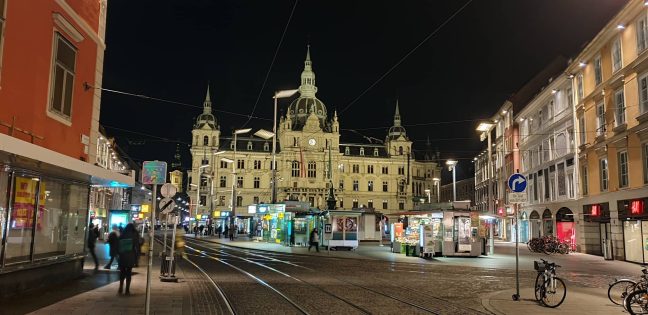
Although slightly tired from the long trip, we only took a few minutes to get settled and then rushed to the city centre to see a few sights before dusk quickly arrived. Walking over one of the many bridges that provide connection to the Innere Stadt, we soon found ourselves in a maze of cute streets with an array of architectural styles that each, in their own way, explained the city’s history. After some wandering around we settled on a café that offered a great blend of coffee which I elected to sip with an accompaniment of apple strudel and vanilla ice cream. The coffee provided some warmth as we rested our feet and contemplated the words of Kurdish refugees who had assembled in front of the Graz City Hall to voice their discontent with the dire situation of their peoples in Eastern Turkey.

As we took in the city sparkling in the sunset, we also plotted our evening meal. Nothing says “I need more food.” like a huge piece of strudel and ice cream. We eventually settled on a Bierstube off the main streetcar (tram) route the runs under the Castle Hill, where we indulged in some regional draft beer (Grössl?) and delicious Käsespätzle. I also pigged out on a lovely pumpkin soup as an appetizer. After that, it was time to walk off the meal; enjoying a bit of night-time Graz and discovering sites like the local theatre, some baroque churches, local parks and bustling boulevards.

Our Saturday, as forecasted, was filled with rain. We grabbed breakfast on the opposite end of the main square, prior to walking the tram road over to where we estimated the streets leading up to the remains of the castle on the Schlossberg would be. On a tiny square below the hill, we noticed a formidable set of stairs that I pondered a few seconds before deciding that this was our way to the top: no funicular, no mountain rail. And so we began our ascent, a few steps at a time. I just focused on my breathing and in no time we got where we needed to be: greeted by the clock tower that looks out on Graz and shares the time with all people in view. Armed with our umbrellas, we moved around the hill top, snapping pics of various skyline views and looking out on the city we’d just begun to discover. The Castle Hill is today sans castle, since the fortress that once protected the city was destroyed during the Napoleonic Wars at the start of the 19th century. So with no monument in sight, it became our duty to enjoy and take in the autumnal colours: happy yellows, blazing oranges and fiery reds. We observed them all as we meandered down the back side of the hill winding down to the city centre below. Then more wandering and enjoying the city: the lovely theatre square in daylight, the beautifully carved woodwork adorning a local pharmacy, the delicious and appetizing farmers market, and interesting blips of modern architecture speckled across the cityscape. All that walking was rewarded with an amazing pork schnitzel (tenderloin) and delicious roasted potatoes. And of course some more local beer to wash it all down.

After lunch, the foodie trekking would pause, as we decided to take in the current exhibit at the Kunsthaus and enjoy the modern pieces there focused on branding and commercialism/consumerism. An abrupt return to the struggles of today’s world which we had temporarily forgotten while immersed in 16th and 17th century architecture and our passion for good food. By evening our tourist adventure was slowly winding down. We had had our fill of local food and accidentally stepped into a cute Mexican restaurant. Filled with a great mood and the lovely songs of guest singers, we enjoyed an array of folk songs, while munching on tacos, quesadillas and other culinary goodies.

Graz, you were a wonderful respite from the stress of the working world. And you’re an excellent place for a weekend get-away: filled with tasty food and architectural pleasures. Not least of all the “Mussel” building that sits in the middle of the Mur. Auf wiedersehen.

Following the clouds across Denmark

Could it be six? Or perhaps it was eight years? Memories came flooding back as the familiar forest of wind turbines that populate the sea of Denmark’s southern coast announced our approach to the Kastrup district and Copenhagen’s airport. So many years of recollections returned along with the apprehension of comparison: how would the present compare to the joy of all the special times from past visits?

However, slowly but surely, the days would unfold just as they were meant to be. Throngs of cyclists accompanied us as we headed to the house – the garden, upon arrival, still full of spring fragrances: lilacs, mock orange, rose blossoms, bridal wreath spirea and more. After a big welcome hug, the conversation began right where it had left off so many years ago. We shared news of what had changed in our lives and thoughts on the state of the world. The scent of fresh-brewed coffee filled the air as we sat in the garden and filled in the gaps of that half-decade.

The beauty of Copenhagen, and Denmark for that matter, lies in the warm welcome of its familiar serenity. Decades ago we would have been on our bikes whizzing into the city centre or headed out along the coastline to ride through the nature preserve. But habits have changed and health and aging have introduced limitations. The absence of riding was replaced by the careful steps of daily walks and thoughtful conversation. The neighbourhood beach had come alive with skateboarders, surfers, paddleboarders and joggers. Strolling along the shore, we watched kids at play and the more daring cranes and herons high-stepping it through the rivulets.

In between walks we enjoyed familiar culinary treats that had also remained unchanged over the years. The hearty open-faced sandwiches and a bottle of elderflower (hyldeblomst) soda pop here and there. Also, the rich cakes and tartes that quickly satisfied one’s sweet tooth; my only regret being new restrictions on how much rhubarb I could consume. The wonderful flavours of local baked goods quickly reminded me that I would need to raid the local store to hoard up my favourite Den Gamle Fabrik jams: hyben (rose hip) and raspberry. Both of which have added pizzazz to my morning porridge since my return to Prague. 

Memories continued to replenish my soul as we moved north to Nykøbing and the Rørvig area. The road to the summer house had been repaved with a mix of tar and gravel. Not sure that was a good idea. But the excess saplings in the front yard and been cleared and the rhododendrons moved to form a beautiful floral wall at the back of the property. The ever-changing Danish weather did us a solid by allowing the sun to shine and accompany us on our walk along the north shore beach that looks out on the Kattegat. We were lucky to have the coastline almost all to ourselves with the exception of an intrepid family that wanted to test the possibility of swimming in the still chilly spring waters and a sole windsurfer who was preparing to try his luck in taming the less than threatening waves. The walk seemed at times overwhelming as it brought with it mental images of past rainy Saturdays in the cottage and cycling adventures along the windy levee and through flooded fields. Or the surprise sight of a windmill on the horizon.

The pleasure of Denmark is that it is easy. No matter how long the gap between visits, each new arrival brings the same warm welcome. And each departure has a sadness of things left unsaid. Still I know I will return, because in København I feel loved.

Meeting Missouri in the Moselle Valley

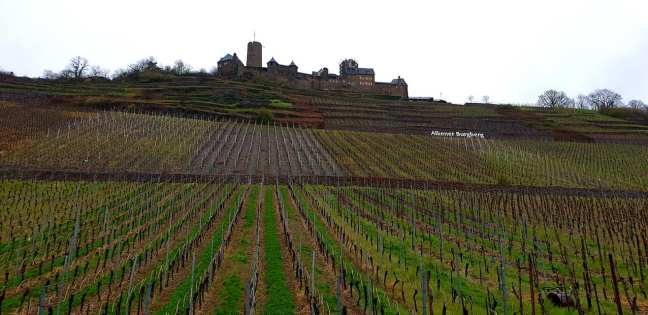
A couple weeks back I coerced a small group of close friends to road trip with me to spend my birthday south of Koblenz, Germany just below the point where the Moselle River flows into the Rhine. I had read somewhere years ago that many of the German immigrants who came to inhabit the area along the banks of the Missouri River (in the segment between Jefferson City and St. Louis) had once lived on the banks of the Moselle. They had made wine in Deutschland and later came to practice the same art in their chosen destination in middle America.

Although the steepness of the bluffs along the Moselle River was much more striking, I could see bits of Missouri in this landscape near the Franco-German border. The river was wide, a muddy green, as well as quick flowing: much like the Missouri River which also bears the nickname “Big Muddy”. However, what the Missouri lacks is the quant little villages and towns tucked in small valleys and ravines along the river banks where, theoretically, you can traipse from house to house ringing doorbells and asking to sample the last season’s wines.

As I chauffeured Laura, Natalie, Pete & Jakub between Moselle Valley hamlets, it became clear that there were a number of local rules that complicated the “drop by anytime” philosophy. The first was that the Weingüter operate only during afternoons on weekends. So after a couple of failed attempts in Kattenes, we decided to move on to the bigger town of Cochem. There, sampling the Moselle Rieslings was less about which vintners were open and willing to show off their wares and more about finding a restaurant with a good selection of local wines. 

In this beautiful Moselle Valley town dominated by a beautiful, yet haunting, castle, we snuck from restaurant to bistro and on stopping to enjoy the light, fragrant white wines and taking advantage of a decent block of sun we’d been offered on an otherwise rainy weekend. It was relaxing to absorb the warming sun along the near-flooding river and observe how spring was slowly starting in the region. That’s when we also got wind of another rule: tourist season along the Moselle doesn’t really start until Easter weekend so it’s better to come visit after that, once wine cellar owners are ready for the Riesling-imbibing crowds.

Still, despite our seemingly premature arrival, we did have a fun culinary and oenological weekend in the villages we visited. Whether it was Niederfell or Cochem or Alken, we had some good wine and spirits and indulged in the very tasty local version of schnitzel made using a special mustard to marinate the meat. Also, hats off to the patient restaurant owners and cooks who took the time to explain their local gastronomy and cuisine to us and who tolerated our crowd when perhaps a few too many wines had been sampled. Or the day of wine-tasting had started too early. 

Plus, kudos to the local tourist/hiker clubs or trailblazers who set up wonderful walking paths leading through local forests and taking wanderers to the tops of the bluffs that look out over the river valley. Despite some kinks in the weather, it was a wonderful weekend in one of Germany’s celebrated wine regions. The natural beauty coupled with the shenanigans of good friends made turning 50 a tolerable experience. 

I would like to close by thanking Werner Sander and his team at the Café-Konditorei-Pension Sander for their amazing hospitality and excellent pastries. Plus, a big thanks to the staff at the Moselblick Niederfell restaurant for the beer sampling and the wonderful service, food, and mainly patience during my birthday dinner. And finally, a big shout out to our new friends from Tortesia who made a great weekend even more special. A weekend in the Moselle Valley … I highly recommend it.  

The Secret of (Lac) Leman

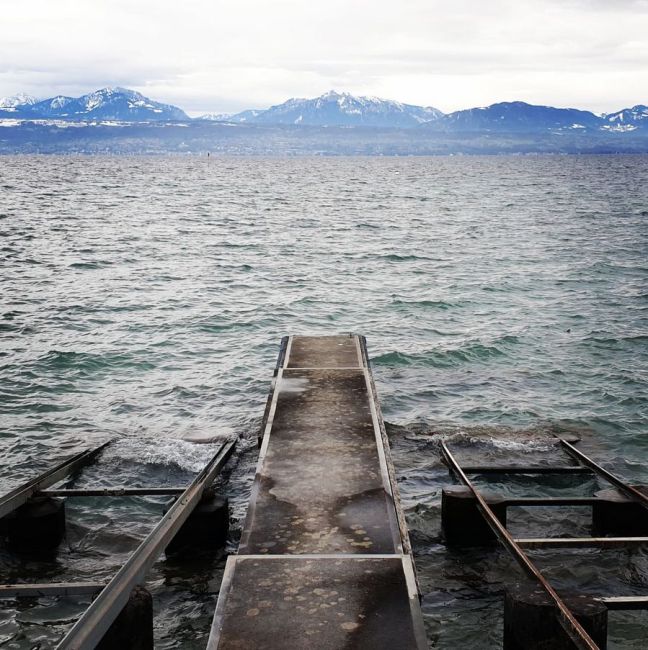
I spent my Christmas again this year in the Vaud region of Switzerland, running away from the noise of my work and the fears of my new reality after a life-changing medical experience. Returning to Saint Sulpice, I found that in addition to the care, love and attention of good friends, the nearby lake too has restorative properties. Lake Geneva, referred to locally as Lac Leman, is a vast expanse of water. It makes up part of the Rhône River, for which I’m particularly grateful, because those waters pass into France and quench the thirst of the thirsty hills in southern France (where some of my favorite wines are grown) before it (the Rhône) rolls into the Mediterranean.

But getting back to the Lake. It is a work of natural art, an expresser of moods and a giver of visual games depending on your vantage point. For me though, this year, it represented therapy; a respite from the worries of the (home) office and global concerns about whether 2022 would finally be the year the world moves past Covid life. I love the Lake especially because each morning the weather above it provides a different view: would we see France and its Alps, or would they be blanketed in lake-generated clouds and fog? Or would the sun dazzle us with how it reflected off the purple-gray mountains and their snow-crested peaks, offering incredible combinations of cerulean, azure, bronze or amethyst with its shadows and reflections. The morning view of the Lake tends to set your mood for the day.

And then there is Leman’s healing force. No wonder so many über fit Swiss folk choose the lakeside as the route for their daily runs or regular walks with their canine companions. Cozy footpaths intermingle with asphalt pavements to offer endless opportunities for the locals to see the Lake’s beauty from manifold angles. This of course gives my friends, once I’m armed with my smartphone camera and ambling along the Lake, cause for dread of my afternoon Instagram/FB posts, where I share for maybe the 9,000th time a slightly different shot of Leman: both its mood and robing for the day.

It was these daily photo sessions, my late morning promenades Ouchy-way or my walks with Jean, Izzi and Poppy that helped me feel a bit safer in my post-surgery world. And more confident in my ability to recuperate and to move forward with life. Each courteous bonjour and each playful chastising of Izzi when speaking to her in Czech made me slightly more certain that I was getting better and reminded me to be thankful for the health I had regained. It was all these faces and moods of Lac Leman that showed me each day would be different: some sunny, some overcast, some full of bluster, but all of them survivable. 

So I took to the Lake with gusto; usually a bit wobbly at first, wondering if my goals of 10K steps were perhaps a bit too ambitious. But as the waters set the tempo and empty benches along the shores invited me for a bit of rest, I learned to trust myself and work to the rhythm of Leman. The Lake is a constant. She is in no rush. She takes contentment in knowing she nourishes the lives of so many towns and villages on her shores and provides both travel routes and entertainment for the people who cross or play in her; from tourists and locals looking to make their way over to Évian-les-Bains (home of the well known spring water) or for the local ferry captains, fishermen, paddle boarders and/or windsurfers to whom the Lake offers both work and play.

From mid-December to mid-January, I had the good fortune to stay with great friends living near the Lake and take advantage of their overly-generous hospitality, and I downed all the medicine that Leman had to offer. I would soak in her sunshine, let her wind whip my hair and chill my face, listen to her stories told in the waves lapping on the shore, and watch her moods change as the clouds and light came and went. I am grateful for the Lake and knowing she is always there for me should I need to abuse her of the curative powers of her ample calm and spiritual nourishment.

Armenia: I (wish I could) take away your pain

Հայաստան։ ցավդ տանեմ

One of the phrases you hear quite often when you live in Armenia, or a phrase you notice quickly as a foreigner living there, is ցավդ տանեմ. It literally means “I take your pain.”  It is a special phrase that I initially thought to be rather trite or overused because you constantly hear it said in daily conversations.

However, it took me a year of living in Armenia and about a half-year (post-Armenia) of reflecting on those words to really understand them. To actually “get them” as we say in English. Learning about Armenian culture and the aftermath of the genocide at the start of the 20th century, you begin to understand that Armenians know something about pain. They’ve had their fair share of suffering. But the special part of the unique Armenian experience, at least for me while living there, is how much of the pain of family, colleagues and even strangers they are willing to take on as their own burden. If they say ցավդ տաեեմ։  to you, they honestly mean that through some act, big or small, they would like to make your situation better.

As I watch the events unfold in Artsakh (commonly called Nagorno-Karabakh, but I use the Armenian term because of the bonds I formed with Armenians and my ties to families whose sons have been drafted), I think yet again about the selflessness of the Armenian people. They are so hospitable and welcoming, and the struggle of Armenian populations in Artsakh really is their struggle. It is also a painful situation that reminds them of the events of 1914-1923 that saw Armenians lose access to over half their native lands and be forced into a world that was sometimes welcoming, sometimes not. Of course, in many cases they had to survive the forced marches across the Syrian desert to even gain access to new lives and new opportunities.

Yet, if you look now, as their diaspora rises up to speak about the unnecessary and destabilizing conflict and aggression (fomented by present-day Armenia’s Western neighbor and easily seized upon by their Eastern one), you see the greater Armenian global family come to life. You hear the slowly growing cry of ցավդ տանեմ as Armenians from all around the world work to raise awareness of the larger problems of the Azeri-Armenian conflict and to support their kinfolk. Armenians in the diaspora from California in the USA to the shores of Lebanon, from the streets of Paris or even Prague’s Old Town Square are calling for the world to act: to see the pain and suffering caused, not so much by Azeri-Armenian-instigated fighting, i.e. that of two peoples, but rather by the work of two despots Erdogan and Aliyev, who have exacerbated conflict for political gain. These two men have taken advantage of the instability, suffering and chaos of a Covid-stricken world and are using aggression to distract domestic populations from their own shortcomings as leaders.

In 2018, the people of Armenia went to the streets, they elected a reform-minded government. They had what they called their Velvet Revolution: in fact, that makes Armenia the second country I’ve called home for a time that has had such a calm, people-driven call for change and reforms that led down the path to a peaceful, democratic existence.  I want the Armenians to be able to continue down that path.  I want to scream from the top of my lungs to all my Armenian friends, to the youth of that country, to the peoples of Artsakh seeking self-determination: ցավդ տաեեմ։  I want you all to have the peace and prosperity you so deserve, and I wish I could take away your pain.


History and Agriculture in the Wachau

In a whirlwind day trip last Saturday, I had the pleasure of re-experiencing one of the most beautiful sections of the Danube river valley: the Wachau. It includes a short section an important European waterway full of stories from history dating back to Richard the Lionheart.  In fact, it was in the village where he was imprisoned, Dürnstein, that we made our first stop. We descended our bus at the water’s edge and turned, on foot, up a slowly inclining cobblestone road that led to the village center. From the retainer walls that once protected the old town, one could take in expansive views of the Blue Danube and look west to the central Wachau valley.

Above Dürnstein village sit the ruins of the old castle where Richard was imprisoned; it stands precariously on the crags and rocky cliffs that rise above the river in this area. It was a special treat to stop here, as I had read last year about Richard the Lionheart’s capture and imprisonment in the excellent travel diary by Patrick Leigh Fermor, A Time of Gifts. I had first travelled through the Wachau in 2009 on a charity bike ride, The MAD Danube Odyssey, and was wondering how I had missed stopping at this site. 

After a quick peak at the abbey in Dürnstein and its colorful, baroque architecture, we quickly boarded our bus to move further upstream to Melk, the western gateway to the Wachau. Melk is famous for its chateau and monastery where monks still study and serve to this day. The yellow-tinged chateau, known for its role in education and the local economy, sits like a dreamy wedding cake atop a precipice looking down on the Danube. It bids welcome to all travelers as they float downstream into the Wachau region. The Melk chateau and abbey is vast in size with its large courtyards, its impressive baroque church and its library with an enormous collection of scholarly works focused on law, theology, philosophy and economics. 

It is at the western end of the chateau complex that visitors can take in breathtaking views of the Danube below, the quaint town of Melk, and the expanses of fields and forests that line the mighty river. When exiting the chateau complex at its eastern end, visitors can wander through a lovely set of French gardens that are immaculately groomed and offer pleasant respite from the bustle of the tours in the chateau/abbey proper. These quiet parks and garden paths are lined with lovely roses, blooming shrubs, and stands of asters that announce the arrival of autumn. 

After a short walk through Melk’s town center, we boarded our boat that would take us downstream to Krems. The boat ride was a wonderful way to soak in all the life and history that lines the Danube river. As we floated along, we saw the numerous vineyards that produce some of Austria’s best Grüner Veltliner wines and the orchards full of apricots and pears. In almost all larger towns of the Wachau, you can find stores that offer you multiple apricot- and pear-based products: schnapps, marmalades and jams, nectars and sirups, and very sweet wines. Also, in this area, you will find that pumpkins and squashes are very popular. That’s why many shops will also sell Kürbiskernöl (pumpkin seed oil), which is a wonderful treat for flavoring salads.

As we went downstream, we saw the castle at Schönbühel, the romantic village of Weissenkirchen, the ancient church of St. Michael with its legend of the rabbits, and the impressive Göttweig Abbey which presides over the eastern Wachau with stateliness and majesty.  Our tour wound down in Krems an der Donau, where we disembarked out boat and made our way to the town center. Krems houses a wide array of architecture and landmarks; beginning with the Center for the Arts (once a former cigarette factory) near the boat docks, then passing by the university campus and the Karikaturmuseum, before reaching the central city park and the Steiner Tor (a gate to the old town).

My visit to the Wachau was quick, but it was definitely a trip I would repeat again over a long weekend. The magnificent vistas coupled with the calming flow of one of Europe’s most important waterways make the Wachau Valley a must see. Accessible by train, bus, car or bike, it’s worth it to treat yourself perhaps to a sun-filled day of leisurely cycling followed by a big plate of hearty Austrian cuisine (perhaps the pumpkin gnocchi) and a glass of crisp, white Wachau wine. Prost und guten Appetit.

Wandering Lužnice (Pt. 2)

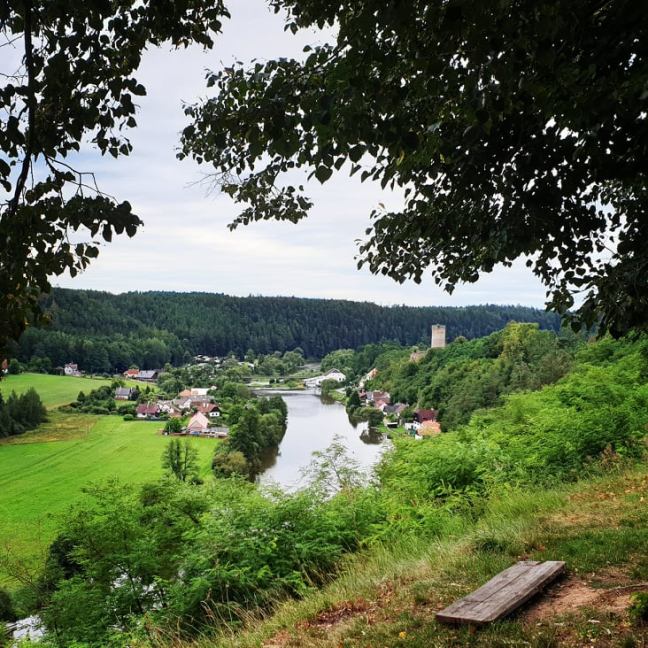
When finishing my previous post on hiking the Lužnice River trail in southern Bohemia, my friends and I had just arrived to the picturesque village of Dobronice u Bechyně. The hike into Dobronice was a tiring, but visually-pleasing finale to a long day of walking. As you approach the village, the path veers away from the river up a fairly steep hill that offers specials vistas of the Lužnice River from above. You see the water wind its way around the village below where small mills hug the right bank and the clackety-clack of the village’s single wooden bridge echoes up from the valley below. 

As you hike to the village center you first pass a look-out point just next to the Church of the Assumption of the Blessed Virgin, which sits in serene isolation at the village’s eastern edge. The marked footpath takes hikers back down to the river, while guiding them alongside the entry to the ruins of what was once Dobronice castle. The castle’s one remaining tower can be seen from the walking path and also from several points along the river below. 

We stayed overnight at a local bed and breakfast and gobbled up the tasty traditional Czech food that the innkeeper prepared. There was sumptuous roast pig, traditional beef goulash and also typical fried edam cheese (that’s the option I chose, because I hadn’t had any in a good while). The bed breakfast/inn offered nice views of the river and I fell asleep that night to the sound of stray cars clanking across the nearby bridge. 

Waking up the next day, we had a special visual treat in the fog lifting off the river and clouding the air around us as we enjoyed our breakfast. It was a quick meal, as we still had about 15 km before us and wanted to get an early start to our final destination of Bechyně. The start of the path was merciful: it began with roughly 3-4 km of tromping over footpaths through dew-covered meadows before once again returning to the mud/rock combo paths they we had regularly encountered the day before. 

It was during this segment of our hike that we got to enjoy the serenity of the Lužnice. Not many rafters and kayakers were out on the water yet, so we took advantage of the morning sun and sitting on the boulders that lay along the riverbanks. The large flat rocks offered the perfect place for sunbathing or for jumping into the refreshing water. Unfortunately though, we were short on time, so we quickly carried on along the riverside path that would intermittently offer sections of marsh where we would hop from one wood plank to the next or sections of rugged cliffs facing the river. These fascinating rock formations were frequently laden with ferns and lush moss.  

Slowly, our river path gave way to gravel roads that led to a series of small cottages that are part of the village Senožaty. I later learned that a friend of mine from East Bohemia has a cottage there where he and his family often stay in summer months. After that, our path would once again pull us away from the river rising into dense beech, pine and spruce forests that would lead to the edge of Bechyně. The forests smelled of pine needles and were just damp enough to offer prime growing conditions for the various types of mushrooms that are found throughout the Czech Republic. We even came across some chanterelles; yet not enough to pick for a good sauce to accompany our dinner.

Within 15 minutes or so, we were out of the forest and walking a field path that would lead us into Bechyně. The smells of autumn surrounded us: fields had been harvested and local apple trees had begun to shed their fruit. We stopped for a last group photo by the sign marking the town limits and then walked into the center to enjoy our “victory coffee”.  With my feet starting to protest a little too much, I left my friends to explore the beautiful chateau in Bechyně and to look at its lovely gardens. I, on the other hand, slowly began my way back to the local rail station and took in views of the public park that surrounds the town’s local spas. It was a wonderful end to the weekend: enjoyed with last-minute photos on Bechyně’s main square and catching glimpses of the town’s “rainbow bridge” as we took the train back to Tábor where we would pick up our car. It took my feet 3-4 days to forgive me for our weekend sojourn, but it was well worth it in the end.

Wandering Lužnice (Pt. 1)

It was a couple weeks ago that two friends and I went hiking along the Lužnice River in southern Bohemia. The Lužnice (called the Lainsitz in German) originates in Austria and we decided to walk the stretch from Planá nad Lužnicí to Běchyně. This portion features serene, mildly-flowing waters that attract swimmers, cyclists, rafters, and hikers like ourselves.

Our first afternoon, a roughly 17km trek, had us walking through various towns and villages just south of the larger town/city, Tábor. It’s an area full of small cottages and well-kept gardens, where local residents use the path along the river to make their trips to visit friends or to their local grocers more pleasant. The first part of the route was rendered more enjoyable by the cool breeze flowing up off the water and the views of gardens that townsfolk seemingly attend to with great care. The river path is brightened with the radiant yellow of sunflowers, the blazing reds of dahlias and cosmos, and the regal purply-blues of late-summer asters.

As we neared the first crossing to head up into the forests south of Tábor, my friends decided to take a dip in the river and to enjoy the refreshing chill of the water. Such a treat was much needed in the sweltering heat of that Friday’s 36-37°C sun. After taking some time to rest and dry off, we stopped for a quick beer in Sezimovo Ústí and then crossed the pedestrian bridge into the forests and glades on the opposite side. The welcome shade cooled us off as we made our way to the Tábor Zoo in the village, Větrovy. By the time we neared the village, the forest had given way and the late afternoon sun was punishing. As we neared the center of the village, we quickly acquiesced to the bidding of a local ice cream salesman, whose wares we hadn’t realized we so sorely needed. It would be his vanilla/pistachio soft-serve that sustained us all the way down the hill into Tábor. In roughly an hour, we descended into the city; via the quiet villages of Horky and Čelkovice. That night the beers served with dinner never tasted better. Then we capped of the evening with a brief tasting of Romanian wines that my friends would later bring back to Prague in ample supply.

The second day, after a night of troubled sleep in a mistakenly-booked B&B that turned out to be a hostel, saw us up early to get a quick start at the 20+ km that lie before us. This was admittedly the most beautiful part of our hike as we set out from Tábor with riverside views of First Republic villas and once active mills that had previously ground grain for nearby villagers and Tábor residents. It was during this portion of our hike that we met our first rafters and kayakers who had chosen to spend their weekend “taming” the Lužnice. Our path and the terrain along it varied repeatedly: with different segments of asphalt road amendable to cyclists interspersed with muddy marshlands and sometimes precariously placed boulders. Here, the river twists and turns until you get to the highly anticipated points that the Toulavá Lužnice website describes in its path highlights: the cliff tunnel after the Breda path intersection and the hanging boardwalk that takes you around the bend right to the Příběnice camping area. It was in Příběnice where a belated lunch (coupled with slower-than-average service and a missing Wi-Fi connection) sent one of my friends into a panic.

But luckily abundant beer would soothe his nerves. Once again, the Czech tradition of generously placing pubs along bike routes and hiking paths did not disappoint. And soon we were fortified with the golden treasure that is Pilsner beer. A second pitstop at the nearby campsite close to the Lužničanka settlement would fortify us even more. Soon we would be nearing the Empire-style bridge below Stadlec after braving the muddy, uneven path that would become slightly more treacherous as we ceded way to families of cyclists who hadn’t anticipated the difficult terrain. Many of them would find themselves faced with the repeated choice: ride and risk flying into the water or just carry their bicycles a good part of the way. It was under the Stadlec Bridge where we would take some extra time to rest our weary feet and enjoy the coolness of the Lužnice’s now rapid-flowing waters. Swimming and soaking our sore limbs, we admired the rafters as they worked to negotiate the sluices below the bridge.

Soon, we reluctantly shoed back up and embarked on the last part of our journey for that day: heading to our accommodation in Dobronice. It was that early evening segment of the Lužnice path that tested our mettle. With the final few kilometers making the whole day’s pedestrian (meant here in the hiking sense) efforts all worthwhile. We pushed our way up the final ascent just before Dobronice where we got our first views of the winding waterway from up above. We took a short pause at the Chapel of the Assumption of the Blessed Virgin to get some glimpses of the sunset and to admire the mills along the river below, near which we would soon be having dinner and getting a good night’s sleep.

Living in three spaces

I haven’t felt like blogging for a while. Or perhaps it’s more that I didn’t know where to go with my writing. It’s been half a year now since I returned (unexpectedly) from northern Armenia.  Now is the moment where the change starts to gel or solidify. I realize that, while I can still hold a conversation in հայերեն, it’s more difficult to recall words that used to be commonplace.  Memories are beginning to fade, and moments of daily life are more distant … saying hello to Manvel who lived in the first floor of my building. He knew three sentences in English, but he greeted me religiously every time I walked by. Always reminding me that I was welcome in Vanadzor and in Armenia in general.  I miss the moments spent persuading fruit and veg vendors that Russian wasn’t my native tongue, and that I could get through a conversation in my pigeon Armenian. I miss the lady from my “beer garden” in Tigran Mets Avenue, who gradually got used to my arriving mid-afternoon on Saturdays after a hike: book in hand, just me, myself and I … ready for a cold draught beer. 

Now as the Czech summer ends and I watch videos, listen to songs, or browse through photos so I can cling to the recollections of my Armenian adventure, I gradually merge the similarities of three specific places I once called home. 

I’m a rural person at heart. I spent my childhood wanting to escape small town life. My dad had aspirations that I would become a farmer and work with animals: as had been his dream. But my hopes went farther. I’m not sure if it was the genetics of my ever-moving paternal grandmother or the travel tales recounted by my very wise neighbor. But I knew I wanted life beyond any local farm. Funny thing is though: despite becoming a city-slicker, I never forsook my rural upbringing or time spent working with my dad, uncles and grandmother. It is the long thread of rural life that, for me, binds Missouri with rural Bohemia and the pastures of Armenia’s Lorri region. In the fields of all those lands, I see and feel the memory of my dad and his dreams; secretly hoping that some of my life’s adventures have made him proud.

Good people are worth listening to. Something inside me tends to be averse to seeking out conversation. However, many places I have lived so easily lent themselves to impromptu chats and discussion. Whether it be the doorways of stores on Brookfield’s Main Street, the garden pub of a Czech village along a random bike route, or the encounters with shepherds as they moved their herds between northern Armenia’s lush, green hills. They all began as strangers to me, yet we ended with many bonds: some had family that had emigrated, others had seen American TV shows or had travelled to Prague on a family holiday. It was my wary, skeptical entries into these numerous, ad hoc chats that confirmed to me that as citizens of the world we are all ostensibly different but very much still the same in our curiosity and desire to learn about and connect with others.

The women of my past prepared me for my future.  Then there’s the W factor. As mentioned above, it was the women of my childhood who told me of the world outside my hometown. They assured me that studying and hard work would give me access to that world. And as the years prove them right, I remember and channel their spirits as I mull new adventures and live new experiences. In my mind, I talked to Elsie as I admired the gardens of many an Armenian grandmother. I give thanks to Louise and Mildred for their nurturing my interest in languages and travel and for helping make possible my first TWA flight to Paris. I summon the courage of Jacqueline anytime I’m not sure I have what it takes to defend myself and fight for what is just in the world. How she so nonchalantly stated in that Parisian tailor’s shop: I survived the Nazis; I’m hardly going to cower to a greedy, deceitful clothing store owner.

It’s been a difficult summer reminiscing about my homes old and new. But I am forever grateful for the lessons they taught me and the people from those places who enriched my spirit more than I ever could have imagined.