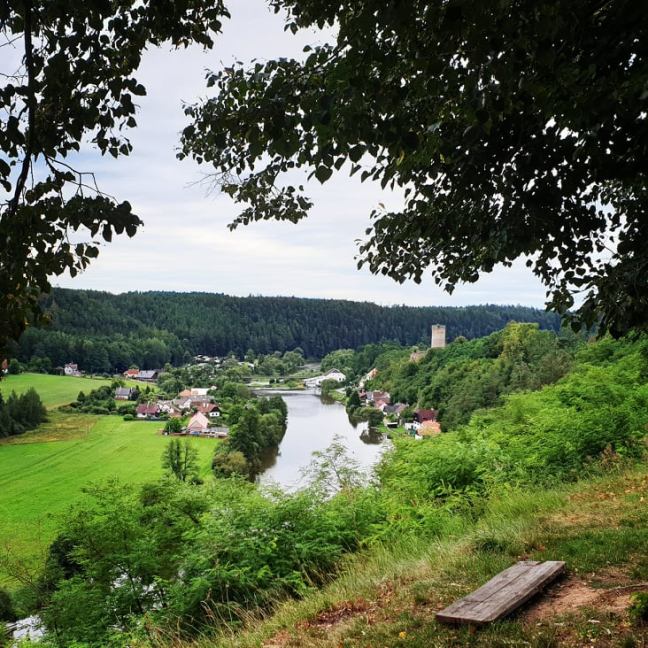
Autumn Lockdown

Walking from coffee, 
In anticipation of rain.
Thoughts like leaves, 
Flutter through my brain.

Could I make it to the river,
Without getting wet.
To guesstimate Prague weather,
Would be a fool's bet.

The day was so indifferent,
A sky of pinks and grays.
Colored leaves squealed the end of autumn,
Through a milky, sun-tinged haze.

I thought of coming seasons,
As I climbed the Kinský garden hills.
A virus has imprisoned us,
I fear a new year void of thrills.

So now I sit by the wading pond,
As dogs circle my legs.
One dashes into the water,
While the other nears me to beg.

Soon I will rise,
For to Malá Strana I descend.
My fall stroll will finish,
Having more coffee with friends.

History and Agriculture in the Wachau

In a whirlwind day trip last Saturday, I had the pleasure of re-experiencing one of the most beautiful sections of the Danube river valley: the Wachau. It includes a short section an important European waterway full of stories from history dating back to Richard the Lionheart.  In fact, it was in the village where he was imprisoned, Dürnstein, that we made our first stop. We descended our bus at the water’s edge and turned, on foot, up a slowly inclining cobblestone road that led to the village center. From the retainer walls that once protected the old town, one could take in expansive views of the Blue Danube and look west to the central Wachau valley.

Above Dürnstein village sit the ruins of the old castle where Richard was imprisoned; it stands precariously on the crags and rocky cliffs that rise above the river in this area. It was a special treat to stop here, as I had read last year about Richard the Lionheart’s capture and imprisonment in the excellent travel diary by Patrick Leigh Fermor, A Time of Gifts. I had first travelled through the Wachau in 2009 on a charity bike ride, The MAD Danube Odyssey, and was wondering how I had missed stopping at this site. 

After a quick peak at the abbey in Dürnstein and its colorful, baroque architecture, we quickly boarded our bus to move further upstream to Melk, the western gateway to the Wachau. Melk is famous for its chateau and monastery where monks still study and serve to this day. The yellow-tinged chateau, known for its role in education and the local economy, sits like a dreamy wedding cake atop a precipice looking down on the Danube. It bids welcome to all travelers as they float downstream into the Wachau region. The Melk chateau and abbey is vast in size with its large courtyards, its impressive baroque church and its library with an enormous collection of scholarly works focused on law, theology, philosophy and economics. 

It is at the western end of the chateau complex that visitors can take in breathtaking views of the Danube below, the quaint town of Melk, and the expanses of fields and forests that line the mighty river. When exiting the chateau complex at its eastern end, visitors can wander through a lovely set of French gardens that are immaculately groomed and offer pleasant respite from the bustle of the tours in the chateau/abbey proper. These quiet parks and garden paths are lined with lovely roses, blooming shrubs, and stands of asters that announce the arrival of autumn. 

After a short walk through Melk’s town center, we boarded our boat that would take us downstream to Krems. The boat ride was a wonderful way to soak in all the life and history that lines the Danube river. As we floated along, we saw the numerous vineyards that produce some of Austria’s best Grüner Veltliner wines and the orchards full of apricots and pears. In almost all larger towns of the Wachau, you can find stores that offer you multiple apricot- and pear-based products: schnapps, marmalades and jams, nectars and sirups, and very sweet wines. Also, in this area, you will find that pumpkins and squashes are very popular. That’s why many shops will also sell Kürbiskernöl (pumpkin seed oil), which is a wonderful treat for flavoring salads.

As we went downstream, we saw the castle at Schönbühel, the romantic village of Weissenkirchen, the ancient church of St. Michael with its legend of the rabbits, and the impressive Göttweig Abbey which presides over the eastern Wachau with stateliness and majesty.  Our tour wound down in Krems an der Donau, where we disembarked out boat and made our way to the town center. Krems houses a wide array of architecture and landmarks; beginning with the Center for the Arts (once a former cigarette factory) near the boat docks, then passing by the university campus and the Karikaturmuseum, before reaching the central city park and the Steiner Tor (a gate to the old town).

My visit to the Wachau was quick, but it was definitely a trip I would repeat again over a long weekend. The magnificent vistas coupled with the calming flow of one of Europe’s most important waterways make the Wachau Valley a must see. Accessible by train, bus, car or bike, it’s worth it to treat yourself perhaps to a sun-filled day of leisurely cycling followed by a big plate of hearty Austrian cuisine (perhaps the pumpkin gnocchi) and a glass of crisp, white Wachau wine. Prost und guten Appetit.

Wandering Lužnice (Pt. 2)

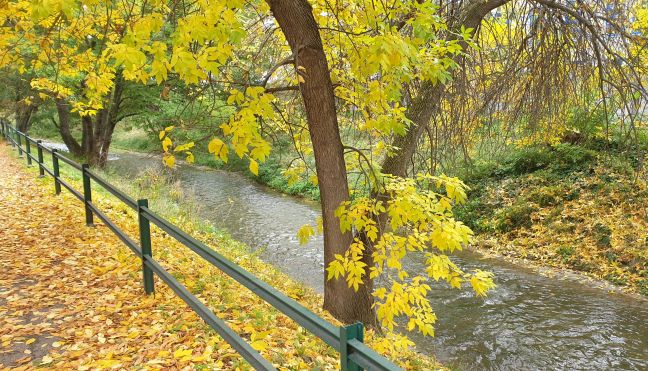
When finishing my previous post on hiking the Lužnice River trail in southern Bohemia, my friends and I had just arrived to the picturesque village of Dobronice u Bechyně. The hike into Dobronice was a tiring, but visually-pleasing finale to a long day of walking. As you approach the village, the path veers away from the river up a fairly steep hill that offers specials vistas of the Lužnice River from above. You see the water wind its way around the village below where small mills hug the right bank and the clackety-clack of the village’s single wooden bridge echoes up from the valley below. 

As you hike to the village center you first pass a look-out point just next to the Church of the Assumption of the Blessed Virgin, which sits in serene isolation at the village’s eastern edge. The marked footpath takes hikers back down to the river, while guiding them alongside the entry to the ruins of what was once Dobronice castle. The castle’s one remaining tower can be seen from the walking path and also from several points along the river below. 

We stayed overnight at a local bed and breakfast and gobbled up the tasty traditional Czech food that the innkeeper prepared. There was sumptuous roast pig, traditional beef goulash and also typical fried edam cheese (that’s the option I chose, because I hadn’t had any in a good while). The bed breakfast/inn offered nice views of the river and I fell asleep that night to the sound of stray cars clanking across the nearby bridge. 

Waking up the next day, we had a special visual treat in the fog lifting off the river and clouding the air around us as we enjoyed our breakfast. It was a quick meal, as we still had about 15 km before us and wanted to get an early start to our final destination of Bechyně. The start of the path was merciful: it began with roughly 3-4 km of tromping over footpaths through dew-covered meadows before once again returning to the mud/rock combo paths they we had regularly encountered the day before. 

It was during this segment of our hike that we got to enjoy the serenity of the Lužnice. Not many rafters and kayakers were out on the water yet, so we took advantage of the morning sun and sitting on the boulders that lay along the riverbanks. The large flat rocks offered the perfect place for sunbathing or for jumping into the refreshing water. Unfortunately though, we were short on time, so we quickly carried on along the riverside path that would intermittently offer sections of marsh where we would hop from one wood plank to the next or sections of rugged cliffs facing the river. These fascinating rock formations were frequently laden with ferns and lush moss.  

Slowly, our river path gave way to gravel roads that led to a series of small cottages that are part of the village Senožaty. I later learned that a friend of mine from East Bohemia has a cottage there where he and his family often stay in summer months. After that, our path would once again pull us away from the river rising into dense beech, pine and spruce forests that would lead to the edge of Bechyně. The forests smelled of pine needles and were just damp enough to offer prime growing conditions for the various types of mushrooms that are found throughout the Czech Republic. We even came across some chanterelles; yet not enough to pick for a good sauce to accompany our dinner.

Within 15 minutes or so, we were out of the forest and walking a field path that would lead us into Bechyně. The smells of autumn surrounded us: fields had been harvested and local apple trees had begun to shed their fruit. We stopped for a last group photo by the sign marking the town limits and then walked into the center to enjoy our “victory coffee”.  With my feet starting to protest a little too much, I left my friends to explore the beautiful chateau in Bechyně and to look at its lovely gardens. I, on the other hand, slowly began my way back to the local rail station and took in views of the public park that surrounds the town’s local spas. It was a wonderful end to the weekend: enjoyed with last-minute photos on Bechyně’s main square and catching glimpses of the town’s “rainbow bridge” as we took the train back to Tábor where we would pick up our car. It took my feet 3-4 days to forgive me for our weekend sojourn, but it was well worth it in the end.

Wandering Lužnice (Pt. 1)

It was a couple weeks ago that two friends and I went hiking along the Lužnice River in southern Bohemia. The Lužnice (called the Lainsitz in German) originates in Austria and we decided to walk the stretch from Planá nad Lužnicí to Běchyně. This portion features serene, mildly-flowing waters that attract swimmers, cyclists, rafters, and hikers like ourselves.

Our first afternoon, a roughly 17km trek, had us walking through various towns and villages just south of the larger town/city, Tábor. It’s an area full of small cottages and well-kept gardens, where local residents use the path along the river to make their trips to visit friends or to their local grocers more pleasant. The first part of the route was rendered more enjoyable by the cool breeze flowing up off the water and the views of gardens that townsfolk seemingly attend to with great care. The river path is brightened with the radiant yellow of sunflowers, the blazing reds of dahlias and cosmos, and the regal purply-blues of late-summer asters.

As we neared the first crossing to head up into the forests south of Tábor, my friends decided to take a dip in the river and to enjoy the refreshing chill of the water. Such a treat was much needed in the sweltering heat of that Friday’s 36-37°C sun. After taking some time to rest and dry off, we stopped for a quick beer in Sezimovo Ústí and then crossed the pedestrian bridge into the forests and glades on the opposite side. The welcome shade cooled us off as we made our way to the Tábor Zoo in the village, Větrovy. By the time we neared the village, the forest had given way and the late afternoon sun was punishing. As we neared the center of the village, we quickly acquiesced to the bidding of a local ice cream salesman, whose wares we hadn’t realized we so sorely needed. It would be his vanilla/pistachio soft-serve that sustained us all the way down the hill into Tábor. In roughly an hour, we descended into the city; via the quiet villages of Horky and Čelkovice. That night the beers served with dinner never tasted better. Then we capped of the evening with a brief tasting of Romanian wines that my friends would later bring back to Prague in ample supply.

The second day, after a night of troubled sleep in a mistakenly-booked B&B that turned out to be a hostel, saw us up early to get a quick start at the 20+ km that lie before us. This was admittedly the most beautiful part of our hike as we set out from Tábor with riverside views of First Republic villas and once active mills that had previously ground grain for nearby villagers and Tábor residents. It was during this portion of our hike that we met our first rafters and kayakers who had chosen to spend their weekend “taming” the Lužnice. Our path and the terrain along it varied repeatedly: with different segments of asphalt road amendable to cyclists interspersed with muddy marshlands and sometimes precariously placed boulders. Here, the river twists and turns until you get to the highly anticipated points that the Toulavá Lužnice website describes in its path highlights: the cliff tunnel after the Breda path intersection and the hanging boardwalk that takes you around the bend right to the Příběnice camping area. It was in Příběnice where a belated lunch (coupled with slower-than-average service and a missing Wi-Fi connection) sent one of my friends into a panic.

But luckily abundant beer would soothe his nerves. Once again, the Czech tradition of generously placing pubs along bike routes and hiking paths did not disappoint. And soon we were fortified with the golden treasure that is Pilsner beer. A second pitstop at the nearby campsite close to the Lužničanka settlement would fortify us even more. Soon we would be nearing the Empire-style bridge below Stadlec after braving the muddy, uneven path that would become slightly more treacherous as we ceded way to families of cyclists who hadn’t anticipated the difficult terrain. Many of them would find themselves faced with the repeated choice: ride and risk flying into the water or just carry their bicycles a good part of the way. It was under the Stadlec Bridge where we would take some extra time to rest our weary feet and enjoy the coolness of the Lužnice’s now rapid-flowing waters. Swimming and soaking our sore limbs, we admired the rafters as they worked to negotiate the sluices below the bridge.

Soon, we reluctantly shoed back up and embarked on the last part of our journey for that day: heading to our accommodation in Dobronice. It was that early evening segment of the Lužnice path that tested our mettle. With the final few kilometers making the whole day’s pedestrian (meant here in the hiking sense) efforts all worthwhile. We pushed our way up the final ascent just before Dobronice where we got our first views of the winding waterway from up above. We took a short pause at the Chapel of the Assumption of the Blessed Virgin to get some glimpses of the sunset and to admire the mills along the river below, near which we would soon be having dinner and getting a good night’s sleep.

Living in three spaces

I haven’t felt like blogging for a while. Or perhaps it’s more that I didn’t know where to go with my writing. It’s been half a year now since I returned (unexpectedly) from northern Armenia.  Now is the moment where the change starts to gel or solidify. I realize that, while I can still hold a conversation in հայերեն, it’s more difficult to recall words that used to be commonplace.  Memories are beginning to fade, and moments of daily life are more distant … saying hello to Manvel who lived in the first floor of my building. He knew three sentences in English, but he greeted me religiously every time I walked by. Always reminding me that I was welcome in Vanadzor and in Armenia in general.  I miss the moments spent persuading fruit and veg vendors that Russian wasn’t my native tongue, and that I could get through a conversation in my pigeon Armenian. I miss the lady from my “beer garden” in Tigran Mets Avenue, who gradually got used to my arriving mid-afternoon on Saturdays after a hike: book in hand, just me, myself and I … ready for a cold draught beer. 

Now as the Czech summer ends and I watch videos, listen to songs, or browse through photos so I can cling to the recollections of my Armenian adventure, I gradually merge the similarities of three specific places I once called home. 

I’m a rural person at heart. I spent my childhood wanting to escape small town life. My dad had aspirations that I would become a farmer and work with animals: as had been his dream. But my hopes went farther. I’m not sure if it was the genetics of my ever-moving paternal grandmother or the travel tales recounted by my very wise neighbor. But I knew I wanted life beyond any local farm. Funny thing is though: despite becoming a city-slicker, I never forsook my rural upbringing or time spent working with my dad, uncles and grandmother. It is the long thread of rural life that, for me, binds Missouri with rural Bohemia and the pastures of Armenia’s Lorri region. In the fields of all those lands, I see and feel the memory of my dad and his dreams; secretly hoping that some of my life’s adventures have made him proud.

Good people are worth listening to. Something inside me tends to be averse to seeking out conversation. However, many places I have lived so easily lent themselves to impromptu chats and discussion. Whether it be the doorways of stores on Brookfield’s Main Street, the garden pub of a Czech village along a random bike route, or the encounters with shepherds as they moved their herds between northern Armenia’s lush, green hills. They all began as strangers to me, yet we ended with many bonds: some had family that had emigrated, others had seen American TV shows or had travelled to Prague on a family holiday. It was my wary, skeptical entries into these numerous, ad hoc chats that confirmed to me that as citizens of the world we are all ostensibly different but very much still the same in our curiosity and desire to learn about and connect with others.

The women of my past prepared me for my future.  Then there’s the W factor. As mentioned above, it was the women of my childhood who told me of the world outside my hometown. They assured me that studying and hard work would give me access to that world. And as the years prove them right, I remember and channel their spirits as I mull new adventures and live new experiences. In my mind, I talked to Elsie as I admired the gardens of many an Armenian grandmother. I give thanks to Louise and Mildred for their nurturing my interest in languages and travel and for helping make possible my first TWA flight to Paris. I summon the courage of Jacqueline anytime I’m not sure I have what it takes to defend myself and fight for what is just in the world. How she so nonchalantly stated in that Parisian tailor’s shop: I survived the Nazis; I’m hardly going to cower to a greedy, deceitful clothing store owner.

It’s been a difficult summer reminiscing about my homes old and new. But I am forever grateful for the lessons they taught me and the people from those places who enriched my spirit more than I ever could have imagined.   

I own nothing but I have everything

When I think back on my time in the East
And entering a land about which I knew little
With no idea what to expect
Of the people that await

And as we greeted each other with apprehension
Reservations about who I was
And what they expected of me
Twice the age of the other “invaders”

Superficial worldviews would say
Comparatively, they had little
Yet never did we/they want
For all life’s essentials

Smiles were abundant
Coffee was plenty
A step over any threshold
Was a call for plates of sweets
And the best any household had to offer

As I approach the year fifty
And berate myself
For not owning a house, not owning a car
While still asking almost daily
What ownership means

I have so many possessions
That I keep inside me
Stores of memories, laughter, tears and embraces
And stories or legends shared
Of lessons my life road has taught me

I no longer worry
About the property I have not yet collected
For my most valuable possession
Is the real estate of my heart

I own nothing, but I have everything

The (Swiss) hills are alive …

It’s been awhile since I’ve added to this blog. That’s mainly because the past few months have been about readjusting to life in Central Europe and trying to get things organized in my business. However, I recently had the good fortune, once Europe re-opened its borders, to go spend two weeks hiding out with some very special friends, Pete and Laura, at their home in St. Sulpice, Switzerland.  It’s a cute little town/village/suburb on the outskirts of Lausanne, and it must be said … they have an awesome view of Lac Léman (Lake Geneva). 

One of my favorite take-aways from my time there was all the gorgeous vistas around the lake; with mountains on every side and the confusing geography that always has you wondering: am I looking at France? Or am I looking at Switzerland.  In any case, there was so much beautiful nature to take in; including the calm waters of Lac Léman, the moody storm clouds rolling in from the Alps or creeping in from the Jura. There was also the morning songs (and sometimes cackles) from the birds who lived near the lake.  When I think back on my visit, I reckon these are some of my favorite memories…

The incessant ringing of the mountains

When we took a Sunday hike in the mountains north of Gland/Arzier, it became immediately apparent that each cow/bull has a bell. And those bells clang non-stop as the animals graze in their alpine pastures and wander to find new meadows unexplored. The sounds give the hills an almost church-like atmosphere where the carillons of cow bells call you to nature’s cathedral and invite you to commune in the lush fields and enjoy the soothing, warm winds that pass through the forests. 

The tangy taste of Gruyère cheese

This was one of my favorite moments during my visit. Parking just below the medieval village of Gruyères and walking through the old gate into this fortified settlement made me feel like I had travelled back in time. As you walk over the cobblestone-paved square and admire the shops and cafés that hark back to a time long ago, you can quickly imagine horse carts and wagons as they must have once brought in wares and crops from the surrounding area. Or vendors as they traded goods from shops and stalls in this hamlet that is home to one of my favorite cheeses. Just down the hill from Gruyères, in the town of Pringy, you can visit the Maison du Gruyère museum and buy all the delicious cheese you want. That coupled with the exquisite views of Le Moléson mountain gives you a sense of serenity and contentment that is worth they journey.

The markets of Évian

Just across Lac Léman from the port at Ouchy lies the peaceful village of Évian les Bains. The town famous for its freshwater springs and its spa hotels makes a nice day trip for visitors from Lausanne, Geneva or the surrounding areas. I travelled there with Laura to explore the Friday farmers’ markets and enjoy the promenade along the waterfront. The animated vendors as they hawk their meats, cheeses and vegetables are a wonderfully intriguing sight to observe. Or sipping a rich cup of coffee while eating a pain au chocolat is just the right treat for starting a holiday weekend.  Plus, there’s the added benefit of looking back at your holiday home on the Swiss side of the lake and taking in the serene Vaudois shores.

I am so grateful to my friends for allowing me to “disappear” at their home for the past couple of weeks. Switzerland and its captivating, hospitable and welcoming countryside was just the right antidote to this spring’s long periods of isolation mandated by the Covid world. If you get the chance to wander through the Swiss mountains and explore the paths that lead you to breathtaking views of the country’s many lakes, definitely seize that opportunity. It’s well worth it.

The sweetest part of Armenia is its fruit

I was looking at some pictures today and noticed that a year ago this time, I was a week away from getting sworn in as a Peace Corps volunteer in Armenia. In my village of Hovtashen in the Ararat region south of Yerevan mulberries (թտւթ) were everywhere. It was a strange, amusing experience. I knew mulberries from my childhood in Missouri. Taste-wise, they were tolerable, but I had never been particularly fond of them. Yet somehow, as with many of life’s simpler experiences in Armenia, the local mulberries were different. They seemed sweeter and there were two kinds: dark and white ones. I had never seen white ones elsewhere. On top of that I learned that Armenians also distill their mulberries and make a very potent alcoholic drink from them. Some might call it brandy in the way people tend to call the distillate from plums in central and eastern Europe plum brandy (locally referred to there using a variation of the word slivovice deriving from the word slivka for plum). Otherwise, in the color sense, it looks what a Missouri kid like me would have called plum moonshine, i.e. it has a color more akin to vodka. All the same, the stuff is strong. And, as I tend to do with the plum brandy from Moravia, I drank a shot first thing in the morning when I felt a cold or sore throat coming on. Just one shot, mind you.

With that intro, I wanted to highlight some of the fruit experiences I enjoyed when I was living in Armenia. So let’s begin.

Apricots / ծիրան

Apricots are synonymous with Armenia: even the orange hue in the country’s flag is referred to as apricot orange. And then there’s the taste: one that can’t be described. They are so rich, sweet and juicy and can be put to many uses. Of course, they can be eaten fresh from the tree or from the markets (if you’re a city dweller). I would always eat them with my host dad Artur when we had evening coffee. Apricots are also used to make a drink/juice referred to as կոմպոտ (compote), which is truly a thick fruit juice and not the jam-like fruit dish we know in English-speaking countries. In addition to that, apricots are dried and stored for the winter: still, the dried fruit has a flavor and juiciness that makes you think it was harvested not more than a week ago. Finally, there is the prized apricot jam that Armenian women all over the country make during late spring. I smuggled two jars of that home to give to friends.

Figs / Թուզ

These are one of my favorite fruits anytime I can get them: fresh from the market or picked from a bush in the wild. Like the mulberries mentioned above, there are two versions: the green ones and the purple/dark ones. I’m generally partial to the purple ones, as they are the variety I know from visits to the beaches of the Mediterranean. On various islands, it was common to pick a handful of figs during pitstops when returning after a day of swimming and sun. There is something about fresh figs that makes them feel like a guilty pleasure; the fact that the vendors at the outdoor markets in Vanadzor would slip me a couple extra when I was shopping always made my day.

Melons / ձմերտւկ (watermelon) and յեմիշ (cantaloupe)

By late June, melon season had arrived in Armenia and sidewalks everywhere were stocked with them. Of course, they were sold by local fruit-vegetable merchants, but it appeared that seasonal melon-vending was a way to generate cash for a number of other entrepreneurial locals as well. And thank goodness for that. Melon was another summertime staple for my coffees with Artur. Depending on what was available, we would chomp on cold watermelon with our rich, dark Armenian coffee, or we would enjoy the spicy flavor and scent of cantaloupe: both added to the spoils we collected from the family garden; specifically, the cherries.

Cherries / Բալ

As with most countries I’ve lived in, both sweet and sour versions of cherries can be found in Armenia. They are also eaten fresh or cooked for jams. And in some cases, the locals make them into the juice (compote). I actually grew quite fond of them as a nice way to round off my evening meal; a slightly healthier version of dessert. It was a joy to partake of cherries so as not to stuff myself with too much of the delicious Armenian գաթա (gata cakes) or with Armine’s delicious pastries and éclairs.

I’ve rambled on too long. But if you make it to Armenia, treat yourself to the wide variety of fruits in the outdoor markets. You won’t regret it.

Go to Prčice …

Do Prčic … it’s a funny phrase you learn when you first explore the Czech language. It essentially works out to mean “Oh crap”, “gosh darn it”, or “F*(k” in English. But it literally means “go to Prčice” a small village in the southeastern part of Central Bohemia. Besides being the namesake of a crazy, fun, torturous hike from Prague that takes place about this time in May every year, the area around Prčice is fun for day-walking and exploring.

I was just there last weekend and got to wear out my legs and take in springtime in the rolling hills of this area. It offers everything from sweet-smelling apple groves, to overabundant fields of rapeseed plants, on to nonplussed herds of cattle (Herefords, Charolais and Simmentals) grazing in newly vernal pastures. I love the area because it offers quiet, beautiful walks through fields and forests that are interspersed with ponds and lakes and sometimes the occasional horse farm.

The area is also beautiful because of the varied sites the villages have to offer: the colorful facades of homes and farms decorated in the village baroque (selské baroko) style or the animals, usually chickens, ducks or geese, who come to greet you as you pass the gates to their yards. Oftentimes tourist paths lead you alongside cool, babbling streams where frogs sing and make their homes or where ducks have recently begun to raise their young.

In the fields near Prčice, Javorová skála and Vojkov/Podolí, you can sometimes catch sight of deer as they make their way to the fields to seek food at dusk. Or, if you walk quietly, in the adjacent forests, you might happen across a random doe or buck, as they return to their herds in the nearby fields. Other times, you come across discoveries that can be less pleasant for certain hikers: like a mother garter snake protecting her nest of babies.

My favorite sites in the Prčice area include the climb up to Javorová skála to see the old post office that someone transplanted from the Czech Republic’s highest peak Sněžka to this random hilltop in Central Bohemia. Of, if you go a little farther, you can climb on top of Čertovo břemeno (which translates as the devil’s burden/load) which is rumored to be a huge boulder that that devil had been carrying to drop atop, and destroy, a newly-built village church before it’s consecration. Luckily, the devil was late in his mission and the church was consecrated before he could destroy it. So, he dropped the boulder in shock (or perhaps disappointment), leaving it perched atop a nearby hill.

Most recently, I took time during a hike to enjoy the teaching trail (naučná stezka in Czech) that is named after Sidonie Nadherná of Borotín, a Bohemian baroness who is famous for hosting literary salons and is known to have corresponded with German poet Rainer Rilke. The trail takes you through a newly-restored horse farm and riding school in another village called Podolí. It’s such a beautiful area, I took the opportunity to each my lunch under a lovely oak grove while I watched the farm’s owners lead their horses to and from the fields and exercise them. There are so many hidden gems in villages of Central Bohemia, so I as close this text, I can definitely advise … go to Prčice (or any of the villages nearby).

Lorri marz (Լոռի մարզ) – where the animals run the show

I was trying to get into the mood to write and share something with my readers that would have an interesting, cohesive element. I have lived in the Czech Republic for almost 26 years now and just got back from a sabbatical in Armenia. When I write I like to think of things about both countries that are similar to, and which in some ways remind me of, my childhood in Missouri. The answer was animals.

I grew up in a rural community in northern Missouri. Although I didn’t live on a farm, most of my younger life was farm-adjacent. My maternal grandfather and his brothers grew angus cattle; my paternal grandmother kept a small number of animals in her backyard farm; and my dad raised cattle, sheep, or what have you on land he rented. It always surprises my friends from the city, when I tell them stories of how I spent the late springtime of my pre-teen years plucking chickens or how, as an even younger child, I helped my dad and his friends butcher cattle or pigs. I never had big jobs, mind you; I usually just stirred the pork fat so that it didn’t scald or burn OR I helped feed chunks of beef into the meat-grinder.

That said, my stay in Armenia often brought back memories of my rural childhood and farm-adjacent life. One occurrence that always made me smile was the work of local shepherds. On occasion I would run into them on hikes. But even more amusing was when they were moving animals to new pastures or mountain fields and the cattle “would come to town.” It didn’t happen that often, but it was always entertaining to watch the disinterested bovines wander through the streets of Vanadzor: rarely in a hurry to get anywhere and giving curious looks when drivers would become irate at the animals’ lack of urgency.

Other times, I would meet some smaller animals in the park. Usually, the sheep or goats showed up during a sunny afternoon when I went to the Sayat Nova այգի to read. As the bushes swished behind my bench, I assumed that either squirrels or birds were foraging. But no, it was the “children“ of a local shepherd who had come to dine on overgrown grass or on the tasty leaves of the abundant shrubbery.

As I watched them, it came to mind that domesticated animals are a unifying force across the world. In almost any country, you can wake up to the crows of an early-rising rooster. Or you can slalom on your bike as curious hens scurry across roads or field paths in search of bugs for their lunch. In Armenia, I most loved the proximity of the animals; for it took me back to my childhood. A time when I knew the provenance of the meat and dairy products we put on our table; also an age when I had a love-hate relationship with chores related to caring for livestock. These days though, the animals of the Czech countryside and Armenia’s Lorri region bring back fond memories: of driving with my late dad to check his cattle, of working with my grandma to gather eggs or feed her hens. So many nights my parents spent worrying about whether the “cattle were out.” My dad would surely chuckle if he saw that the cows of Armenia certainly are out: AND they rule the roads.