Fès (Fez): the Final Frontier

There was something about this city. You could feel it calling even before you left the Casa Voyageur train station on the other side of the country. Way too early in the morning to embark on an almost four-hour train ride, but you could sense adventure in the air. The balmy breeze through Casablanca and its surroundings quickly left us and as the train bounded forward into a sunny, desert-esque landscape. We splurged on first class tickets to make sure we had seats waiting for us and upon finding our spots the social engagement began. For a time, we chatted with a fellow tourist from Senegal who shared bits and pieces of information about his travels throughout Morocco – he pointed out that there was a second Chefchaouen called Nador further down the northern coastline. My Moroccan colleague from Tangier begs to differ on this opinion. The voyage went fairly fast, however. A couple, of which the husband was a restaurateur who had worked all over the United States, told us of his American adventures and welcomed us to his country. He gave highlights of different sights that we needed to see and offered his appraisals of our plans for travel around the Fez area.

Arrival in Fez

When descending from the train, it was clear we were in a different region with a different climate. The temperature had jumped about 10°C and the winter coats and sweaters quickly became a burden. The sport of finding a reasonably priced cab then followed. And we did OK haggling a price of 70 dirham down to 50. Comparatively, the taxi fees aren’t terrible; there’s just a bit of competition involved relating to one’s personal pride and a need to prove that this isn’t a person’s first rodeo. That said, the driver was kind and quickly dispatched us to the Blue Gate, where a staff member from our riad would be waiting for us.

It’s hard to put into words the overwhelming of the senses that occurred next. Picked up by our riad contact, we marvelled at the amazing architecture and the bustle of the westernmost part of the old medina (market). The entry to the medina also seemingly has the only permanently functioning ATM for cash withdrawals, which is an important thing to know about travel in Morocco. In the cities, card payments are common, but in some larger and medium-sized towns, they will say cards are OK but later make an excuse to accept only cash. There’s no malicious intent involved – it appears to be solely a matter of convenience, internet connections, and possibly tax evasion.

From the market to maison

The medina was all I expected it to be and in some cases more. It was a bedlam and cacophony of selling, selling, selling. Piles of fresh fruit and vegetables: onions, oranges, tangerines, zucchini, carrots, you name it. Here and there, animal oddities would appear. You could find crates of fresh eggs overseen by a rooster and a hen or two, who gave the feeling they didn’t wish to depart with their goods. Likewise, you would see cages of pigeons; grain sacks full of flour, cornmeal, barley; and food stands offering everything from kebabs to sandwiches on to doughnuts. The doughnuts were tasty and kept us going on our afternoon train back to Casablanca later that week.

I am not sure where to begin when it comes to describing our accommodation. We stayed in two separate apartments in two riads (bed and breakfasts) run by the same family. When I think back on that experience, the words hospitality, kindness, good food and helpfulness come to mind. The interior décor of those buildings transported you to another space and time: the colourful geometric designs, the plump cushions, fluffy beds, elaborate handwoven carpets. You felt like you had stepped into an old tale about Aladdin or Sinbad (even if those took place in different countries). The talent, craftmanship and skilful mystique of those venues’ architects made the experience special.

An afternoon in the tanneries and a morning in the royal gardens

There was so much to take in in Fez. From the scrumptious breakfasts with four types of homemade bread, honey that tasted and smelled as if a colony of bees had delivered it that very morning, or the mazes of streets and alleyways that made up the old medina. There were ups and downs to navigating the old city, impacted by warnings we had been given not to stray off main streets. It was pointed out to us that offers to help tourists find their way were not always helpful. So that made me a bit more careful and mindful of using Google maps and refusing many offers for guidance. But the experience and the kindness of the family running the Fez tanneries and seeing how animal skins were cleaned, processed and decorated reassured me of the local people’s goodness and big hearts. The owners offer fresh mint to mute the smell of the animal hides and pigeon excrement used in the tanning process, but for this one time Missouri country boy it just smelled like your typical Friday at a sale barn.

Enjoying the natural surroundings of the city and the amazing ancient walls, we worked our way back up the hill to our particular gate to the city. It was a long, steady climb but the golden, tawny rock that encloses Fez is beautiful and somehow seems to warm the soul. The following day we would penetrate the wall from the other side to loiter in the royal gardens and watch locals enjoy morning walks with their children. We observed the egrets sunbathing and the occasional stork dropping from the sky to inspect what the fuss was about.

This is scattershot description of my impressions of Fez. But truth be told, I am still processing all the city had, and what more it still has, to offer.

Praha through Ree jan’s eyes

Author’s note/warning: This text is written with a good dose of sarcasm and self-deprecation. Ree assured me she had a great time during her visit to Prague. I just tend to make light of my tics and idiosyncrasies when serving in the role of tour guide.

Living in one of Europe’s most beautiful capitals can make you jaded in some ways. After 25+ years living in a city I thought I would stay in for 2-3 years max, I tend to just always look at the city’s beautiful monuments, smile, nod and make a mental check. Prague Castle – still there; the Charles Bridge – still there; National Theatre – still … well, you get the gist.

But in January I had the privilege of welcoming a good friend and fellow returned Peace Corps volunteer Ree to my adopted home town. And it gave me time to get to know the city all over again. I also quickly realised what an annoying tour guide I am. On most days I couldn’t tell you my own name but, sadly, for those brave enough to tour the city with me, every building, monument, sidewalk, street crossing, subway station and tram stop comes with a short story.

There’s a lot to do and see in Prague in less than a week. However, fortunately, Ree is a chill traveller. She endured and survived (and I think enjoyed) the wild life of southern Armenia (except for being over-potatoed) and so I was certain she would survive all I had to tell her about the Golden City or the City of Many Spires, as the Czech capital is often called. It’s also good that Ree’s a walker. That bode well for her being able to tolerate my aversion to public transport and enjoy the pedestrian life. So just to sum up a few highlights of her stay.

First stop – Vyšehrad

The Vyšehrad Hill and fortress is the site of (I think) the first permanent settlement in Prague. It offers splendid views of the Vltava River and looks at Hradčany (the location of Prague Castle) and Malá Strana where the kings and emperors who ruled the city lived for centuries. It’s also the spot where, according to legend, the Celtic queen Libuše proclaimed that a city would form here with a fame and prosperity that would last for thousands of years. I think it’s also the hill that Horymír and his trusted steed Šemík jumped from on their flight from the city before Šemík succumbed to fatigue in Neumětely (just west of Prague). I think my diatribe on the Prague skyline quickly exhausted Ree: she hadn’t counted on there being so many spires … so somewhere between the Žižkov TV tower and the Petřín Hill “Eiffel Tower” she lost track and a glazed look spread over face.

Walking through the New Town to the Old Town (also TMD – too much data)

The best part of starting a tour with Vyšehrad is that you get to descend the winding stairs down to the river and take your pick of which river bank to meander along. Now, I forget if we went to the Smíchov side or wandered up the right bank to the National Theatre. However, I’m pretty sure we stopped for a hot drink (cocoa for me, mulled wine for Ree jan) and enjoyed Prague’s plentiful medieval and baroque vistas. I’m not sure on what day or in what order, but I do know that we stopped at one of my new favourite pubs in the New Town and ordered a proper ½ litre Plzeň (Pilsner beer) for each with us and a nakládaný hermelín (a pickled cheese that is camembert adjacent); this one served with cranberry jam and walnuts. I think Ree liked it.

A day at the National Museum

I think our museum visit turned out to be a special treat for both of us. In 28 or so years, I had never taken the time to visit the monument. Mind you, I only live 10 minutes away and walk by it almost every other day. But having Ree in town was just the right occasion to test-drive the newly-refurbished building and visit its exhibits. And I can now tell you, it is worth the 10 bucks or so that you pay for the entrance fee. You have two buildings to explore: the more historic building, the National Museum proper, and several exhibits housed in the more modern (in my opinion uglier) building that used to be home to the Czechoslovak Federal Assembly. There is much to see: from displays on minerals and geology, to exhibits on prehistory – a woolly mammoth included, on to audio-visual time travel through the history of 20th century Czechoslovakia and the 30+ year-old Czech Republic.

I could recount more, but I’ve hit the one-page mark. I can just say it was an honour to share my city with Ree. It was great to revisit Prague’s history, show her my hood, and also to treat her and my friends to some rounds of the Phase 10 card game that ended up with all of us being given the bird by Jakub … but in an artistic, pretty way. Hopefully, there will be more visits in the future.

To the hills hugging Beaune

There’s nothing like the warm embrace of every corner of France. And to no one’s surprise the vineyards of Burgundy were no less enchanting than those of the Languedoc, Bordeaux or Côtes-du-Rhône. After a slightly torturous (think Griswoldian if you’re familiar with the National Lampoons Vacation movies), Nat, Jake, Ree and I arrived to spend the New Year holiday with friends. It was a special five days of learning and seeing what made Pete and Laura fall in love with this corner of the world when they took their first vacation in the region as a couple a decade plus ago.

Driving into the valley that hugs the city of Beaune, you simply nod in contentment. Yes, you are in France. And, yes, some good wines await. Given that my days of Queen Wino are behind me, I spent more time taking in the atmosphere and enjoying the culinary craftspersonship for which France is famous. Idling down the streets of Beaune’s old city, I studied each shop; checking out what delights they had to offer. One store teased with dozens of homemade jams and marmalades; another with pâtés and rillettes of all sorts. I quickly filled my basket with some foie gras that had integrated chestnuts as a surprise. Then I went back to the first shop for some of those jams: who knew what a treat pêche de vigne preserves are? The peaches apparently grow on trees in orchards that are interspersed with the vineyards; hence “peach from the vine”. The taste = amazing.

Moving on from the shops, my entourage and I filed into the local Saturday market, where we marvelled at the endless possibilities put forward by local cheese-makers. Sharp goat cheeses or milder sheep cheese. The decor of special moulds or ash that just make French cheeses special. Alongside that you have the piles of veggies that the season delivers; mainly more root vegetables but still some quite tasty tomatoes and greens here and there.

Of course trapsing through Beaune is not complete without some time spent people watching. We met many of the locals taking a moment to get away from the holiday table and exercise their legs a bit. Then, there was that special lady all in gold: I couldn’t tell if she was just going home from last night’s soirée or perhaps she was early in heading out to her next one. As I wandered the city streets, some likely there since the Middle Ages, I ducked into the main church to make a quick prayer for continued good health and safe travels as we would soon drive home into the new year. The peaceful calm of that long-standing house of worship stood in stark contrast to the bustle of the markets outside and tourists and locals mingling to celebrate the close of 2022.

Of course my reminiscing wouldn’t be complete without some comments on the amazing meals: be it the home-cooked ones (Pete’s lasagne and wild board ragout, plus Laura’s sinfully delicious chocolate cake) or the culinary treats found in local restaurants. I got to enjoy some Burgundian escargots and also had a lovely veal dish in the local brasserie down the hill from our holiday home (Chez Baxter).

Yes, this retreat to the hills of Burgundy was just what the doctor ordered when in came to regrouping to have the strength to face 2023: socialising with friends in an inviting stone farm house; saying hello to Manilow (either a horse or donkey, I was never sure which animal bore that name) when out for walks; or just taking in some amazing sunsets. Good friends and good food are really all we need to get by.

Loving Graz: one meal at a time

A couple of weekends ago, a friend and I boarded a train and head for Graz, the main city of Austria’s Styria region. The train ride is just over 7 hours but takes you through some beautiful countryside in the wine regions along the Czech-Austrian border and in the mini-mountains as it nears Graz. The railway serpentines around Semmering-Kurort are lovely as you swoosh from tunnel to tunnel and get glimpses of colourful rock formations bedecked this time of year with fall foliage.

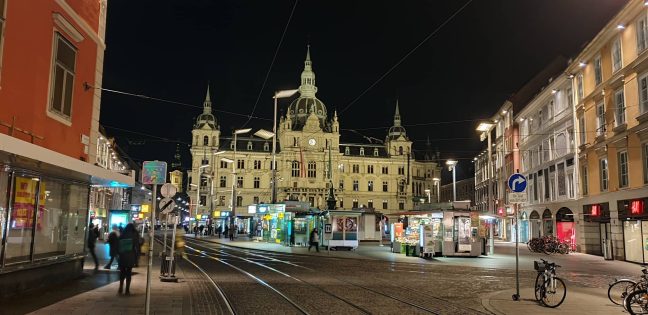
Upon arrival in Graz, you descend into a quiet-bustling regional city with the bahnhof life loud and hopping and a fitness centre right there to greet you. Our stroll from rail station to hotel took us down a busy thoroughfare to the bank of the Mur River, where the modern-ly fun and imposing Kunsthaus told us our accommodation was nearby.

Although slightly tired from the long trip, we only took a few minutes to get settled and then rushed to the city centre to see a few sights before dusk quickly arrived. Walking over one of the many bridges that provide connection to the Innere Stadt, we soon found ourselves in a maze of cute streets with an array of architectural styles that each, in their own way, explained the city’s history. After some wandering around we settled on a café that offered a great blend of coffee which I elected to sip with an accompaniment of apple strudel and vanilla ice cream. The coffee provided some warmth as we rested our feet and contemplated the words of Kurdish refugees who had assembled in front of the Graz City Hall to voice their discontent with the dire situation of their peoples in Eastern Turkey.

As we took in the city sparkling in the sunset, we also plotted our evening meal. Nothing says “I need more food.” like a huge piece of strudel and ice cream. We eventually settled on a Bierstube off the main streetcar (tram) route the runs under the Castle Hill, where we indulged in some regional draft beer (Grössl?) and delicious Käsespätzle. I also pigged out on a lovely pumpkin soup as an appetizer. After that, it was time to walk off the meal; enjoying a bit of night-time Graz and discovering sites like the local theatre, some baroque churches, local parks and bustling boulevards.

Our Saturday, as forecasted, was filled with rain. We grabbed breakfast on the opposite end of the main square, prior to walking the tram road over to where we estimated the streets leading up to the remains of the castle on the Schlossberg would be. On a tiny square below the hill, we noticed a formidable set of stairs that I pondered a few seconds before deciding that this was our way to the top: no funicular, no mountain rail. And so we began our ascent, a few steps at a time. I just focused on my breathing and in no time we got where we needed to be: greeted by the clock tower that looks out on Graz and shares the time with all people in view. Armed with our umbrellas, we moved around the hill top, snapping pics of various skyline views and looking out on the city we’d just begun to discover. The Castle Hill is today sans castle, since the fortress that once protected the city was destroyed during the Napoleonic Wars at the start of the 19th century. So with no monument in sight, it became our duty to enjoy and take in the autumnal colours: happy yellows, blazing oranges and fiery reds. We observed them all as we meandered down the back side of the hill winding down to the city centre below. Then more wandering and enjoying the city: the lovely theatre square in daylight, the beautifully carved woodwork adorning a local pharmacy, the delicious and appetizing farmers market, and interesting blips of modern architecture speckled across the cityscape. All that walking was rewarded with an amazing pork schnitzel (tenderloin) and delicious roasted potatoes. And of course some more local beer to wash it all down.

After lunch, the foodie trekking would pause, as we decided to take in the current exhibit at the Kunsthaus and enjoy the modern pieces there focused on branding and commercialism/consumerism. An abrupt return to the struggles of today’s world which we had temporarily forgotten while immersed in 16th and 17th century architecture and our passion for good food. By evening our tourist adventure was slowly winding down. We had had our fill of local food and accidentally stepped into a cute Mexican restaurant. Filled with a great mood and the lovely songs of guest singers, we enjoyed an array of folk songs, while munching on tacos, quesadillas and other culinary goodies.

Graz, you were a wonderful respite from the stress of the working world. And you’re an excellent place for a weekend get-away: filled with tasty food and architectural pleasures. Not least of all the “Mussel” building that sits in the middle of the Mur. Auf wiedersehen.

Train to the past present – back to Žďár

A trip through memories from the start of my life in the Czech Republic

Traditionally this blog space is meant for my thoughts on travel abroad and, when possible, going to fun, exciting destinations. The pandemic and personal health issues have slowed all that down for me over the past two years (as with everyone). But recovery is in full force and I had what I will call the surprising good fortune to have my train re-directed on a route through my past during my recent trip to meet up with friends in the charming wine village of Valtice

Since Czech Railways is repairing part of their northern corridor, I quickly found out that my journey would take me through the southern route crossing the Czech-Moravian Highlands (the Vysočina region) and small part of my past. It did seem odd getting on the train and looking at an itinerary that skipped from Kolín (in Central Bohemia) on to Brno (what I call the capital of Moravia). But the diversion brought back so many memories as it crossed through the towns where I spent my first years of my sojourn (now life) in the Czech Republic. 

As the morning sun stretched across the landscape, I saw the names of familiar towns pass quickly by my window: Kutná Hora (home to the beautiful St. Barbara’s Cathedral and former mining town), Čáslav (home to a military air base and easily recognisable with the bell tower that stands watch over the town centre) and then Světlá nad Sázavou, a quiet town on the Sázava River, famous for its glass-making. I had the privilege of working many times, in my later career, with a local glassworks firm and both their products and customer service were flawless.

Soon though, we would arrive at the eastern frontier of Bohemia where it disappears into Moravia. That’s when I saw it: the blue and white sign announcing our passage through Havlíčkův Brod. This was one of my main weekend haunts in the early 1990s when a 22-year-old, naïve young man from Missouri had taken on a teaching job in nearby Žďár nad Sázavou (already in Moravia) and would travel to Havlíčkův Brod to spend weekends with teacher-friends in our small expats-meet-locals community. From the window of the train I could smell the memory of a tasty soup Jodi had just made on a snowy winter Saturday, or smoking Sparta’s or “Startky” or whatever was available during pub debates with fellow Missouran, Matt from St. Louis. With Matt, Jodi and guitarist Vojta or whomever else joined our crew, we were likely drinking a Rebel or a Ježek from one of the nearby regional breweries. Quickly though my view of Havlíčkův Brod faded from sight and I began trying to remember the names of villages the local train (Os – osobák; what we dubbed the “oh so slow me” train because that sort of rhymed with the official Czech name osobní) passed through before hitting Žďár. The only ones I recalled were Přibyslav and Veselí. 

And then I saw it on the horizon, the arrival of Žďár. The first glimpse includes the garden communities on the west end of town and then the rail line widens to service incoming and outgoing freight to the largest local enterprise, Žďás. I think at one time it may have employed over half the town. Although not visible from the train, I wondered how many of my old haunts, stores, schools and restaurants were still around. I know the White Lion Hotel (Hotel Bílý lev or Bílého lva) no longer exists. I assume my place of employment, the Škola ekonomiky a cestovního ruchu and its administrators the Holemářovi are still doing fine. But what of the grocery store Mana (by now it’s likely a Lidl or Albert) and the department store we called Papír, hračky, sport (Paper, Toys, Sport)? Because that what was written of on the windows of each floor when viewed from outside. Or what became of Süssův hostinec, the pub that was so local that we foreigners were scared to enter, but which somehow became super friendly once its beer garden opened in the summer? At the time, I spoke perhaps 8 words of Czech and didn’t have the gumption to ask the locals if our entourage could “přisednout” (i.e., join their table provided chairs were available).

Of course, the train moved on quickly towards my destination of Břeclav. But my mind remained stuck at the Žďár train station. What had become of all those students from so long ago. I know Jirka Filippi is a successful corporate manager; Petr Váněk, a good friend of Jirka’s whom I once told in a moment of frustration that his English was subpar and asked what he was going to do when Jirka wasn’t there to speak for him? Well, Petr has since proven to me that perhaps it was the teacher, not the student. He’s become a successful actor and has gone on to play not only roles in Czech movies, TV shows and commercials, but also in English-language films as well. Simply put, he showed me. And I’m so proud he did. So many more names came to mind as the train progressed toward Brno: what of Marek Pospíšil, of Lenka, or Renata or Vít (I hope I have his name right: he was a young, blond, bespectacled student from Havlíčkův Brod who studied in Žďár and invited me one Saturday to meet his mother … how we had any type of conversation in Czech is beyond me; I am guessing Vít was a good interpreter).

Needless to say, I made it to Břeclav and caught my connection to Valtice, where I caught up with the Hradec crew and watched them taste (sample) more wine than any of them can possibly remember. But děkuji (thank you) to Czech Railways for those rail repairs. You took me back to a place in time where both my students and I had our futures still before us. For that I am grateful.

I own nothing but I have everything

When I think back on my time in the East
And entering a land about which I knew little
With no idea what to expect
Of the people that await

And as we greeted each other with apprehension
Reservations about who I was
And what they expected of me
Twice the age of the other “invaders”

Superficial worldviews would say
Comparatively, they had little
Yet never did we/they want
For all life’s essentials

Smiles were abundant
Coffee was plenty
A step over any threshold
Was a call for plates of sweets
And the best any household had to offer

As I approach the year fifty
And berate myself
For not owning a house, not owning a car
While still asking almost daily
What ownership means

I have so many possessions
That I keep inside me
Stores of memories, laughter, tears and embraces
And stories or legends shared
Of lessons my life road has taught me

I no longer worry
About the property I have not yet collected
For my most valuable possession
Is the real estate of my heart

I own nothing, but I have everything

Tasting Armenia

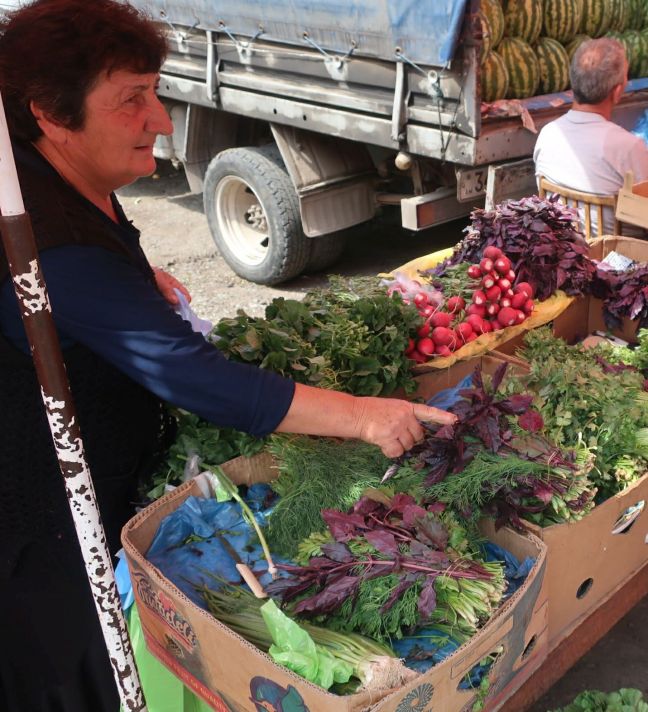
Since I was a child, I’ve loved gardening. At times it was a chore, when I had to go pick green beans in 30°+ C heat or if I had to weed through rows of carrots. But most of the time it was a way to escape: school life, family disputes or just the general noise of the world. Spending time with families in south central Armenia’s Ararat region, and in the northern Lori region, took me back to those childhood memories; specifically, I had the chance to help harvest an abundance of herbs that I would learn were essential staples in Armenia’s cooking vocabulary.

Dill / Սամիթ

This is one of my favorite herbs. Although, I find it to be quite divisive when it comes to people’s culinary tastes. Most of my friends either LOVE it, or they HATE it. I belong to the former group and was always delighted when my host family would send me back to my home in the north with a sack full of dill. It’s great for salads and soups. Or it’s nice for flavoring dishes like boiled potatoes (which I saw and tasted a lot when visiting southern Poland during the time I lived in the neighboring Czech Republic). I love that many countries seem to have their different takes on how to use dill. Whereas the Armenians would often use it to flavor carrot, cucumber or lentil salads, the Czechs use it as the base for a wonderful white sauce served with braised beef koprovka or as the main herb in a potato-mushroom soup called kulajda.

Coriander / Համեմ ու Գինձ

This is another herb that tends to polarize. I usually can’t get enough of it and I was delighted to find it in abundance in the gardens and markets of Armenia. It is interesting that the locals tend to use herbs in two specific ways when cooking, and you would often see them eat coriander in such fashion. There is the traditional method of chopping the herb and integrating it into salads, sauces or soups. However, Armenians also tend to serve a plate of kanachi (կանաչի), the general term for greens, with most of their meals. It is common to take fresh herbs from this plate: coriander, dill, tarragon, green onion or purple basil and work that into rolled up “sandwich” of sorts made with their traditional bread lavash (լավաշ).

Tarragon / Թարխուն

I never really saw tarragon used other than it being chomped on while raw, e.g. taken from the kanachi plate. I found it enjoyable in small doses; specifically, for its peppery-, anise- or licorice-like flavor. It was a nice addition to a sandwich made during khorovats (խորոված), the Armenian version of barbeque. Plus, it was interesting to see that someone somewhere had come up with the idea to make tarragon soda pop. The bright green color was equal parts intriguing and scary, while the soda was refreshing: again in small doses.

Purple Basil / Ռեհան

I never quite found a suitable use for this herb. We had it in heaps in my childhood gardens and flower beds in northern Missouri. However, I find it to be more assertive than sweet green basil, and thus more difficult to cook with. Most of the time, I took this colorful herb and chopped it up for use fresh garden salads I would make; also using it in sparing quantities.

Mountain Thyme / Լեռնային ուրց

This is one of the sweetest surprises to be found during hikes along the mountain ridges in the Lori region where I lived. It’s a cute, unassuming plant and, when the wind is right, it sweetens the air of the peaks and valleys as you meander through the passes along Armenia’s northern mountains. There, mountain thyme is abundant and it’s always tempting to grab a couple of handfuls to take home to dry: for later use in flavoring meats and various baked vegetable dishes.

All those unfinished plans …

It feels like last week was the moment reality set in. After having had to leave northern Armenia suddenly because of the situation with COVID-19 and the realities of the new corona world, just 5 days ago I realized I had so much unfinished business in and around my adopted city of Vanadzor.

Of late, I like to blame Facebook for my melancholy. Well, not Facebook as such; instead that gosh darn “memories” function. That little tool contains a whole lot of bittersweet. Mind you, I don’t want to use my blogging to whine. My colleagues and I who left Armenia are well aware that there are persons in the world with bigger concerns and who are living in much more dire situations.

At the moment, my funk stems from having missed out on my/our (I usually speak of my time in Armenia as a joint adventure embarked upon by myself and 34 other American volunteers) first independent spring. By “independent” I mean that most of us had become adjusted to the towns and villages where we served, and we had plans for big adventures that warmer weather would allow. Mine included getting to the top of Maymekh mountain, finding that spot somewhere near Aragats where the water “flows upside down” and planning a long-anticipated visited to the “stans” with Ree jan and Natalie.

Now, it’s clear that those plans won’t soon happen, and I’ll need to make new ones. So I’ve thrown myself into a job search and doing some career analysis to see what the next chapter of my career involves. I’m not 100% sure of the answer yet, but I do know it will likely involve more adventure. My decision to travel to Armenia was one based on a need for change, a need to get away from the virtual world of marketing and communications for awhile, and a thirst for finding an experience that was genuine.

When the world re-opens and travel resumes, I encourage my readers to go enjoy, if they have the chance, a few sites I missed in Armenia and which I hope to one day see …

  • Surb Sargis mountain and its odd boat (between Vardablur and Kurtan in northern Armenia’s Lorri region)
  • Mount Aragats – the tallest mountain in today’s Armenia
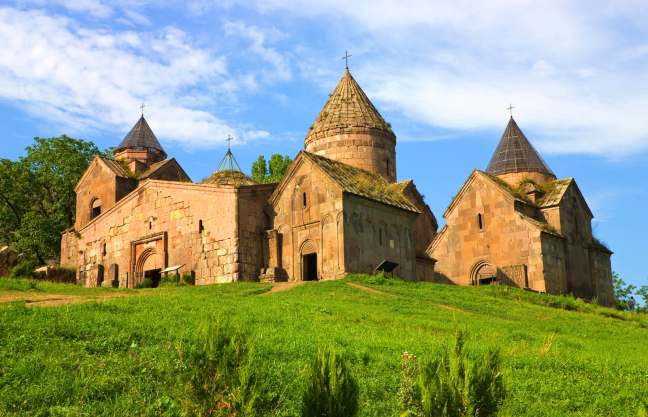
  • Parz Lake and the nearby monastery in Gosh
  • Sanahin and Haghpat monasteries (UNESCO heritage sites) near Alaverdi

I realize my words today aren’t particularly inspiring or fascinating. But this is the spot in which I find myself at the moment. I’m a little bit nostalgic, a tad bitter, but a whole lot of hopeful. For as the Armenians of the diaspora know all too well, I will one day find my way back home.

Main image courtesy of http://www.itinari.com blog.

How I gained a new family (Pt. 1)

I woke up this morning in a state of denial and confusion.  It’s hard to say if I’m really happy or sad.  When the corona virus started to put into question the future of my Peace Corps service in Armenia, I wasn’t sure how severe the situation was.  Our group had been put on stand-by and was ready to evacuate if need be. In the end we did.  For me, that day was 18 March 2020.

So now I am on my couch, the morning after arriving back to Prague (the place I’d called home for 25 years prior to applying to Peace Corps), and I am trying to sort through feelings.  For the moment, it all feels like a weird dream.  But the most urgent thing I want to write about, or the thing that constantly comes to mind, is the feeling of family.  After just one year in Armenia, I feel that I have been separated from part of my family (my fellow volunteers who have gone back to their homes in the USA) and have left another family behind (all the Armenians with whom I had the good fortune to work and collaborate during that short year in their country).

Prior to leaving Armenia, I took part in a TV interview to speak about my service in the north central part of the country.  Since I attempted to brave that process while speaking in my pigeon Armenian, I found it difficult at times to say eloquently just how much the chance at experiencing life there meant to me. I had arrived there a burnt out PR/marketing manager and had no idea what I sought from my service experience.  I only knew I needed change and wanted to do something a bit more meaningful personally; something that would hopefully make other people’s lives better.  Right now, it’s too soon to say for certain, if that happened.  However, based on the constant pain this separation has caused in my heart, I think I can say some change happened.

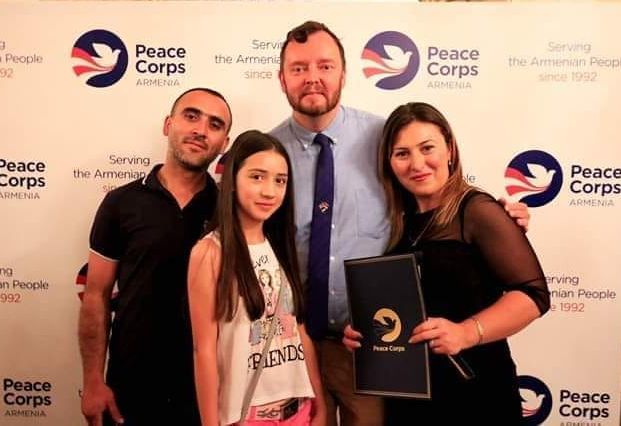
Firstly, I would like to speak to the change a small family in southern Armenia caused in my life and hopefully I in theirs.  It’s important to know that I was an “odd man out”-type volunteers. At 47, I was twice the age of most of my other fellow volunteers and that was, I believe, a bit odd for the host families. These Armenian families are so gracious, and they take you into their homes not having any clue what sort of situation they will find themselves in.  From my end, I am older and never had a family of my own. I had lived alone for most of my adult life.  Suddenly, I was living in a family with three daughters, mom and dad, and a grandfather.  I had my own room, but it was clear the impositions that I was putting on the family.  All the daughters had to pick up camp and move to another bedroom shared with their parents: all because of me.  It was only over time that I came to realize this, and it touched my heart how much space this family was willing to give up take me in and learn what life in America was like.

That said, I was concerned that I had failed them on that count as well.  I used to joke with them that they ordered a US Peace Corps volunteer but ended up getting a “fake” one.  I make this comment, because I didn’t check all the boxes for what most families expected.  As said above, I was older. I didn’t have much immediate experience on what life was currently like in the USA, because I had only been travelling there for work or family visits over the past 20+ years. Then, add to that the fact that when I reverted to my previous daily language I was speaking in Czech: an idiom that had been my daily go-to for the past 20 years. It made my family laugh when I kept explaining that the filler words I would slip into sentences, mostly unwittingly, were Czech … not my mother tongue, English.  We just agreed I was weird and laughed.  Yet it did help us mark some progress, when I went from saying moment (the Czech term for asking someone to “wait a minute”) and advancing to mi rope / մի րոպե: the proper Armenian expression.

With my abrupt departure from Armenia, it was painful not to get to see my first host family in person one last time.  Although I know we will meet again soon after the world heals itself and the corona virus comes under control.  However, there is solace in the fact that the weird, old volunteer that I am is now forever irrevocably bound to an Armenian family: and not just one.  As my hopes for this family’s future diminish my temporary sorrows. I left behind what might be a future educator, a future artist or a future actress. I can’t wait to see all the good things that Ema, Lilit and Eva will do with their lives.  And that hope keeps my current pain at bay.

Note: there are lot of thoughts going through my head at the moment (post-service), and I will write one or two more comments on my connections and shared experiences with Armenian families in my future blog updates.

Disclaimer:  This blog is used to express my own thoughts and feelings. My comments are purely my own and do not reflect any official views or opinions of the US Peace Corps or the US government. Likewise, the US Peace Corps bears no liability for any of the content I post.