Blowing into Bilbao

I need to be outside walking but my mind is filled with the winds of Spain’s Basque Country. It’s already been a fortnight since I said goodbye to the sad rain pouring tears onto the airport tarmac.

Following a visit of just four days, I wasn’t sure what to make of this corner of northern Spain. Bilbao had ranked on my bucket list for quite some time, and finally I had had the opportunity to explore the city. It is a beautiful place alongside a river that seems to flow with invention and creativity. From Frank Gehry’s architectural wonder that is the Gugenheim museum, to the street murals and sculptures that line the bike paths and walkways heading from the north-ish part of town south toward the old city centre. The big blessing is that the city is very walkable. It only took us 30 minutes on foot, after arriving at our accidental bus stop on one of the main thoroughfares, to get to our hotel. And some of the first sights you see are Bilbao’s bridges: interesting feats of modern architecture.

As we moved into the city’s old town, we immediately saw one of the things about Spain that I find most endearing: mixtures of people young and old, parents bringing their children home from school, grandparents playing with their kids in the park, or elderly people sharing the news of their day, surrounded by business people heading off to their next meeting. In Spain, everyone is out and about and truly living in the cities or towns they call home.

And the centre of the old town is a respectful mix of architecture old and new, bespeckled with tapas bars and restaurants so you can try at anytime any day the local pinxtos which defy the imagination. Whether it’s a tortilla (omelette) with cod and potatoes, or a stuffed pepper or grilled flank steak or pork loin, each dish is better than the one before and you never want the courses to stop coming. Even the French toast-ish dessert with a caramel cream sauce and mango ice cream felt like it should not be the end of this amazing culinary excursion.

Wandering through the old town you pass quaint little shops, mostly filled with local foods or clothing sundries; here and there a small grocery store. And on every block cute little cafés where you would sit on little stools huddled around wooden blocks and scarf down delicious cakes and rich dark coffee. Coffee so intense and aromatic, you knew you were drinking it the way it was meant to be served. Even my favourite pasteles de Belém (the custard cakes I love from Portugal) had managed to sneak their way into the local bakeries.

One morning we took time to meander through the local fish market and check out all the seafood specialities that had been brought in for daily sale. Whether it was octopus or squid, or the freshest of fish, you knew these products would soon find their way to your table in a restaurant and be prepared with the utmost care.

My main impression (or memory) of Bilbao is one of caring and comfort. From the history that surrounds you in the churches, old residential buildings and stone bridges to the welcomes that you get in cafés and restaurants, you feel that it is fine (or OK) for you to be there. There’s a small gratitude for your visit. One of my favourite afternoons was spent in the corner of a pub (the crowd predominantly local) that we ducked into to escape some torrential rain. The barman quickly found us a table in the corner where we could quietly enjoy a late lunch. But my favourite part of that experience was watching the local residents who had decided to begin their weekend early. They boisterously caught up on the news of their weeks while here and their letting out cheers and jeers depending on which team had made the last goal in the football (soccer) game being broadcast on the wide screen TV by the bar.

Bilbao felt welcoming, calm and safe. And also happy to see us. It is a bustling city nestled in a valley between the foothills of (or near) the Pyrenees. A place where you could go back time and again and discover things you hadn’t seen before. And the residents would be glad you returned for another bite to eat, another bit of history, or just to spend a little more time in their serene corner of the world.

Fès (Fez): the Final Frontier

There was something about this city. You could feel it calling even before you left the Casa Voyageur train station on the other side of the country. Way too early in the morning to embark on an almost four-hour train ride, but you could sense adventure in the air. The balmy breeze through Casablanca and its surroundings quickly left us and as the train bounded forward into a sunny, desert-esque landscape. We splurged on first class tickets to make sure we had seats waiting for us and upon finding our spots the social engagement began. For a time, we chatted with a fellow tourist from Senegal who shared bits and pieces of information about his travels throughout Morocco – he pointed out that there was a second Chefchaouen called Nador further down the northern coastline. My Moroccan colleague from Tangier begs to differ on this opinion. The voyage went fairly fast, however. A couple, of which the husband was a restaurateur who had worked all over the United States, told us of his American adventures and welcomed us to his country. He gave highlights of different sights that we needed to see and offered his appraisals of our plans for travel around the Fez area.

Arrival in Fez

When descending from the train, it was clear we were in a different region with a different climate. The temperature had jumped about 10°C and the winter coats and sweaters quickly became a burden. The sport of finding a reasonably priced cab then followed. And we did OK haggling a price of 70 dirham down to 50. Comparatively, the taxi fees aren’t terrible; there’s just a bit of competition involved relating to one’s personal pride and a need to prove that this isn’t a person’s first rodeo. That said, the driver was kind and quickly dispatched us to the Blue Gate, where a staff member from our riad would be waiting for us.

It’s hard to put into words the overwhelming of the senses that occurred next. Picked up by our riad contact, we marvelled at the amazing architecture and the bustle of the westernmost part of the old medina (market). The entry to the medina also seemingly has the only permanently functioning ATM for cash withdrawals, which is an important thing to know about travel in Morocco. In the cities, card payments are common, but in some larger and medium-sized towns, they will say cards are OK but later make an excuse to accept only cash. There’s no malicious intent involved – it appears to be solely a matter of convenience, internet connections, and possibly tax evasion.

From the market to maison

The medina was all I expected it to be and in some cases more. It was a bedlam and cacophony of selling, selling, selling. Piles of fresh fruit and vegetables: onions, oranges, tangerines, zucchini, carrots, you name it. Here and there, animal oddities would appear. You could find crates of fresh eggs overseen by a rooster and a hen or two, who gave the feeling they didn’t wish to depart with their goods. Likewise, you would see cages of pigeons; grain sacks full of flour, cornmeal, barley; and food stands offering everything from kebabs to sandwiches on to doughnuts. The doughnuts were tasty and kept us going on our afternoon train back to Casablanca later that week.

I am not sure where to begin when it comes to describing our accommodation. We stayed in two separate apartments in two riads (bed and breakfasts) run by the same family. When I think back on that experience, the words hospitality, kindness, good food and helpfulness come to mind. The interior décor of those buildings transported you to another space and time: the colourful geometric designs, the plump cushions, fluffy beds, elaborate handwoven carpets. You felt like you had stepped into an old tale about Aladdin or Sinbad (even if those took place in different countries). The talent, craftmanship and skilful mystique of those venues’ architects made the experience special.

An afternoon in the tanneries and a morning in the royal gardens

There was so much to take in in Fez. From the scrumptious breakfasts with four types of homemade bread, honey that tasted and smelled as if a colony of bees had delivered it that very morning, or the mazes of streets and alleyways that made up the old medina. There were ups and downs to navigating the old city, impacted by warnings we had been given not to stray off main streets. It was pointed out to us that offers to help tourists find their way were not always helpful. So that made me a bit more careful and mindful of using Google maps and refusing many offers for guidance. But the experience and the kindness of the family running the Fez tanneries and seeing how animal skins were cleaned, processed and decorated reassured me of the local people’s goodness and big hearts. The owners offer fresh mint to mute the smell of the animal hides and pigeon excrement used in the tanning process, but for this one time Missouri country boy it just smelled like your typical Friday at a sale barn.

Enjoying the natural surroundings of the city and the amazing ancient walls, we worked our way back up the hill to our particular gate to the city. It was a long, steady climb but the golden, tawny rock that encloses Fez is beautiful and somehow seems to warm the soul. The following day we would penetrate the wall from the other side to loiter in the royal gardens and watch locals enjoy morning walks with their children. We observed the egrets sunbathing and the occasional stork dropping from the sky to inspect what the fuss was about.

This is scattershot description of my impressions of Fez. But truth be told, I am still processing all the city had, and what more it still has, to offer.

To the hills hugging Beaune

There’s nothing like the warm embrace of every corner of France. And to no one’s surprise the vineyards of Burgundy were no less enchanting than those of the Languedoc, Bordeaux or Côtes-du-Rhône. After a slightly torturous (think Griswoldian if you’re familiar with the National Lampoons Vacation movies), Nat, Jake, Ree and I arrived to spend the New Year holiday with friends. It was a special five days of learning and seeing what made Pete and Laura fall in love with this corner of the world when they took their first vacation in the region as a couple a decade plus ago.

Driving into the valley that hugs the city of Beaune, you simply nod in contentment. Yes, you are in France. And, yes, some good wines await. Given that my days of Queen Wino are behind me, I spent more time taking in the atmosphere and enjoying the culinary craftspersonship for which France is famous. Idling down the streets of Beaune’s old city, I studied each shop; checking out what delights they had to offer. One store teased with dozens of homemade jams and marmalades; another with pâtés and rillettes of all sorts. I quickly filled my basket with some foie gras that had integrated chestnuts as a surprise. Then I went back to the first shop for some of those jams: who knew what a treat pêche de vigne preserves are? The peaches apparently grow on trees in orchards that are interspersed with the vineyards; hence “peach from the vine”. The taste = amazing.

Moving on from the shops, my entourage and I filed into the local Saturday market, where we marvelled at the endless possibilities put forward by local cheese-makers. Sharp goat cheeses or milder sheep cheese. The decor of special moulds or ash that just make French cheeses special. Alongside that you have the piles of veggies that the season delivers; mainly more root vegetables but still some quite tasty tomatoes and greens here and there.

Of course trapsing through Beaune is not complete without some time spent people watching. We met many of the locals taking a moment to get away from the holiday table and exercise their legs a bit. Then, there was that special lady all in gold: I couldn’t tell if she was just going home from last night’s soirée or perhaps she was early in heading out to her next one. As I wandered the city streets, some likely there since the Middle Ages, I ducked into the main church to make a quick prayer for continued good health and safe travels as we would soon drive home into the new year. The peaceful calm of that long-standing house of worship stood in stark contrast to the bustle of the markets outside and tourists and locals mingling to celebrate the close of 2022.

Of course my reminiscing wouldn’t be complete without some comments on the amazing meals: be it the home-cooked ones (Pete’s lasagne and wild board ragout, plus Laura’s sinfully delicious chocolate cake) or the culinary treats found in local restaurants. I got to enjoy some Burgundian escargots and also had a lovely veal dish in the local brasserie down the hill from our holiday home (Chez Baxter).

Yes, this retreat to the hills of Burgundy was just what the doctor ordered when in came to regrouping to have the strength to face 2023: socialising with friends in an inviting stone farm house; saying hello to Manilow (either a horse or donkey, I was never sure which animal bore that name) when out for walks; or just taking in some amazing sunsets. Good friends and good food are really all we need to get by.

Loving Graz: one meal at a time

A couple of weekends ago, a friend and I boarded a train and head for Graz, the main city of Austria’s Styria region. The train ride is just over 7 hours but takes you through some beautiful countryside in the wine regions along the Czech-Austrian border and in the mini-mountains as it nears Graz. The railway serpentines around Semmering-Kurort are lovely as you swoosh from tunnel to tunnel and get glimpses of colourful rock formations bedecked this time of year with fall foliage.

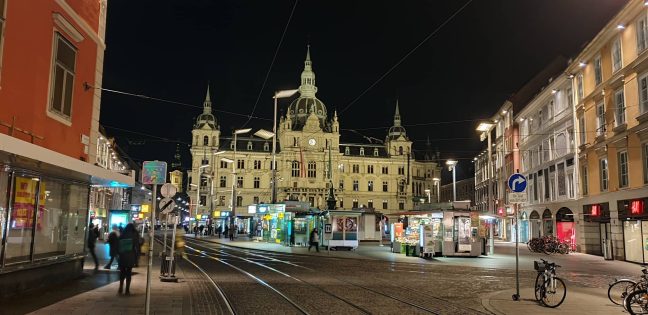
Upon arrival in Graz, you descend into a quiet-bustling regional city with the bahnhof life loud and hopping and a fitness centre right there to greet you. Our stroll from rail station to hotel took us down a busy thoroughfare to the bank of the Mur River, where the modern-ly fun and imposing Kunsthaus told us our accommodation was nearby.

Although slightly tired from the long trip, we only took a few minutes to get settled and then rushed to the city centre to see a few sights before dusk quickly arrived. Walking over one of the many bridges that provide connection to the Innere Stadt, we soon found ourselves in a maze of cute streets with an array of architectural styles that each, in their own way, explained the city’s history. After some wandering around we settled on a café that offered a great blend of coffee which I elected to sip with an accompaniment of apple strudel and vanilla ice cream. The coffee provided some warmth as we rested our feet and contemplated the words of Kurdish refugees who had assembled in front of the Graz City Hall to voice their discontent with the dire situation of their peoples in Eastern Turkey.

As we took in the city sparkling in the sunset, we also plotted our evening meal. Nothing says “I need more food.” like a huge piece of strudel and ice cream. We eventually settled on a Bierstube off the main streetcar (tram) route the runs under the Castle Hill, where we indulged in some regional draft beer (Grössl?) and delicious Käsespätzle. I also pigged out on a lovely pumpkin soup as an appetizer. After that, it was time to walk off the meal; enjoying a bit of night-time Graz and discovering sites like the local theatre, some baroque churches, local parks and bustling boulevards.

Our Saturday, as forecasted, was filled with rain. We grabbed breakfast on the opposite end of the main square, prior to walking the tram road over to where we estimated the streets leading up to the remains of the castle on the Schlossberg would be. On a tiny square below the hill, we noticed a formidable set of stairs that I pondered a few seconds before deciding that this was our way to the top: no funicular, no mountain rail. And so we began our ascent, a few steps at a time. I just focused on my breathing and in no time we got where we needed to be: greeted by the clock tower that looks out on Graz and shares the time with all people in view. Armed with our umbrellas, we moved around the hill top, snapping pics of various skyline views and looking out on the city we’d just begun to discover. The Castle Hill is today sans castle, since the fortress that once protected the city was destroyed during the Napoleonic Wars at the start of the 19th century. So with no monument in sight, it became our duty to enjoy and take in the autumnal colours: happy yellows, blazing oranges and fiery reds. We observed them all as we meandered down the back side of the hill winding down to the city centre below. Then more wandering and enjoying the city: the lovely theatre square in daylight, the beautifully carved woodwork adorning a local pharmacy, the delicious and appetizing farmers market, and interesting blips of modern architecture speckled across the cityscape. All that walking was rewarded with an amazing pork schnitzel (tenderloin) and delicious roasted potatoes. And of course some more local beer to wash it all down.

After lunch, the foodie trekking would pause, as we decided to take in the current exhibit at the Kunsthaus and enjoy the modern pieces there focused on branding and commercialism/consumerism. An abrupt return to the struggles of today’s world which we had temporarily forgotten while immersed in 16th and 17th century architecture and our passion for good food. By evening our tourist adventure was slowly winding down. We had had our fill of local food and accidentally stepped into a cute Mexican restaurant. Filled with a great mood and the lovely songs of guest singers, we enjoyed an array of folk songs, while munching on tacos, quesadillas and other culinary goodies.

Graz, you were a wonderful respite from the stress of the working world. And you’re an excellent place for a weekend get-away: filled with tasty food and architectural pleasures. Not least of all the “Mussel” building that sits in the middle of the Mur. Auf wiedersehen.

Côtes du Rhône … where memories meet and happiness flows

Since I was a teenager, France has had a special power for me. It’s “meant to be-ness” has always made it feel safe. And celebrating a good friend’s birthday in Provence in September served as an important reminder of the need to cherish special certainties.

The givens of Pete fixing amazing food while tormenting me incessantly, or Jakub telling silly dad jokes, or Natalie being armed and ready with rosé, or Laura acting as the voice of reason. Not to mention Jean making sure we were all looked after and the house in order.

An insane route to the farmhouse we were staying at had me less than certain how our celebratory week in Provence would end up. But France, this time the southern part, did not disappoint. The smell of lavender, the rugged mountains hugging our local horizon, and the poplar or sycamore-lined roadways … they all told me that life was as it should be.

It’s funny that the French created the term je ne sais quoi. Because that’s how I often feel when describing why I am at home there. It’s an “I don’t know what” sentiment. I’m never 100% certain why but I always feel welcome when I move through the fruit and veggie markets, when I sit down for un crême, or when I escape inside a house of worship that dates back to the times of The Crusades. The beauty of the Rhone Valley immediately tells visitors, without their knowing why, that everything will be all right.

Our corner of Provence that we hid out in that week afforded us the best that France has to offer. Great wines from the ancient land of Popes (a Châteauneuf-du-Pape or a Gigondas) accompanied most of our meals. The shops welcomed us with the culinary artisanry that only the French can deliver: sumptuous sausages of the Camargue, excellent terrine de foie gras, or rillettes … food shopping in France is unique. Just brush off your French vocabulary from college days and enquire after which local farmers supply the shops and to what periods these agro-culinary traditions date back.

It’s in these moments that you slowly come to understand that the “I don’t know what” may just simply be a proud love or passion for traditions in food-making, animal-raising and store-owning that transcends time. Perhaps, it’s because the river lies nearby. But in the Rhone Valley and that area of France, there’s a fluidity: a phantom of centuries of trade routes that connected Ancient Rome to the Iberian peninsula. When you submit to the region of Provence, you feel these transitory moments. Of wine poured into glasses across the years, of floral scents being gathered for perfumes that would sweeten numerous decades, or of frankincense emanating from churches that would bring the religions of the Holy Land to the Empire’s marchlands.

There’s never a single, clear cause for the serenity and happiness flowing along the Rhone in Provence, but I’m certain it has something to do with the land always seeing to residents’ and visitors’ basic needs. You eat well. You drink well. And you relax as time nourishes you with the riches of the region’s traditions.

Laissez-vous en profiter de ce que la région vous offre.   

The sweetest part of Armenia is its fruit

I was looking at some pictures today and noticed that a year ago this time, I was a week away from getting sworn in as a Peace Corps volunteer in Armenia. In my village of Hovtashen in the Ararat region south of Yerevan mulberries (թտւթ) were everywhere. It was a strange, amusing experience. I knew mulberries from my childhood in Missouri. Taste-wise, they were tolerable, but I had never been particularly fond of them. Yet somehow, as with many of life’s simpler experiences in Armenia, the local mulberries were different. They seemed sweeter and there were two kinds: dark and white ones. I had never seen white ones elsewhere. On top of that I learned that Armenians also distill their mulberries and make a very potent alcoholic drink from them. Some might call it brandy in the way people tend to call the distillate from plums in central and eastern Europe plum brandy (locally referred to there using a variation of the word slivovice deriving from the word slivka for plum). Otherwise, in the color sense, it looks what a Missouri kid like me would have called plum moonshine, i.e. it has a color more akin to vodka. All the same, the stuff is strong. And, as I tend to do with the plum brandy from Moravia, I drank a shot first thing in the morning when I felt a cold or sore throat coming on. Just one shot, mind you.

With that intro, I wanted to highlight some of the fruit experiences I enjoyed when I was living in Armenia. So let’s begin.

Apricots / ծիրան

Apricots are synonymous with Armenia: even the orange hue in the country’s flag is referred to as apricot orange. And then there’s the taste: one that can’t be described. They are so rich, sweet and juicy and can be put to many uses. Of course, they can be eaten fresh from the tree or from the markets (if you’re a city dweller). I would always eat them with my host dad Artur when we had evening coffee. Apricots are also used to make a drink/juice referred to as կոմպոտ (compote), which is truly a thick fruit juice and not the jam-like fruit dish we know in English-speaking countries. In addition to that, apricots are dried and stored for the winter: still, the dried fruit has a flavor and juiciness that makes you think it was harvested not more than a week ago. Finally, there is the prized apricot jam that Armenian women all over the country make during late spring. I smuggled two jars of that home to give to friends.

Figs / Թուզ

These are one of my favorite fruits anytime I can get them: fresh from the market or picked from a bush in the wild. Like the mulberries mentioned above, there are two versions: the green ones and the purple/dark ones. I’m generally partial to the purple ones, as they are the variety I know from visits to the beaches of the Mediterranean. On various islands, it was common to pick a handful of figs during pitstops when returning after a day of swimming and sun. There is something about fresh figs that makes them feel like a guilty pleasure; the fact that the vendors at the outdoor markets in Vanadzor would slip me a couple extra when I was shopping always made my day.

Melons / ձմերտւկ (watermelon) and յեմիշ (cantaloupe)

By late June, melon season had arrived in Armenia and sidewalks everywhere were stocked with them. Of course, they were sold by local fruit-vegetable merchants, but it appeared that seasonal melon-vending was a way to generate cash for a number of other entrepreneurial locals as well. And thank goodness for that. Melon was another summertime staple for my coffees with Artur. Depending on what was available, we would chomp on cold watermelon with our rich, dark Armenian coffee, or we would enjoy the spicy flavor and scent of cantaloupe: both added to the spoils we collected from the family garden; specifically, the cherries.

Cherries / Բալ

As with most countries I’ve lived in, both sweet and sour versions of cherries can be found in Armenia. They are also eaten fresh or cooked for jams. And in some cases, the locals make them into the juice (compote). I actually grew quite fond of them as a nice way to round off my evening meal; a slightly healthier version of dessert. It was a joy to partake of cherries so as not to stuff myself with too much of the delicious Armenian գաթա (gata cakes) or with Armine’s delicious pastries and éclairs.

I’ve rambled on too long. But if you make it to Armenia, treat yourself to the wide variety of fruits in the outdoor markets. You won’t regret it.

Tasting Armenia

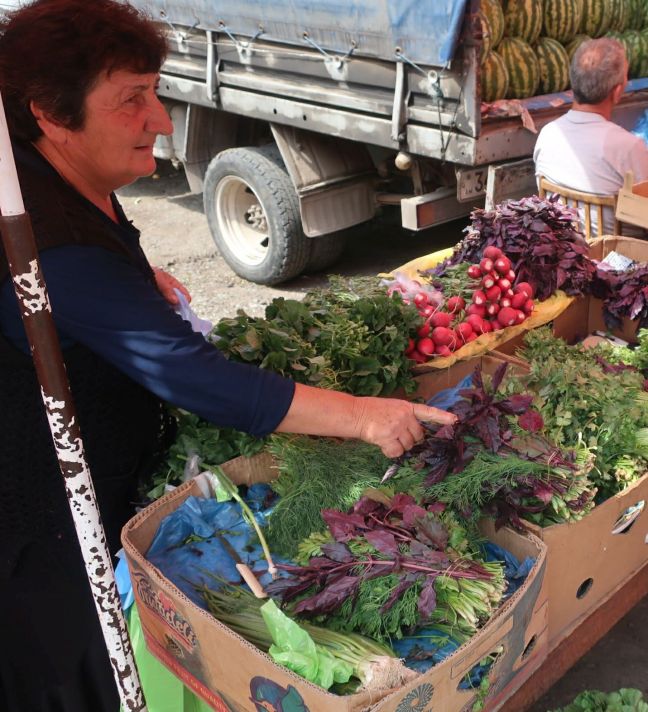
Since I was a child, I’ve loved gardening. At times it was a chore, when I had to go pick green beans in 30°+ C heat or if I had to weed through rows of carrots. But most of the time it was a way to escape: school life, family disputes or just the general noise of the world. Spending time with families in south central Armenia’s Ararat region, and in the northern Lori region, took me back to those childhood memories; specifically, I had the chance to help harvest an abundance of herbs that I would learn were essential staples in Armenia’s cooking vocabulary.

Dill / Սամիթ

This is one of my favorite herbs. Although, I find it to be quite divisive when it comes to people’s culinary tastes. Most of my friends either LOVE it, or they HATE it. I belong to the former group and was always delighted when my host family would send me back to my home in the north with a sack full of dill. It’s great for salads and soups. Or it’s nice for flavoring dishes like boiled potatoes (which I saw and tasted a lot when visiting southern Poland during the time I lived in the neighboring Czech Republic). I love that many countries seem to have their different takes on how to use dill. Whereas the Armenians would often use it to flavor carrot, cucumber or lentil salads, the Czechs use it as the base for a wonderful white sauce served with braised beef koprovka or as the main herb in a potato-mushroom soup called kulajda.

Coriander / Համեմ ու Գինձ

This is another herb that tends to polarize. I usually can’t get enough of it and I was delighted to find it in abundance in the gardens and markets of Armenia. It is interesting that the locals tend to use herbs in two specific ways when cooking, and you would often see them eat coriander in such fashion. There is the traditional method of chopping the herb and integrating it into salads, sauces or soups. However, Armenians also tend to serve a plate of kanachi (կանաչի), the general term for greens, with most of their meals. It is common to take fresh herbs from this plate: coriander, dill, tarragon, green onion or purple basil and work that into rolled up “sandwich” of sorts made with their traditional bread lavash (լավաշ).

Tarragon / Թարխուն

I never really saw tarragon used other than it being chomped on while raw, e.g. taken from the kanachi plate. I found it enjoyable in small doses; specifically, for its peppery-, anise- or licorice-like flavor. It was a nice addition to a sandwich made during khorovats (խորոված), the Armenian version of barbeque. Plus, it was interesting to see that someone somewhere had come up with the idea to make tarragon soda pop. The bright green color was equal parts intriguing and scary, while the soda was refreshing: again in small doses.

Purple Basil / Ռեհան

I never quite found a suitable use for this herb. We had it in heaps in my childhood gardens and flower beds in northern Missouri. However, I find it to be more assertive than sweet green basil, and thus more difficult to cook with. Most of the time, I took this colorful herb and chopped it up for use fresh garden salads I would make; also using it in sparing quantities.

Mountain Thyme / Լեռնային ուրց

This is one of the sweetest surprises to be found during hikes along the mountain ridges in the Lori region where I lived. It’s a cute, unassuming plant and, when the wind is right, it sweetens the air of the peaks and valleys as you meander through the passes along Armenia’s northern mountains. There, mountain thyme is abundant and it’s always tempting to grab a couple of handfuls to take home to dry: for later use in flavoring meats and various baked vegetable dishes.

Travel randomly

Just like a lot of people at the start of they year, I’ve decided to make a resolution.  This one involves sharing some of my global travel experiences with readers and, hopefully, connecting with other travel fans around the world who like to avoid typical destinations.  My goal is to post to this blog on a weekly basis and share experiences that range from roast lamb for Sunday lunch at an abandoned restaurant in Beja, Portugal to staring down into Poland from the highest peak in the Czech Republic.

My destinations are not the most exotic, but hopefully the stories about local contacts and lots of amazingly good food and wine will keep your attention.  So from ramblings about Curacao to the wines of Languedoc onto the bi bim bap on Korean Air … here’s to enjoying all the world has to show and teach us.