
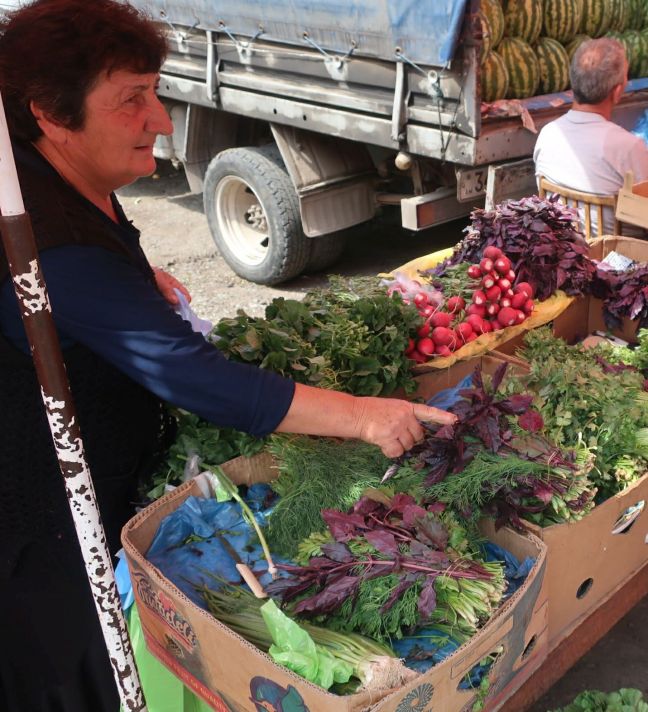
Since I was a child, I’ve loved gardening. At times it was a chore, when I had to go pick green beans in 30°+ C heat or if I had to weed through rows of carrots. But most of the time it was a way to escape: school life, family disputes or just the general noise of the world. Spending time with families in south central Armenia’s Ararat region, and in the northern Lori region, took me back to those childhood memories; specifically, I had the chance to help harvest an abundance of herbs that I would learn were essential staples in Armenia’s cooking vocabulary.
Dill / Սամիթ
This is one of my favorite herbs. Although, I find it to be quite divisive when it comes to people’s culinary tastes. Most of my friends either LOVE it, or they HATE it. I belong to the former group and was always delighted when my host family would send me back to my home in the north with a sack full of dill. It’s great for salads and soups. Or it’s nice for flavoring dishes like boiled potatoes (which I saw and tasted a lot when visiting southern Poland during the time I lived in the neighboring Czech Republic). I love that many countries seem to have their different takes on how to use dill. Whereas the Armenians would often use it to flavor carrot, cucumber or lentil salads, the Czechs use it as the base for a wonderful white sauce served with braised beef koprovka or as the main herb in a potato-mushroom soup called kulajda.
Coriander / Համեմ ու Գինձ
This is another herb that tends to polarize. I usually can’t get enough of it and I was delighted to find it in abundance in the gardens and markets of Armenia. It is interesting that the locals tend to use herbs in two specific ways when cooking, and you would often see them eat coriander in such fashion. There is the traditional method of chopping the herb and integrating it into salads, sauces or soups. However, Armenians also tend to serve a plate of kanachi (կանաչի), the general term for greens, with most of their meals. It is common to take fresh herbs from this plate: coriander, dill, tarragon, green onion or purple basil and work that into rolled up “sandwich” of sorts made with their traditional bread lavash (լավաշ).
Tarragon / Թարխուն
I never really saw tarragon used other than it being chomped on while raw, e.g. taken from the kanachi plate. I found it enjoyable in small doses; specifically, for its peppery-, anise- or licorice-like flavor. It was a nice addition to a sandwich made during khorovats (խորոված), the Armenian version of barbeque. Plus, it was interesting to see that someone somewhere had come up with the idea to make tarragon soda pop. The bright green color was equal parts intriguing and scary, while the soda was refreshing: again in small doses.
Purple Basil / Ռեհան
I never quite found a suitable use for this herb. We had it in heaps in my childhood gardens and flower beds in northern Missouri. However, I find it to be more assertive than sweet green basil, and thus more difficult to cook with. Most of the time, I took this colorful herb and chopped it up for use fresh garden salads I would make; also using it in sparing quantities.
Mountain Thyme / Լեռնային ուրց
This is one of the sweetest surprises to be found during hikes along the mountain ridges in the Lori region where I lived. It’s a cute, unassuming plant and, when the wind is right, it sweetens the air of the peaks and valleys as you meander through the passes along Armenia’s northern mountains. There, mountain thyme is abundant and it’s always tempting to grab a couple of handfuls to take home to dry: for later use in flavoring meats and various baked vegetable dishes.
 hiddenspacesblog