Blowing into Bilbao

I need to be outside walking but my mind is filled with the winds of Spain’s Basque Country. It’s already been a fortnight since I said goodbye to the sad rain pouring tears onto the airport tarmac.

Following a visit of just four days, I wasn’t sure what to make of this corner of northern Spain. Bilbao had ranked on my bucket list for quite some time, and finally I had had the opportunity to explore the city. It is a beautiful place alongside a river that seems to flow with invention and creativity. From Frank Gehry’s architectural wonder that is the Gugenheim museum, to the street murals and sculptures that line the bike paths and walkways heading from the north-ish part of town south toward the old city centre. The big blessing is that the city is very walkable. It only took us 30 minutes on foot, after arriving at our accidental bus stop on one of the main thoroughfares, to get to our hotel. And some of the first sights you see are Bilbao’s bridges: interesting feats of modern architecture.

As we moved into the city’s old town, we immediately saw one of the things about Spain that I find most endearing: mixtures of people young and old, parents bringing their children home from school, grandparents playing with their kids in the park, or elderly people sharing the news of their day, surrounded by business people heading off to their next meeting. In Spain, everyone is out and about and truly living in the cities or towns they call home.

And the centre of the old town is a respectful mix of architecture old and new, bespeckled with tapas bars and restaurants so you can try at anytime any day the local pinxtos which defy the imagination. Whether it’s a tortilla (omelette) with cod and potatoes, or a stuffed pepper or grilled flank steak or pork loin, each dish is better than the one before and you never want the courses to stop coming. Even the French toast-ish dessert with a caramel cream sauce and mango ice cream felt like it should not be the end of this amazing culinary excursion.

Wandering through the old town you pass quaint little shops, mostly filled with local foods or clothing sundries; here and there a small grocery store. And on every block cute little cafés where you would sit on little stools huddled around wooden blocks and scarf down delicious cakes and rich dark coffee. Coffee so intense and aromatic, you knew you were drinking it the way it was meant to be served. Even my favourite pasteles de Belém (the custard cakes I love from Portugal) had managed to sneak their way into the local bakeries.

One morning we took time to meander through the local fish market and check out all the seafood specialities that had been brought in for daily sale. Whether it was octopus or squid, or the freshest of fish, you knew these products would soon find their way to your table in a restaurant and be prepared with the utmost care.

My main impression (or memory) of Bilbao is one of caring and comfort. From the history that surrounds you in the churches, old residential buildings and stone bridges to the welcomes that you get in cafés and restaurants, you feel that it is fine (or OK) for you to be there. There’s a small gratitude for your visit. One of my favourite afternoons was spent in the corner of a pub (the crowd predominantly local) that we ducked into to escape some torrential rain. The barman quickly found us a table in the corner where we could quietly enjoy a late lunch. But my favourite part of that experience was watching the local residents who had decided to begin their weekend early. They boisterously caught up on the news of their weeks while here and their letting out cheers and jeers depending on which team had made the last goal in the football (soccer) game being broadcast on the wide screen TV by the bar.

Bilbao felt welcoming, calm and safe. And also happy to see us. It is a bustling city nestled in a valley between the foothills of (or near) the Pyrenees. A place where you could go back time and again and discover things you hadn’t seen before. And the residents would be glad you returned for another bite to eat, another bit of history, or just to spend a little more time in their serene corner of the world.
Chefchaouen: Still questioning an azure, cerulean, cornflower, powder blue mystery.

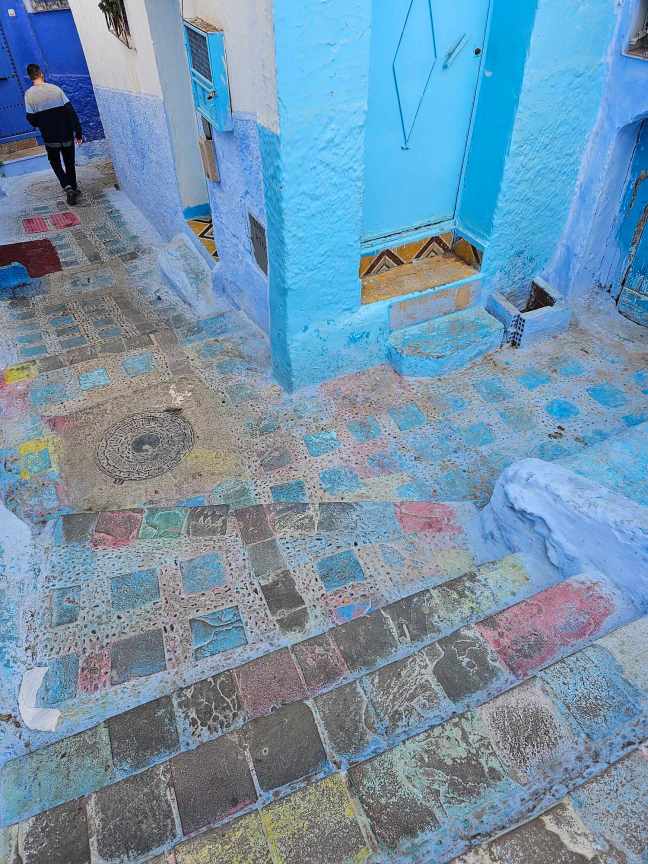
Roughly 3-4 hours north of Fès, further into the mountains, lies a magical town painted in multiple shades of blue. It is famous among tourists to Morocco. Everyone wants to visit the blue city. I have to admit that I am a failed visitor in the fact that I never asked why the buildings of this municipality tucked in the northern Atlas mountain range had been painted my favourite colour.

I do know that travelling to Chefchaouen was an adventurous, long-ish journey where you have to spend roughly four hours getting there in a mini-tour bus. Don’t get me wrong. The bus was comfortable and the driver very professional, with the patience of a saint. But the trek is long and you are very happy when you arrive. The driver is even kind enough to make a stop on the bluff overlooking the town before you move into its centre. At that stop, travellers from all parts of the world carefully cross the busy blacktop to stand in front of the nearby hill town. Interestingly, it looks a lot less blue from the bird’s eye perspective, so you wouldn’t really know it’s the destination you seek without the nearby road signs or the driver telling you that you are close to the end of your journey.

Arriving to Chefchaouen was a relief; well at least until we realised the quickest route to finding our riad (accommodation) was a journey through the people-packed, narrow streets of the old medina in the city centre. So along with Ree, who had to take a deep breath and tolerate a hangry Brenda, we plodded our way up the gradual slope. Fortunately, the blue tones on all walls along the way are calming. You just look in awe and think: who had this idea? Who does the paint touch ups? Are there restrictions on what shades of blue can be used? It immediately occurred to me that the monument protection institute in Prague would have a field day setting out rules on paint usage in this city.

Half-way up the hill, you finally make it out of the medina and you reach an open square. Much to my profound happiness. There, you have a view of the local kasbah (a former fortress and prison) with its colourful gardens and pretty views of the local terra cotta tile rooftops and the jagged hills (mountains) surrounding Chefchaouen. This was a moment of respite from the crowded medina paths but it meant the arrival of the salesmen. Stop for lunch? Would you like something to eat? Check out our shops. It was a lot to handle for someone like me who has come to love the standoffish-ness of most Czech storekeepers and sales clerks. I am a firm subscriber to the If I need something I will ask. take on shopping. Soon enough though – with the generosity of Google maps – we would find our way to our riad and the busy juice-maker (vendor) and his neighbour-carpet sellers who flanked the stairsteps nearby.

And the riad … what can I say? And where to begin? Wonderful staff and a room from a fairytale. Ree was kind enough to let me hide myself in the bed on the upper level, complete with a window nook where I could work, read and inspect the hullabaloo that seemed to be a constant on the stairs and sidewalk below.

There didn’t seem to be a strict tourist agenda for persons visiting Chefchaouen. You were in the blue city, so you enjoyed the blueness. The cute little paths and the many locals who were there to sell, sell, sell. You can watch the vagabond cats scurry from house to house or run the cobblestone sidewalks looking for food and treats. To make my hangriness subside, we agreed to find an internet-recommended restaurant where we could grab a proper lunch and catch our breath after days of being on the move. I’m not sure now what I even ate. I want to stay I started with something puff-pastry adjacent that reminded me of Greek spanakopita. And for the main – a tagine or some sort? Who knows. I mainly remember being enthralled by the mountain views around us. These rocky crags that had to be fairly tall – I was so curious about them I turned on my Mapy.cz app to get confirmation that some were indeed over 2000 metres tall. And then I realised that one should do their homework before travelling: had I know of the nearby mountains and their well-marked hiking paths, I would have booked a longer stay. The reality is that if you hike to the tops of the mountains, a view of the Mediterranean awaits you on the other side. In fact, you are perhaps only 50 km from the seashore. Oh well, there’s always next time.

I don’t know what else to say about Chefchaouen. It was a special, almost surreal place with wonderful people full of kindness and hospitality. You just kind of want to think carefully about the mini-interviews that local vendors conduct. Beyond that, I would love to go back and hike the mountains to the sea. I feel like that needs to happen. Until then.

Fès (Fez): the Final Frontier

There was something about this city. You could feel it calling even before you left the Casa Voyageur train station on the other side of the country. Way too early in the morning to embark on an almost four-hour train ride, but you could sense adventure in the air. The balmy breeze through Casablanca and its surroundings quickly left us and as the train bounded forward into a sunny, desert-esque landscape. We splurged on first class tickets to make sure we had seats waiting for us and upon finding our spots the social engagement began. For a time, we chatted with a fellow tourist from Senegal who shared bits and pieces of information about his travels throughout Morocco – he pointed out that there was a second Chefchaouen called Nador further down the northern coastline. My Moroccan colleague from Tangier begs to differ on this opinion. The voyage went fairly fast, however. A couple, of which the husband was a restaurateur who had worked all over the United States, told us of his American adventures and welcomed us to his country. He gave highlights of different sights that we needed to see and offered his appraisals of our plans for travel around the Fez area.

Arrival in Fez

When descending from the train, it was clear we were in a different region with a different climate. The temperature had jumped about 10°C and the winter coats and sweaters quickly became a burden. The sport of finding a reasonably priced cab then followed. And we did OK haggling a price of 70 dirham down to 50. Comparatively, the taxi fees aren’t terrible; there’s just a bit of competition involved relating to one’s personal pride and a need to prove that this isn’t a person’s first rodeo. That said, the driver was kind and quickly dispatched us to the Blue Gate, where a staff member from our riad would be waiting for us.

It’s hard to put into words the overwhelming of the senses that occurred next. Picked up by our riad contact, we marvelled at the amazing architecture and the bustle of the westernmost part of the old medina (market). The entry to the medina also seemingly has the only permanently functioning ATM for cash withdrawals, which is an important thing to know about travel in Morocco. In the cities, card payments are common, but in some larger and medium-sized towns, they will say cards are OK but later make an excuse to accept only cash. There’s no malicious intent involved – it appears to be solely a matter of convenience, internet connections, and possibly tax evasion.

From the market to maison

The medina was all I expected it to be and in some cases more. It was a bedlam and cacophony of selling, selling, selling. Piles of fresh fruit and vegetables: onions, oranges, tangerines, zucchini, carrots, you name it. Here and there, animal oddities would appear. You could find crates of fresh eggs overseen by a rooster and a hen or two, who gave the feeling they didn’t wish to depart with their goods. Likewise, you would see cages of pigeons; grain sacks full of flour, cornmeal, barley; and food stands offering everything from kebabs to sandwiches on to doughnuts. The doughnuts were tasty and kept us going on our afternoon train back to Casablanca later that week.

I am not sure where to begin when it comes to describing our accommodation. We stayed in two separate apartments in two riads (bed and breakfasts) run by the same family. When I think back on that experience, the words hospitality, kindness, good food and helpfulness come to mind. The interior décor of those buildings transported you to another space and time: the colourful geometric designs, the plump cushions, fluffy beds, elaborate handwoven carpets. You felt like you had stepped into an old tale about Aladdin or Sinbad (even if those took place in different countries). The talent, craftmanship and skilful mystique of those venues’ architects made the experience special.

An afternoon in the tanneries and a morning in the royal gardens

There was so much to take in in Fez. From the scrumptious breakfasts with four types of homemade bread, honey that tasted and smelled as if a colony of bees had delivered it that very morning, or the mazes of streets and alleyways that made up the old medina. There were ups and downs to navigating the old city, impacted by warnings we had been given not to stray off main streets. It was pointed out to us that offers to help tourists find their way were not always helpful. So that made me a bit more careful and mindful of using Google maps and refusing many offers for guidance. But the experience and the kindness of the family running the Fez tanneries and seeing how animal skins were cleaned, processed and decorated reassured me of the local people’s goodness and big hearts. The owners offer fresh mint to mute the smell of the animal hides and pigeon excrement used in the tanning process, but for this one time Missouri country boy it just smelled like your typical Friday at a sale barn.

Enjoying the natural surroundings of the city and the amazing ancient walls, we worked our way back up the hill to our particular gate to the city. It was a long, steady climb but the golden, tawny rock that encloses Fez is beautiful and somehow seems to warm the soul. The following day we would penetrate the wall from the other side to loiter in the royal gardens and watch locals enjoy morning walks with their children. We observed the egrets sunbathing and the occasional stork dropping from the sky to inspect what the fuss was about.

This is scattershot description of my impressions of Fez. But truth be told, I am still processing all the city had, and what more it still has, to offer.

Craziness and confusion in Casablanca

Over the year-end holidays I made my first trip to Morocco. I honestly had no idea what to expect; I just knew that I had wanted to visit the country for a long time. So we got on the plane from Lisbon and began what would be a fun, unpredictable and tiring adventure. Tiring in a good way though.

Moroccans are very hospitable. You might not initially expect that based on the line at the passport checks in the Casablanca airport. Which took forever, and forever, and forever. As my friend Ree and I waited there to be somehow  let in the country, my hangriness levels started to peak. I don’t really remember now what Ree fed me to keep me from going off the deep end, but it worked. For that matter, I also don’t know what happened to the Asian lady in front of me at the passport check. After she was questioned for 10 minutes, they took her somewhere. I didn’t see her come back.

But we eventually got through and into baggage claim, grabbed our bags, and set off to look for the train station. We quickly found it but had no idea when the train would leave. Turned out it was RIGHT THEN and THERE. So I went into party planner mode and saw Moroccan hospitality and guest care burst into action. I ordered two tickets using my rusty French, told Ree how much we needed to pay … then we ran. We ran because the train was leaving that minute but the ticket vendor called the platform and told them to hold departure for us and they did. Within two minutes we were riding through desert plains to Casa Oasis or Casa Port. Just someplace.

With a little time to relax in the train, we joked about what we had just gone through. And we were really impressed and grateful for the support from our help at the Moroccan ONCF/SNCF. Then came the arrival at the train station and our first stab at finding a Moroccan cab driver, of which there are plenty. I tried to weed through the many “helpful” people who wanted to take us “someplace” and looked for drivers at an official cab stand. That turned out not to work so well but we found a nice enough elderly driver, paid roughly 20 dirham too much to get to the hotel, and then embarked on an interesting ride. My favourite part of that journey was when I turned on Google maps to get the precise hotel location and the driver said “Wow, that GPS tracking is very useful.” I just nodded in tired agreement.

Our hotel location was decent. Lots of boutiques and shops along the busy boulevards, which led me to my first impressions of Casablanca. It is a BIG city for Morocco and feels much more USA metropolitan than Berber, north African desert chic. We bookended our stay in Morocco with a few nights in Casablanca. After our return trip to the city (and a train ride with an interesting Dutch family from whom we got ex post travel advice and discovered what all we had missed out on), we were glad to get back to our favourite hotel and relax. Once again we overpaid for the ride from the train station Casa Oasis to our hotel, but given that other costs for food, public transport, etc. were generally reasonably priced (even cheap by European standards), we just tolerated the random cab fares when necessary.

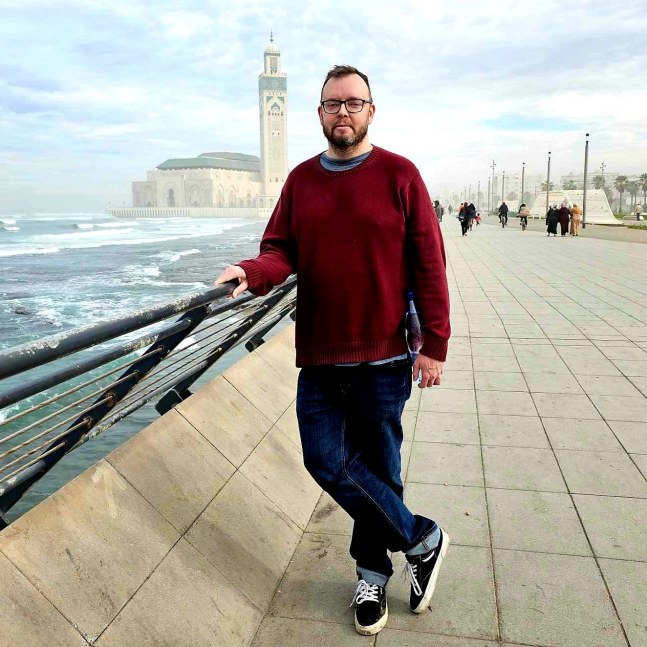
We spent the next day trying to discover Casablanca’s city centre as much as possible. As said, the town is very urban with lots of high-rises and skyscrapers with some bits of traditional architecture woven in here and there. The promenade along the coastline by the main mosque is enjoyable. Waves bustling in from the Atlantic and the misty, foggy beauty of that that semi-shrouded place of worship in morning hours gave it a special air of mystery. Walking along the coastline you could watch local young men on their sports bikes doing tricks, while their elders sat along the beachfront and promenade railing casting their fishing lines in hopes of being rewarded with some sort of nice catch for the day. We rounded out our walks with some visits to cafés and restaurants here and there; enjoying the comfort of the delicious Moroccan mint tea and the gracious kindness of our servers in various types of restaurants – Italian, Moroccan and some sort of fusion. We ate well.

Casablanca remains a sort of mystery to me. It’s a bit too modern and doesn’t have that local feel of the country’s interior,  nor is there that visible switch to a different history and culture I was hoping for. I would be happy to visit again though just to learn more about the city (after doing some online research). Plus, we were told a venture up the coast to Rabat is worthwhile. So, hang on, Casablanca. I’m not quite done with you yet.

Praha through Ree jan’s eyes

Author’s note/warning: This text is written with a good dose of sarcasm and self-deprecation. Ree assured me she had a great time during her visit to Prague. I just tend to make light of my tics and idiosyncrasies when serving in the role of tour guide.

Living in one of Europe’s most beautiful capitals can make you jaded in some ways. After 25+ years living in a city I thought I would stay in for 2-3 years max, I tend to just always look at the city’s beautiful monuments, smile, nod and make a mental check. Prague Castle – still there; the Charles Bridge – still there; National Theatre – still … well, you get the gist.

But in January I had the privilege of welcoming a good friend and fellow returned Peace Corps volunteer Ree to my adopted home town. And it gave me time to get to know the city all over again. I also quickly realised what an annoying tour guide I am. On most days I couldn’t tell you my own name but, sadly, for those brave enough to tour the city with me, every building, monument, sidewalk, street crossing, subway station and tram stop comes with a short story.

There’s a lot to do and see in Prague in less than a week. However, fortunately, Ree is a chill traveller. She endured and survived (and I think enjoyed) the wild life of southern Armenia (except for being over-potatoed) and so I was certain she would survive all I had to tell her about the Golden City or the City of Many Spires, as the Czech capital is often called. It’s also good that Ree’s a walker. That bode well for her being able to tolerate my aversion to public transport and enjoy the pedestrian life. So just to sum up a few highlights of her stay.

First stop – Vyšehrad

The Vyšehrad Hill and fortress is the site of (I think) the first permanent settlement in Prague. It offers splendid views of the Vltava River and looks at Hradčany (the location of Prague Castle) and Malá Strana where the kings and emperors who ruled the city lived for centuries. It’s also the spot where, according to legend, the Celtic queen Libuše proclaimed that a city would form here with a fame and prosperity that would last for thousands of years. I think it’s also the hill that Horymír and his trusted steed Šemík jumped from on their flight from the city before Šemík succumbed to fatigue in Neumětely (just west of Prague). I think my diatribe on the Prague skyline quickly exhausted Ree: she hadn’t counted on there being so many spires … so somewhere between the Žižkov TV tower and the Petřín Hill “Eiffel Tower” she lost track and a glazed look spread over face.

Walking through the New Town to the Old Town (also TMD – too much data)

The best part of starting a tour with Vyšehrad is that you get to descend the winding stairs down to the river and take your pick of which river bank to meander along. Now, I forget if we went to the Smíchov side or wandered up the right bank to the National Theatre. However, I’m pretty sure we stopped for a hot drink (cocoa for me, mulled wine for Ree jan) and enjoyed Prague’s plentiful medieval and baroque vistas. I’m not sure on what day or in what order, but I do know that we stopped at one of my new favourite pubs in the New Town and ordered a proper ½ litre Plzeň (Pilsner beer) for each with us and a nakládaný hermelín (a pickled cheese that is camembert adjacent); this one served with cranberry jam and walnuts. I think Ree liked it.

A day at the National Museum

I think our museum visit turned out to be a special treat for both of us. In 28 or so years, I had never taken the time to visit the monument. Mind you, I only live 10 minutes away and walk by it almost every other day. But having Ree in town was just the right occasion to test-drive the newly-refurbished building and visit its exhibits. And I can now tell you, it is worth the 10 bucks or so that you pay for the entrance fee. You have two buildings to explore: the more historic building, the National Museum proper, and several exhibits housed in the more modern (in my opinion uglier) building that used to be home to the Czechoslovak Federal Assembly. There is much to see: from displays on minerals and geology, to exhibits on prehistory – a woolly mammoth included, on to audio-visual time travel through the history of 20th century Czechoslovakia and the 30+ year-old Czech Republic.

I could recount more, but I’ve hit the one-page mark. I can just say it was an honour to share my city with Ree. It was great to revisit Prague’s history, show her my hood, and also to treat her and my friends to some rounds of the Phase 10 card game that ended up with all of us being given the bird by Jakub … but in an artistic, pretty way. Hopefully, there will be more visits in the future.

To the hills hugging Beaune

There’s nothing like the warm embrace of every corner of France. And to no one’s surprise the vineyards of Burgundy were no less enchanting than those of the Languedoc, Bordeaux or Côtes-du-Rhône. After a slightly torturous (think Griswoldian if you’re familiar with the National Lampoons Vacation movies), Nat, Jake, Ree and I arrived to spend the New Year holiday with friends. It was a special five days of learning and seeing what made Pete and Laura fall in love with this corner of the world when they took their first vacation in the region as a couple a decade plus ago.

Driving into the valley that hugs the city of Beaune, you simply nod in contentment. Yes, you are in France. And, yes, some good wines await. Given that my days of Queen Wino are behind me, I spent more time taking in the atmosphere and enjoying the culinary craftspersonship for which France is famous. Idling down the streets of Beaune’s old city, I studied each shop; checking out what delights they had to offer. One store teased with dozens of homemade jams and marmalades; another with pâtés and rillettes of all sorts. I quickly filled my basket with some foie gras that had integrated chestnuts as a surprise. Then I went back to the first shop for some of those jams: who knew what a treat pêche de vigne preserves are? The peaches apparently grow on trees in orchards that are interspersed with the vineyards; hence “peach from the vine”. The taste = amazing.

Moving on from the shops, my entourage and I filed into the local Saturday market, where we marvelled at the endless possibilities put forward by local cheese-makers. Sharp goat cheeses or milder sheep cheese. The decor of special moulds or ash that just make French cheeses special. Alongside that you have the piles of veggies that the season delivers; mainly more root vegetables but still some quite tasty tomatoes and greens here and there.

Of course trapsing through Beaune is not complete without some time spent people watching. We met many of the locals taking a moment to get away from the holiday table and exercise their legs a bit. Then, there was that special lady all in gold: I couldn’t tell if she was just going home from last night’s soirée or perhaps she was early in heading out to her next one. As I wandered the city streets, some likely there since the Middle Ages, I ducked into the main church to make a quick prayer for continued good health and safe travels as we would soon drive home into the new year. The peaceful calm of that long-standing house of worship stood in stark contrast to the bustle of the markets outside and tourists and locals mingling to celebrate the close of 2022.

Of course my reminiscing wouldn’t be complete without some comments on the amazing meals: be it the home-cooked ones (Pete’s lasagne and wild board ragout, plus Laura’s sinfully delicious chocolate cake) or the culinary treats found in local restaurants. I got to enjoy some Burgundian escargots and also had a lovely veal dish in the local brasserie down the hill from our holiday home (Chez Baxter).

Yes, this retreat to the hills of Burgundy was just what the doctor ordered when in came to regrouping to have the strength to face 2023: socialising with friends in an inviting stone farm house; saying hello to Manilow (either a horse or donkey, I was never sure which animal bore that name) when out for walks; or just taking in some amazing sunsets. Good friends and good food are really all we need to get by.

Loving Graz: one meal at a time

A couple of weekends ago, a friend and I boarded a train and head for Graz, the main city of Austria’s Styria region. The train ride is just over 7 hours but takes you through some beautiful countryside in the wine regions along the Czech-Austrian border and in the mini-mountains as it nears Graz. The railway serpentines around Semmering-Kurort are lovely as you swoosh from tunnel to tunnel and get glimpses of colourful rock formations bedecked this time of year with fall foliage.

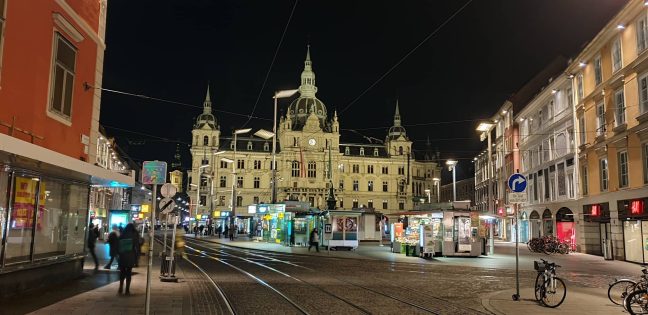
Upon arrival in Graz, you descend into a quiet-bustling regional city with the bahnhof life loud and hopping and a fitness centre right there to greet you. Our stroll from rail station to hotel took us down a busy thoroughfare to the bank of the Mur River, where the modern-ly fun and imposing Kunsthaus told us our accommodation was nearby.

Although slightly tired from the long trip, we only took a few minutes to get settled and then rushed to the city centre to see a few sights before dusk quickly arrived. Walking over one of the many bridges that provide connection to the Innere Stadt, we soon found ourselves in a maze of cute streets with an array of architectural styles that each, in their own way, explained the city’s history. After some wandering around we settled on a café that offered a great blend of coffee which I elected to sip with an accompaniment of apple strudel and vanilla ice cream. The coffee provided some warmth as we rested our feet and contemplated the words of Kurdish refugees who had assembled in front of the Graz City Hall to voice their discontent with the dire situation of their peoples in Eastern Turkey.

As we took in the city sparkling in the sunset, we also plotted our evening meal. Nothing says “I need more food.” like a huge piece of strudel and ice cream. We eventually settled on a Bierstube off the main streetcar (tram) route the runs under the Castle Hill, where we indulged in some regional draft beer (Grössl?) and delicious Käsespätzle. I also pigged out on a lovely pumpkin soup as an appetizer. After that, it was time to walk off the meal; enjoying a bit of night-time Graz and discovering sites like the local theatre, some baroque churches, local parks and bustling boulevards.

Our Saturday, as forecasted, was filled with rain. We grabbed breakfast on the opposite end of the main square, prior to walking the tram road over to where we estimated the streets leading up to the remains of the castle on the Schlossberg would be. On a tiny square below the hill, we noticed a formidable set of stairs that I pondered a few seconds before deciding that this was our way to the top: no funicular, no mountain rail. And so we began our ascent, a few steps at a time. I just focused on my breathing and in no time we got where we needed to be: greeted by the clock tower that looks out on Graz and shares the time with all people in view. Armed with our umbrellas, we moved around the hill top, snapping pics of various skyline views and looking out on the city we’d just begun to discover. The Castle Hill is today sans castle, since the fortress that once protected the city was destroyed during the Napoleonic Wars at the start of the 19th century. So with no monument in sight, it became our duty to enjoy and take in the autumnal colours: happy yellows, blazing oranges and fiery reds. We observed them all as we meandered down the back side of the hill winding down to the city centre below. Then more wandering and enjoying the city: the lovely theatre square in daylight, the beautifully carved woodwork adorning a local pharmacy, the delicious and appetizing farmers market, and interesting blips of modern architecture speckled across the cityscape. All that walking was rewarded with an amazing pork schnitzel (tenderloin) and delicious roasted potatoes. And of course some more local beer to wash it all down.

After lunch, the foodie trekking would pause, as we decided to take in the current exhibit at the Kunsthaus and enjoy the modern pieces there focused on branding and commercialism/consumerism. An abrupt return to the struggles of today’s world which we had temporarily forgotten while immersed in 16th and 17th century architecture and our passion for good food. By evening our tourist adventure was slowly winding down. We had had our fill of local food and accidentally stepped into a cute Mexican restaurant. Filled with a great mood and the lovely songs of guest singers, we enjoyed an array of folk songs, while munching on tacos, quesadillas and other culinary goodies.

Graz, you were a wonderful respite from the stress of the working world. And you’re an excellent place for a weekend get-away: filled with tasty food and architectural pleasures. Not least of all the “Mussel” building that sits in the middle of the Mur. Auf wiedersehen.

Côtes du Rhône … where memories meet and happiness flows

Since I was a teenager, France has had a special power for me. It’s “meant to be-ness” has always made it feel safe. And celebrating a good friend’s birthday in Provence in September served as an important reminder of the need to cherish special certainties.

The givens of Pete fixing amazing food while tormenting me incessantly, or Jakub telling silly dad jokes, or Natalie being armed and ready with rosé, or Laura acting as the voice of reason. Not to mention Jean making sure we were all looked after and the house in order.

An insane route to the farmhouse we were staying at had me less than certain how our celebratory week in Provence would end up. But France, this time the southern part, did not disappoint. The smell of lavender, the rugged mountains hugging our local horizon, and the poplar or sycamore-lined roadways … they all told me that life was as it should be.

It’s funny that the French created the term je ne sais quoi. Because that’s how I often feel when describing why I am at home there. It’s an “I don’t know what” sentiment. I’m never 100% certain why but I always feel welcome when I move through the fruit and veggie markets, when I sit down for un crême, or when I escape inside a house of worship that dates back to the times of The Crusades. The beauty of the Rhone Valley immediately tells visitors, without their knowing why, that everything will be all right.

Our corner of Provence that we hid out in that week afforded us the best that France has to offer. Great wines from the ancient land of Popes (a Châteauneuf-du-Pape or a Gigondas) accompanied most of our meals. The shops welcomed us with the culinary artisanry that only the French can deliver: sumptuous sausages of the Camargue, excellent terrine de foie gras, or rillettes … food shopping in France is unique. Just brush off your French vocabulary from college days and enquire after which local farmers supply the shops and to what periods these agro-culinary traditions date back.

It’s in these moments that you slowly come to understand that the “I don’t know what” may just simply be a proud love or passion for traditions in food-making, animal-raising and store-owning that transcends time. Perhaps, it’s because the river lies nearby. But in the Rhone Valley and that area of France, there’s a fluidity: a phantom of centuries of trade routes that connected Ancient Rome to the Iberian peninsula. When you submit to the region of Provence, you feel these transitory moments. Of wine poured into glasses across the years, of floral scents being gathered for perfumes that would sweeten numerous decades, or of frankincense emanating from churches that would bring the religions of the Holy Land to the Empire’s marchlands.

There’s never a single, clear cause for the serenity and happiness flowing along the Rhone in Provence, but I’m certain it has something to do with the land always seeing to residents’ and visitors’ basic needs. You eat well. You drink well. And you relax as time nourishes you with the riches of the region’s traditions.

Laissez-vous en profiter de ce que la région vous offre.   

Returning to my other HOME

Three years after Covid forced me out and a major heart surgery threw a wrench in my travel plans, I finally made it back to Armenia last weekend. It was amazing how quickly the warmth of Armenians and reconnecting with old friends melted away the anxiousness I had about travelling to the southern Caucasus region. My worries were never of the normal kind, i.e., would people and places still be as I remembered? Would there still be a connection to, and love for, the communities where I trained and worked. I was more concerned about being fit enough for the journey.  

My current adventure began with new target destinations: to see parts of the country I had not yet visited; and this thanks to having a good rental car at my disposal.  Of course, driving also made me a little anxious but having a great, funny, supportive team of fellow travellers (Jesus and Ani from Peace Corps’ A27 cohort and our new friend Marietta) made my first trip to the Vayots Dzor region perfectly enjoyable. Our journey took us to the spa town of Jermuk, or what I call Armenian Karlovy Vary (Carlsbad for German or English speakers). This small, unassuming town nestled in between cliffs and canyon made for a nice respite from the stress of air travel. It also filled me with hope for all that tourism can, and hopefully will one day, offer local and regional businesses in Armenia. Although the dominant buildings in Jermuk are large therapy and rehabilitation facilities as well as a couple of resort hotels, the town’s charm, at least for me, derives from the nature that envelops it. There are the cliffs west of the town centre formed from volcanic activity and “tubes” of basalt. These geographic features always make me think of Superman’s Fortress of Solitude. Then, as you meander to the north end of Jermuk’s “Main Street”, you will find a sign pointing you to stairs that take you down to a beautiful, breath-taking gorge or canyon and the gurgling river that soothes even the most exhausted traveller’s nerves. 

As you walk along the canyon path, you are surrounded by beautiful flora – wild roses greet you at every turn along with other colourful flowering plants (I couldn’t tell you their names for the life of me) that jump out in shades of pink, blue, yellow and purple. The trail also offers a break from the intense summer sun that warms all of southern Armenia. Cliff overhangs and large boulders (even a rock arch) cool the canyon and make the hike all the more pleasant. Finally, when you reach the river’s edge, it only takes a few more steps before you hear that a wonderful surprise awaits. The sound of rushing water shushing eager hikers soon reveals itself to be an amazing waterfall towering from the hilltop above. It carries the cool, refreshing Jermuk waters down to the river so they can travel further south to Armenia’s Syunik region.

Many travellers will journey to Jermuk to enjoy the curative spring waters, to relax or to seek rehabilitation. Odd traveller that I am, I went there to be hugged by the hillsides, calmed by the canyon river and streams and to listen to nature telling me to slow down. There is so much energy bursting in this beautiful landscape that I can’t wait to return one day: to hike more in the sun-drenched golden mountains; to watch local beekeepers as they gather their honey; to observe the farmers as they cut, mow and rake their hay into small bales; and mainly to enjoy the serenity that is, and always has been, the mountains, gorges and canyons of Armenia.

It felt good to be back in those Armenian mountains; it felt good to be back in, and embraced by, one of the lands I now call home.  

Following the clouds across Denmark

Could it be six? Or perhaps it was eight years? Memories came flooding back as the familiar forest of wind turbines that populate the sea of Denmark’s southern coast announced our approach to the Kastrup district and Copenhagen’s airport. So many years of recollections returned along with the apprehension of comparison: how would the present compare to the joy of all the special times from past visits?

However, slowly but surely, the days would unfold just as they were meant to be. Throngs of cyclists accompanied us as we headed to the house – the garden, upon arrival, still full of spring fragrances: lilacs, mock orange, rose blossoms, bridal wreath spirea and more. After a big welcome hug, the conversation began right where it had left off so many years ago. We shared news of what had changed in our lives and thoughts on the state of the world. The scent of fresh-brewed coffee filled the air as we sat in the garden and filled in the gaps of that half-decade.

The beauty of Copenhagen, and Denmark for that matter, lies in the warm welcome of its familiar serenity. Decades ago we would have been on our bikes whizzing into the city centre or headed out along the coastline to ride through the nature preserve. But habits have changed and health and aging have introduced limitations. The absence of riding was replaced by the careful steps of daily walks and thoughtful conversation. The neighbourhood beach had come alive with skateboarders, surfers, paddleboarders and joggers. Strolling along the shore, we watched kids at play and the more daring cranes and herons high-stepping it through the rivulets.

In between walks we enjoyed familiar culinary treats that had also remained unchanged over the years. The hearty open-faced sandwiches and a bottle of elderflower (hyldeblomst) soda pop here and there. Also, the rich cakes and tartes that quickly satisfied one’s sweet tooth; my only regret being new restrictions on how much rhubarb I could consume. The wonderful flavours of local baked goods quickly reminded me that I would need to raid the local store to hoard up my favourite Den Gamle Fabrik jams: hyben (rose hip) and raspberry. Both of which have added pizzazz to my morning porridge since my return to Prague. 

Memories continued to replenish my soul as we moved north to Nykøbing and the Rørvig area. The road to the summer house had been repaved with a mix of tar and gravel. Not sure that was a good idea. But the excess saplings in the front yard and been cleared and the rhododendrons moved to form a beautiful floral wall at the back of the property. The ever-changing Danish weather did us a solid by allowing the sun to shine and accompany us on our walk along the north shore beach that looks out on the Kattegat. We were lucky to have the coastline almost all to ourselves with the exception of an intrepid family that wanted to test the possibility of swimming in the still chilly spring waters and a sole windsurfer who was preparing to try his luck in taming the less than threatening waves. The walk seemed at times overwhelming as it brought with it mental images of past rainy Saturdays in the cottage and cycling adventures along the windy levee and through flooded fields. Or the surprise sight of a windmill on the horizon.

The pleasure of Denmark is that it is easy. No matter how long the gap between visits, each new arrival brings the same warm welcome. And each departure has a sadness of things left unsaid. Still I know I will return, because in København I feel loved.