Train to the past present – back to Žďár

A trip through memories from the start of my life in the Czech Republic

Traditionally this blog space is meant for my thoughts on travel abroad and, when possible, going to fun, exciting destinations. The pandemic and personal health issues have slowed all that down for me over the past two years (as with everyone). But recovery is in full force and I had what I will call the surprising good fortune to have my train re-directed on a route through my past during my recent trip to meet up with friends in the charming wine village of Valtice

Since Czech Railways is repairing part of their northern corridor, I quickly found out that my journey would take me through the southern route crossing the Czech-Moravian Highlands (the Vysočina region) and small part of my past. It did seem odd getting on the train and looking at an itinerary that skipped from Kolín (in Central Bohemia) on to Brno (what I call the capital of Moravia). But the diversion brought back so many memories as it crossed through the towns where I spent my first years of my sojourn (now life) in the Czech Republic. 

As the morning sun stretched across the landscape, I saw the names of familiar towns pass quickly by my window: Kutná Hora (home to the beautiful St. Barbara’s Cathedral and former mining town), Čáslav (home to a military air base and easily recognisable with the bell tower that stands watch over the town centre) and then Světlá nad Sázavou, a quiet town on the Sázava River, famous for its glass-making. I had the privilege of working many times, in my later career, with a local glassworks firm and both their products and customer service were flawless.

Soon though, we would arrive at the eastern frontier of Bohemia where it disappears into Moravia. That’s when I saw it: the blue and white sign announcing our passage through Havlíčkův Brod. This was one of my main weekend haunts in the early 1990s when a 22-year-old, naïve young man from Missouri had taken on a teaching job in nearby Žďár nad Sázavou (already in Moravia) and would travel to Havlíčkův Brod to spend weekends with teacher-friends in our small expats-meet-locals community. From the window of the train I could smell the memory of a tasty soup Jodi had just made on a snowy winter Saturday, or smoking Sparta’s or “Startky” or whatever was available during pub debates with fellow Missouran, Matt from St. Louis. With Matt, Jodi and guitarist Vojta or whomever else joined our crew, we were likely drinking a Rebel or a Ježek from one of the nearby regional breweries. Quickly though my view of Havlíčkův Brod faded from sight and I began trying to remember the names of villages the local train (Os – osobák; what we dubbed the “oh so slow me” train because that sort of rhymed with the official Czech name osobní) passed through before hitting Žďár. The only ones I recalled were Přibyslav and Veselí. 

And then I saw it on the horizon, the arrival of Žďár. The first glimpse includes the garden communities on the west end of town and then the rail line widens to service incoming and outgoing freight to the largest local enterprise, Žďás. I think at one time it may have employed over half the town. Although not visible from the train, I wondered how many of my old haunts, stores, schools and restaurants were still around. I know the White Lion Hotel (Hotel Bílý lev or Bílého lva) no longer exists. I assume my place of employment, the Škola ekonomiky a cestovního ruchu and its administrators the Holemářovi are still doing fine. But what of the grocery store Mana (by now it’s likely a Lidl or Albert) and the department store we called Papír, hračky, sport (Paper, Toys, Sport)? Because that what was written of on the windows of each floor when viewed from outside. Or what became of Süssův hostinec, the pub that was so local that we foreigners were scared to enter, but which somehow became super friendly once its beer garden opened in the summer? At the time, I spoke perhaps 8 words of Czech and didn’t have the gumption to ask the locals if our entourage could “přisednout” (i.e., join their table provided chairs were available).

Of course, the train moved on quickly towards my destination of Břeclav. But my mind remained stuck at the Žďár train station. What had become of all those students from so long ago. I know Jirka Filippi is a successful corporate manager; Petr Váněk, a good friend of Jirka’s whom I once told in a moment of frustration that his English was subpar and asked what he was going to do when Jirka wasn’t there to speak for him? Well, Petr has since proven to me that perhaps it was the teacher, not the student. He’s become a successful actor and has gone on to play not only roles in Czech movies, TV shows and commercials, but also in English-language films as well. Simply put, he showed me. And I’m so proud he did. So many more names came to mind as the train progressed toward Brno: what of Marek Pospíšil, of Lenka, or Renata or Vít (I hope I have his name right: he was a young, blond, bespectacled student from Havlíčkův Brod who studied in Žďár and invited me one Saturday to meet his mother … how we had any type of conversation in Czech is beyond me; I am guessing Vít was a good interpreter).

Needless to say, I made it to Břeclav and caught my connection to Valtice, where I caught up with the Hradec crew and watched them taste (sample) more wine than any of them can possibly remember. But děkuji (thank you) to Czech Railways for those rail repairs. You took me back to a place in time where both my students and I had our futures still before us. For that I am grateful.
Would this be my last trip?

I’ve been silent for a few months. But that’s because I had some travelling to do. Plans began in March when the bookings agent called me up in the form of weird pains in my arms and a tingling in the back of my head. I was pretty sure it wasn’t Mr. Infarct ringing, nor Ms. Stroke. But as I sat in my Prague 2 flat by myself wondering what to do, I wasn’t sure what to make of things. The Michelin Guide that is Google MD gave me some solace as I tested possible signs of what could be a heart attack or anything stroke-adjacent. Ultimately, the forecast just showed signs of high blood pressure and a call for a visit to my GP and many specialists. 

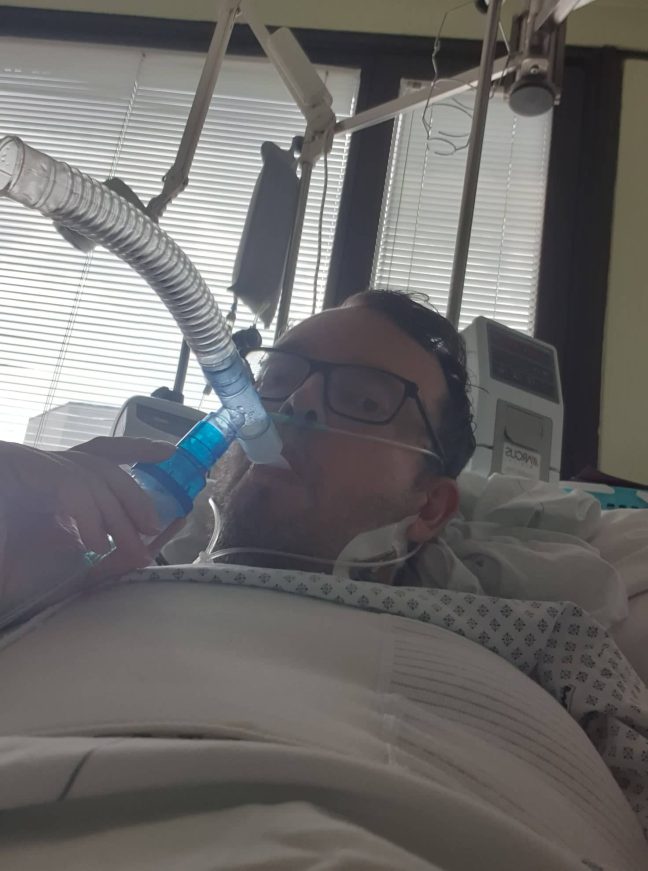
Flash-forward to mid-July and the trip that took months of planning had begun. I lay there in a skimpy grey gown, fearing my derriere (or lack thereof) was exposed to the world and I had no idea where my trip would end … would I get to my destination? All my “travel agents” were the epitome of professionalism and kindness, making me laugh as they helped plan my “flight” …

This trip has changed me more than any other. In planning the journey, I found out that I had a bicuspid valve or something similar thereto in my aorta. That’s why I had to make this trip and fly immediately. I was born with a congenital defect and my aortic valves (what my doctors referred to as the Mercedes symbol) had been deformed all my life. As you can imagine, for someone who’s been travelling in the same “aircraft” for nearly 50 years, this was a shock: how had I run track in middle school, how had I danced like an insane dervish for hours on end in multiple European clubs, how had I managed 150km-a-day bike rides or climbed so many mountains? How had I not known?

I didn’t see any signs along any of my earlier flightpaths. I had just felt I was tired or slightly more winded than usual when climbing new peaks during the most recent months of my travels. One thing was certain though, it was time to go on an adventure with the country’s, if not the region’s, best pilot. And that is what I did on that mild July morning. I don’t remember much about the flight. I just recall waking up in my destination; I even arrived speaking the local language in lieu of my native English. I was glad for that because I had been studying Czech (the language of the country I woke up in) for over two decades.

I am still processing my recent travels. Indeed, I am still on my journey. My life will never be the same and I will have to use special fuel since my plane had to have its “engine” partially replaced. Maintenance also looks to be a challenge: no more fueling up with cheap petrol products; no more low-quality motor oil or used parts. My newly refurbished aircraft will require a lot of care. That said, I have everything in the world to be grateful for and happy about. I had dozens of friends who came to visit me while I was away and so many more rallied to greet me at the airport upon my return. I am elated my plane’s engine is working at close to full speed once again. 

I’ve been blessed to have had so many opportunities to see the world in my previous aircraft. I’ve climbed the peaks of northern Armenia, I’ve watched the sun set from the coast of Portugal and even fell asleep to the lapping waves on the beaches of St. Croix in the US Virgin Islands. I tortured and tested myself on climbs in the Šumava mountains or on long bike treks over the Brdy highlands between Prague and Plzeň. And with my new plane, I have so much more I wish to do: from visits to Samarkand and Buchara, to walking the dunes of the Moroccan deserts to wading in the waters off the coast of Mauritius. I am eternally grateful to all the aerospace technicians and mechanics at Na Homolce who repaired me; to their support teams who assisted in the process; to all the fellow passengers (among them my closest friends) who cheered me on. I don’t know how many more miles I have on my current vessel, but you can be certain that I see each and every one of them as a blessing. To any and all readers: get your “planes” checked and serviced regularly and travel safely as you continue your journeys through life.

Floral Time Travel

Lockdown in Prague is slowly ending and we have been blessed with quite a few sunny, if not exceedingly warm, spring days. Since I have not been able to travel in recent months, I was having difficulty coming up with a topic for my blog. Yet, in recent days, my mind has kept wandering back to my hometown in northern Missouri and the first enchanted garden I came to know in the 800 block of Hansen Avenue.

I was an awkward kid who grew into an awkward adult. But one thing I always recall when spring arrives each year in the escape provide by gardening in my yard and improving my flower beds using skills learned from my neighbor Elsie. Spring was always a time of cleaning: raking leaves out of flower beds, weeding around bulbs that were sure to soon send up their first shoots and trimming the borders of various garden areas and shoring up the rocks and railroad ties that formed them.

As my mind walks through that garden of some 35 years ago, my first thought it of coreopsis and black-eyed susans. Those vibrant yellow flowers in a circular bed near the street curb  welcomed all those who walked up my neighbor’s driveway. From that small patch, interspersed with irises of different shades, we would walk along the row of bridal’s wreath spirea that provided a nice, natural foundation to the front of the house. The spirea was also a lovely, mid-spring bloom that cast long fountains of ivory flowers downward toward a lawn filled with sheep’s sorrel – which I quickly learned had a tangy, lemony taste. Then, moving the right of the house and walking toward the back lot, there was just a tiny strip of mums and succulents that did their best to thrive in the overly-shaded side yard more or less hidden by the house next door. Only when one arrived toward the back porch did more colorful shrubs (lilacs, quince and wild roses) and bunches of peonies begin to fill the landscape with lush green leaves. Peonies of every hue imaginable: deep purples or violets, crisp whites and soft, pastel pinks that announced to all visitors that spring was out in full force.

The path to the back of the yard was lined with an ample hedge of both white and purple lilacs, along with a deeper purple bloom that Elsie called French lilac. They had an equally lovely scent as that of traditional lilacs, albeit with smaller, more delicate and darker flowers. Those purple sprays then gave way to a number of quince bushes which sat, as did the lilacs, under an immense persimmon tree. It was toward the back of the garden that many of the spring flowers ceded place to plants that would bloom in early or late summer: asters, Jerusalem artichokes (what we also called Missouri sunflower) and various sets of roses (both wild and cultivated). As the garden soil progressed into a rockier, rougher terrain toward the back alley of the lot, more roses peaked out through spaces they carved out for themselves in a lush bed of vinca minor (which we usually called periwinkle).

It was the repetition of this garden tour that taught me all about the therapy offered by gardening. I learned when and how to plant specific varieties and to save transplanting peonies till late summer – right after the gladiola had bloomed. It was transplanting time that would become a favorite moment in my year, where I would proudly bring my neighbor a shade of iris I knew she did not have; or she would provide me roots for peonies in new colors that would add to the alleys of those flowers at the back of our family’s lot.

So many years ago, but I still travel (in my mind) back to Hansen Avenue every spring. I remind myself of the flower names and types that Elsie so carefully planted in my head: Hosta, sempervirens, Solomon’s seal and more. Although that garden no longer stands, it blooms in my heart each spring: as I see the first flowers on the lily of the valley, or notice the lush pink of the bleeding hearts and the faded yellow of the forsythia flowers that have run their course. With all those colors, scents and memories of floral names, my heart becomes full and I appreciate the repetition of these memory-travels. Although I will never likely return in person, my mind always has a ticket those gardens of my childhood and their announcement of spring.

Ապրե՛ս / Ապրե՛ք (Live!)

In a week or so, 60 years will have passed since US president John F. Kennedy signed the executive order 10924 creating the Peace Corps. The date was 1 March 1961. I’ve been thinking for a couple of weeks about how to recognize that very important anniversary while combining it with my personal blog here which focuses on travel.

After a lot of thought, I decided to share with you some comments about how the US Peace Corps has influenced my views on travel and how I perceive it a bit differently now. Although cut short, my experience serving in northern Armenia helped me “travel” in multiple senses of the word. It helped me explore and learn about a country I’ve come to love more than I ever could have imagined. And it helped me advance further down a road of personal maturity and understanding (and coming to accept) what I have to give to, and what I sometimes need from, the world.

All that said, I want to share with you one of the greatest gifts the Armenians gave a language nerd like me. And that would be the word in the title to this blog entry which transliterates as apres or apreq. It is the imperative of the verb “to live” and is used in Armenia as an expression of commendation or praise. When Armenians appreciate something you’ve done or approve of your actions, they literally tell you to “Live!”. Usage of this term is so common in Armenia that I never put much thought into its broader significance and the lessons or values it could teach people from other countries: that one of the greatest gifts we have in this world is life. If you think back on the 20th century history of Armenia – both at the time of the collapse of the Ottoman Empire and after the dissolution of the Soviet Union – you realize that the Armenian people were always endangered by the ambitions of their larger neighbors or the commercial interests of other global powers. For those Armenians who lost family in the genocide of 1915 or other mass killings of Armenian populations or for families who lost sons and fathers in the wars in Artsakh, one of the most precious gifts a person has is “life” or “living”. This is a reality that most of us in Europe or the USA don’t give much thought. One of the most daring, audacious things we can do in our time on this planet is to live. Not just exist, but LIVE!

This is a point that was not lost on me the longer I stayed in Armenia and got to know the people there. I went to the Peace Corps because I wanted to learn about another culture; I had hoped that some of the skills and experience I had acquired in my professional life over 20+ years would be of some use or worth to local communities. To my surprise though, my Armenian colleagues and families taught me a small lesson of enormous value: I needed to learn to live. This meant celebrating all that life offers us from dusk till dawn: from making tahini sandwiches with my host sister Yeva and having my morning tea with her mom Zara, on to having a late evening snack with my second host dad Artur and watching bits of the TV news with him. I learned that actually living meant I needed to slow down to truly see and appreciate life. I needed to listen. I had to find value in opening up to strangers and appreciating their natural curiosity about the super tall, dark-haired man who wasn’t one of them, who wasn’t a Russian speaker, but who had somehow made his home for awhile in their bustling town.

I like to think that over time, all the progress that I made in learning how to live (how to heal myself) came from the repetition of that tiny, yet powerful, Armenian entreaty: ապրե՛ս. My Armenian friends and family constantly invited me to enjoy life, to take time to talk and share myself with them and their families, and to notice the small blessings that show up around us day in, day out. So, Armenia, thank you for helping me truly live and enjoy life: ձեզ էլ ապրե՛ք։

Seeking Serenity in the Orbe Valley (Pt. 2)

In my last post, I spoke of my holiday hiking with friends met in Prague who now live in Lausanne. We decided that in today’s Covid-impacted world the best spiritual rejuvenation would come from getting out of the city and back to nature. Luckily, some of Switzerland’s most interesting and intriguing natural sites are to be found at the foot of the Jura mountains: not far from our home base in Lausanne. Our preferred destination is Les Clées (reached easily by car). Our first hike this season, a new one to me, was a footpath heading west of Les Clées village: in direction of the French border. 

I have to admit that his hike was not full-on serene for me. The nature was amazing and beautiful, but the precarious path and the threat of a possible fall off a steep incline down into the Orbe River had me a bit ill-at-ease at times. Initially, the route is wider and you focus more on questioning why you had such a big breakfast OR you wish you’d had more to eat. You need a good store of energy to push yourself up the constantly ascending path. However, quickly the route narrows and you look at the rushing Orbe below and wonder how rapidly you might plummet down to the water.

As with all things Swiss, this path is impeccably organized. Should you happen on an outshoot of rock: no worries. The locals long ago carved a tunnel into the grey-white rock so that hikers can easily navigate through the mountainside when need be. Likewise, this section of the Orbe River Path also has ample swells of fresh-water springs that trickle slowly to the rapids down below. In the winter season, these water flows offer an additional, amazing spectacle: icicle cascades. Passages through the rock tunnels along the route have an almost 2m tall person like myself dodging a number of frozen-water daggers: a) so as not to hit my head, b) in order to preserve the beauty the icicles contribute to this magical, wintertime, natural kingdom.

The hike provides ample amounts of calm and solace, with the only creatures interrupting our thoughts being Izzi our Vizsla canine companion (she’s afraid of the icy footbridges) and our Jack Russell named Poppy, who shoots up and down the path and sometimes along the icy cliffside without thought for potential consequences. Ultimately though, there is an incredible reward toward the end of the trail. These are the Le Day waterfalls (the Saut du Day) which tower over you as you reach a broadening of the Orbe River where it shallows out and serves up rocky sandbars that are perfect for a picnic. It was at the waterfalls that we went crazy with our cameras and took multiple pics of our beautiful surroundings. We let the dogs test the icy waters and run to their hearts’ content. Plus, it was there that we came across our first humans: other locals on holiday, who also apparently needed to escape their isolating in place for just an hour or two.

I am thankful to have spent a part of my holidays admiring the Orbe River and the gorge through which it passes. It is a calming, fascinating place where I never cease to be in awe of how the water swiftly flows, sharing its gurgles with the random hikers who pass alongside it. I give thanks to the Swiss people who look after the nearby paths and make such wonderful views of nature accessible to all who journey to the area for a walk. As I sit here in Day 4 of my post-holiday quarantine, I can still hear the river calling me. Come back one day. I’ll be waiting. And surely I will return: for a future dose of much needed and appreciated serenity.       

Autumn Lockdown

Walking from coffee, 
In anticipation of rain.
Thoughts like leaves, 
Flutter through my brain.

Could I make it to the river,
Without getting wet.
To guesstimate Prague weather,
Would be a fool's bet.

The day was so indifferent,
A sky of pinks and grays.
Colored leaves squealed the end of autumn,
Through a milky, sun-tinged haze.

I thought of coming seasons,
As I climbed the Kinský garden hills.
A virus has imprisoned us,
I fear a new year void of thrills.

So now I sit by the wading pond,
As dogs circle my legs.
One dashes into the water,
While the other nears me to beg.

Soon I will rise,
For to Malá Strana I descend.
My fall stroll will finish,
Having more coffee with friends.

History and Agriculture in the Wachau

In a whirlwind day trip last Saturday, I had the pleasure of re-experiencing one of the most beautiful sections of the Danube river valley: the Wachau. It includes a short section an important European waterway full of stories from history dating back to Richard the Lionheart.  In fact, it was in the village where he was imprisoned, Dürnstein, that we made our first stop. We descended our bus at the water’s edge and turned, on foot, up a slowly inclining cobblestone road that led to the village center. From the retainer walls that once protected the old town, one could take in expansive views of the Blue Danube and look west to the central Wachau valley.

Above Dürnstein village sit the ruins of the old castle where Richard was imprisoned; it stands precariously on the crags and rocky cliffs that rise above the river in this area. It was a special treat to stop here, as I had read last year about Richard the Lionheart’s capture and imprisonment in the excellent travel diary by Patrick Leigh Fermor, A Time of Gifts. I had first travelled through the Wachau in 2009 on a charity bike ride, The MAD Danube Odyssey, and was wondering how I had missed stopping at this site. 

After a quick peak at the abbey in Dürnstein and its colorful, baroque architecture, we quickly boarded our bus to move further upstream to Melk, the western gateway to the Wachau. Melk is famous for its chateau and monastery where monks still study and serve to this day. The yellow-tinged chateau, known for its role in education and the local economy, sits like a dreamy wedding cake atop a precipice looking down on the Danube. It bids welcome to all travelers as they float downstream into the Wachau region. The Melk chateau and abbey is vast in size with its large courtyards, its impressive baroque church and its library with an enormous collection of scholarly works focused on law, theology, philosophy and economics. 

It is at the western end of the chateau complex that visitors can take in breathtaking views of the Danube below, the quaint town of Melk, and the expanses of fields and forests that line the mighty river. When exiting the chateau complex at its eastern end, visitors can wander through a lovely set of French gardens that are immaculately groomed and offer pleasant respite from the bustle of the tours in the chateau/abbey proper. These quiet parks and garden paths are lined with lovely roses, blooming shrubs, and stands of asters that announce the arrival of autumn. 

After a short walk through Melk’s town center, we boarded our boat that would take us downstream to Krems. The boat ride was a wonderful way to soak in all the life and history that lines the Danube river. As we floated along, we saw the numerous vineyards that produce some of Austria’s best Grüner Veltliner wines and the orchards full of apricots and pears. In almost all larger towns of the Wachau, you can find stores that offer you multiple apricot- and pear-based products: schnapps, marmalades and jams, nectars and sirups, and very sweet wines. Also, in this area, you will find that pumpkins and squashes are very popular. That’s why many shops will also sell Kürbiskernöl (pumpkin seed oil), which is a wonderful treat for flavoring salads.

As we went downstream, we saw the castle at Schönbühel, the romantic village of Weissenkirchen, the ancient church of St. Michael with its legend of the rabbits, and the impressive Göttweig Abbey which presides over the eastern Wachau with stateliness and majesty.  Our tour wound down in Krems an der Donau, where we disembarked out boat and made our way to the town center. Krems houses a wide array of architecture and landmarks; beginning with the Center for the Arts (once a former cigarette factory) near the boat docks, then passing by the university campus and the Karikaturmuseum, before reaching the central city park and the Steiner Tor (a gate to the old town).

My visit to the Wachau was quick, but it was definitely a trip I would repeat again over a long weekend. The magnificent vistas coupled with the calming flow of one of Europe’s most important waterways make the Wachau Valley a must see. Accessible by train, bus, car or bike, it’s worth it to treat yourself perhaps to a sun-filled day of leisurely cycling followed by a big plate of hearty Austrian cuisine (perhaps the pumpkin gnocchi) and a glass of crisp, white Wachau wine. Prost und guten Appetit.

Wandering Lužnice (Pt. 2)

When finishing my previous post on hiking the Lužnice River trail in southern Bohemia, my friends and I had just arrived to the picturesque village of Dobronice u Bechyně. The hike into Dobronice was a tiring, but visually-pleasing finale to a long day of walking. As you approach the village, the path veers away from the river up a fairly steep hill that offers specials vistas of the Lužnice River from above. You see the water wind its way around the village below where small mills hug the right bank and the clackety-clack of the village’s single wooden bridge echoes up from the valley below. 

As you hike to the village center you first pass a look-out point just next to the Church of the Assumption of the Blessed Virgin, which sits in serene isolation at the village’s eastern edge. The marked footpath takes hikers back down to the river, while guiding them alongside the entry to the ruins of what was once Dobronice castle. The castle’s one remaining tower can be seen from the walking path and also from several points along the river below. 

We stayed overnight at a local bed and breakfast and gobbled up the tasty traditional Czech food that the innkeeper prepared. There was sumptuous roast pig, traditional beef goulash and also typical fried edam cheese (that’s the option I chose, because I hadn’t had any in a good while). The bed breakfast/inn offered nice views of the river and I fell asleep that night to the sound of stray cars clanking across the nearby bridge. 

Waking up the next day, we had a special visual treat in the fog lifting off the river and clouding the air around us as we enjoyed our breakfast. It was a quick meal, as we still had about 15 km before us and wanted to get an early start to our final destination of Bechyně. The start of the path was merciful: it began with roughly 3-4 km of tromping over footpaths through dew-covered meadows before once again returning to the mud/rock combo paths they we had regularly encountered the day before. 

It was during this segment of our hike that we got to enjoy the serenity of the Lužnice. Not many rafters and kayakers were out on the water yet, so we took advantage of the morning sun and sitting on the boulders that lay along the riverbanks. The large flat rocks offered the perfect place for sunbathing or for jumping into the refreshing water. Unfortunately though, we were short on time, so we quickly carried on along the riverside path that would intermittently offer sections of marsh where we would hop from one wood plank to the next or sections of rugged cliffs facing the river. These fascinating rock formations were frequently laden with ferns and lush moss.  

Slowly, our river path gave way to gravel roads that led to a series of small cottages that are part of the village Senožaty. I later learned that a friend of mine from East Bohemia has a cottage there where he and his family often stay in summer months. After that, our path would once again pull us away from the river rising into dense beech, pine and spruce forests that would lead to the edge of Bechyně. The forests smelled of pine needles and were just damp enough to offer prime growing conditions for the various types of mushrooms that are found throughout the Czech Republic. We even came across some chanterelles; yet not enough to pick for a good sauce to accompany our dinner.

Within 15 minutes or so, we were out of the forest and walking a field path that would lead us into Bechyně. The smells of autumn surrounded us: fields had been harvested and local apple trees had begun to shed their fruit. We stopped for a last group photo by the sign marking the town limits and then walked into the center to enjoy our “victory coffee”.  With my feet starting to protest a little too much, I left my friends to explore the beautiful chateau in Bechyně and to look at its lovely gardens. I, on the other hand, slowly began my way back to the local rail station and took in views of the public park that surrounds the town’s local spas. It was a wonderful end to the weekend: enjoyed with last-minute photos on Bechyně’s main square and catching glimpses of the town’s “rainbow bridge” as we took the train back to Tábor where we would pick up our car. It took my feet 3-4 days to forgive me for our weekend sojourn, but it was well worth it in the end.

Living in three spaces

I haven’t felt like blogging for a while. Or perhaps it’s more that I didn’t know where to go with my writing. It’s been half a year now since I returned (unexpectedly) from northern Armenia.  Now is the moment where the change starts to gel or solidify. I realize that, while I can still hold a conversation in հայերեն, it’s more difficult to recall words that used to be commonplace.  Memories are beginning to fade, and moments of daily life are more distant … saying hello to Manvel who lived in the first floor of my building. He knew three sentences in English, but he greeted me religiously every time I walked by. Always reminding me that I was welcome in Vanadzor and in Armenia in general.  I miss the moments spent persuading fruit and veg vendors that Russian wasn’t my native tongue, and that I could get through a conversation in my pigeon Armenian. I miss the lady from my “beer garden” in Tigran Mets Avenue, who gradually got used to my arriving mid-afternoon on Saturdays after a hike: book in hand, just me, myself and I … ready for a cold draught beer. 

Now as the Czech summer ends and I watch videos, listen to songs, or browse through photos so I can cling to the recollections of my Armenian adventure, I gradually merge the similarities of three specific places I once called home. 

I’m a rural person at heart. I spent my childhood wanting to escape small town life. My dad had aspirations that I would become a farmer and work with animals: as had been his dream. But my hopes went farther. I’m not sure if it was the genetics of my ever-moving paternal grandmother or the travel tales recounted by my very wise neighbor. But I knew I wanted life beyond any local farm. Funny thing is though: despite becoming a city-slicker, I never forsook my rural upbringing or time spent working with my dad, uncles and grandmother. It is the long thread of rural life that, for me, binds Missouri with rural Bohemia and the pastures of Armenia’s Lorri region. In the fields of all those lands, I see and feel the memory of my dad and his dreams; secretly hoping that some of my life’s adventures have made him proud.

Good people are worth listening to. Something inside me tends to be averse to seeking out conversation. However, many places I have lived so easily lent themselves to impromptu chats and discussion. Whether it be the doorways of stores on Brookfield’s Main Street, the garden pub of a Czech village along a random bike route, or the encounters with shepherds as they moved their herds between northern Armenia’s lush, green hills. They all began as strangers to me, yet we ended with many bonds: some had family that had emigrated, others had seen American TV shows or had travelled to Prague on a family holiday. It was my wary, skeptical entries into these numerous, ad hoc chats that confirmed to me that as citizens of the world we are all ostensibly different but very much still the same in our curiosity and desire to learn about and connect with others.

The women of my past prepared me for my future.  Then there’s the W factor. As mentioned above, it was the women of my childhood who told me of the world outside my hometown. They assured me that studying and hard work would give me access to that world. And as the years prove them right, I remember and channel their spirits as I mull new adventures and live new experiences. In my mind, I talked to Elsie as I admired the gardens of many an Armenian grandmother. I give thanks to Louise and Mildred for their nurturing my interest in languages and travel and for helping make possible my first TWA flight to Paris. I summon the courage of Jacqueline anytime I’m not sure I have what it takes to defend myself and fight for what is just in the world. How she so nonchalantly stated in that Parisian tailor’s shop: I survived the Nazis; I’m hardly going to cower to a greedy, deceitful clothing store owner.

It’s been a difficult summer reminiscing about my homes old and new. But I am forever grateful for the lessons they taught me and the people from those places who enriched my spirit more than I ever could have imagined.   

I own nothing but I have everything

When I think back on my time in the East
And entering a land about which I knew little
With no idea what to expect
Of the people that await

And as we greeted each other with apprehension
Reservations about who I was
And what they expected of me
Twice the age of the other “invaders”

Superficial worldviews would say
Comparatively, they had little
Yet never did we/they want
For all life’s essentials

Smiles were abundant
Coffee was plenty
A step over any threshold
Was a call for plates of sweets
And the best any household had to offer

As I approach the year fifty
And berate myself
For not owning a house, not owning a car
While still asking almost daily
What ownership means

I have so many possessions
That I keep inside me
Stores of memories, laughter, tears and embraces
And stories or legends shared
Of lessons my life road has taught me

I no longer worry
About the property I have not yet collected
For my most valuable possession
Is the real estate of my heart

I own nothing, but I have everything