The (Swiss) hills are alive …

It’s been awhile since I’ve added to this blog. That’s mainly because the past few months have been about readjusting to life in Central Europe and trying to get things organized in my business. However, I recently had the good fortune, once Europe re-opened its borders, to go spend two weeks hiding out with some very special friends, Pete and Laura, at their home in St. Sulpice, Switzerland.  It’s a cute little town/village/suburb on the outskirts of Lausanne, and it must be said … they have an awesome view of Lac Léman (Lake Geneva). 

One of my favorite take-aways from my time there was all the gorgeous vistas around the lake; with mountains on every side and the confusing geography that always has you wondering: am I looking at France? Or am I looking at Switzerland.  In any case, there was so much beautiful nature to take in; including the calm waters of Lac Léman, the moody storm clouds rolling in from the Alps or creeping in from the Jura. There was also the morning songs (and sometimes cackles) from the birds who lived near the lake.  When I think back on my visit, I reckon these are some of my favorite memories…

The incessant ringing of the mountains

When we took a Sunday hike in the mountains north of Gland/Arzier, it became immediately apparent that each cow/bull has a bell. And those bells clang non-stop as the animals graze in their alpine pastures and wander to find new meadows unexplored. The sounds give the hills an almost church-like atmosphere where the carillons of cow bells call you to nature’s cathedral and invite you to commune in the lush fields and enjoy the soothing, warm winds that pass through the forests. 

The tangy taste of Gruyère cheese

This was one of my favorite moments during my visit. Parking just below the medieval village of Gruyères and walking through the old gate into this fortified settlement made me feel like I had travelled back in time. As you walk over the cobblestone-paved square and admire the shops and cafés that hark back to a time long ago, you can quickly imagine horse carts and wagons as they must have once brought in wares and crops from the surrounding area. Or vendors as they traded goods from shops and stalls in this hamlet that is home to one of my favorite cheeses. Just down the hill from Gruyères, in the town of Pringy, you can visit the Maison du Gruyère museum and buy all the delicious cheese you want. That coupled with the exquisite views of Le Moléson mountain gives you a sense of serenity and contentment that is worth they journey.

The markets of Évian

Just across Lac Léman from the port at Ouchy lies the peaceful village of Évian les Bains. The town famous for its freshwater springs and its spa hotels makes a nice day trip for visitors from Lausanne, Geneva or the surrounding areas. I travelled there with Laura to explore the Friday farmers’ markets and enjoy the promenade along the waterfront. The animated vendors as they hawk their meats, cheeses and vegetables are a wonderfully intriguing sight to observe. Or sipping a rich cup of coffee while eating a pain au chocolat is just the right treat for starting a holiday weekend.  Plus, there’s the added benefit of looking back at your holiday home on the Swiss side of the lake and taking in the serene Vaudois shores.

I am so grateful to my friends for allowing me to “disappear” at their home for the past couple of weeks. Switzerland and its captivating, hospitable and welcoming countryside was just the right antidote to this spring’s long periods of isolation mandated by the Covid world. If you get the chance to wander through the Swiss mountains and explore the paths that lead you to breathtaking views of the country’s many lakes, definitely seize that opportunity. It’s well worth it.

The sweetest part of Armenia is its fruit

I was looking at some pictures today and noticed that a year ago this time, I was a week away from getting sworn in as a Peace Corps volunteer in Armenia. In my village of Hovtashen in the Ararat region south of Yerevan mulberries (թտւթ) were everywhere. It was a strange, amusing experience. I knew mulberries from my childhood in Missouri. Taste-wise, they were tolerable, but I had never been particularly fond of them. Yet somehow, as with many of life’s simpler experiences in Armenia, the local mulberries were different. They seemed sweeter and there were two kinds: dark and white ones. I had never seen white ones elsewhere. On top of that I learned that Armenians also distill their mulberries and make a very potent alcoholic drink from them. Some might call it brandy in the way people tend to call the distillate from plums in central and eastern Europe plum brandy (locally referred to there using a variation of the word slivovice deriving from the word slivka for plum). Otherwise, in the color sense, it looks what a Missouri kid like me would have called plum moonshine, i.e. it has a color more akin to vodka. All the same, the stuff is strong. And, as I tend to do with the plum brandy from Moravia, I drank a shot first thing in the morning when I felt a cold or sore throat coming on. Just one shot, mind you.

With that intro, I wanted to highlight some of the fruit experiences I enjoyed when I was living in Armenia. So let’s begin.

Apricots / ծիրան

Apricots are synonymous with Armenia: even the orange hue in the country’s flag is referred to as apricot orange. And then there’s the taste: one that can’t be described. They are so rich, sweet and juicy and can be put to many uses. Of course, they can be eaten fresh from the tree or from the markets (if you’re a city dweller). I would always eat them with my host dad Artur when we had evening coffee. Apricots are also used to make a drink/juice referred to as կոմպոտ (compote), which is truly a thick fruit juice and not the jam-like fruit dish we know in English-speaking countries. In addition to that, apricots are dried and stored for the winter: still, the dried fruit has a flavor and juiciness that makes you think it was harvested not more than a week ago. Finally, there is the prized apricot jam that Armenian women all over the country make during late spring. I smuggled two jars of that home to give to friends.

Figs / Թուզ

These are one of my favorite fruits anytime I can get them: fresh from the market or picked from a bush in the wild. Like the mulberries mentioned above, there are two versions: the green ones and the purple/dark ones. I’m generally partial to the purple ones, as they are the variety I know from visits to the beaches of the Mediterranean. On various islands, it was common to pick a handful of figs during pitstops when returning after a day of swimming and sun. There is something about fresh figs that makes them feel like a guilty pleasure; the fact that the vendors at the outdoor markets in Vanadzor would slip me a couple extra when I was shopping always made my day.

Melons / ձմերտւկ (watermelon) and յեմիշ (cantaloupe)

By late June, melon season had arrived in Armenia and sidewalks everywhere were stocked with them. Of course, they were sold by local fruit-vegetable merchants, but it appeared that seasonal melon-vending was a way to generate cash for a number of other entrepreneurial locals as well. And thank goodness for that. Melon was another summertime staple for my coffees with Artur. Depending on what was available, we would chomp on cold watermelon with our rich, dark Armenian coffee, or we would enjoy the spicy flavor and scent of cantaloupe: both added to the spoils we collected from the family garden; specifically, the cherries.

Cherries / Բալ

As with most countries I’ve lived in, both sweet and sour versions of cherries can be found in Armenia. They are also eaten fresh or cooked for jams. And in some cases, the locals make them into the juice (compote). I actually grew quite fond of them as a nice way to round off my evening meal; a slightly healthier version of dessert. It was a joy to partake of cherries so as not to stuff myself with too much of the delicious Armenian գաթա (gata cakes) or with Armine’s delicious pastries and éclairs.

I’ve rambled on too long. But if you make it to Armenia, treat yourself to the wide variety of fruits in the outdoor markets. You won’t regret it.

Lorri marz (Լոռի մարզ) – where the animals run the show

I was trying to get into the mood to write and share something with my readers that would have an interesting, cohesive element. I have lived in the Czech Republic for almost 26 years now and just got back from a sabbatical in Armenia. When I write I like to think of things about both countries that are similar to, and which in some ways remind me of, my childhood in Missouri. The answer was animals.

I grew up in a rural community in northern Missouri. Although I didn’t live on a farm, most of my younger life was farm-adjacent. My maternal grandfather and his brothers grew angus cattle; my paternal grandmother kept a small number of animals in her backyard farm; and my dad raised cattle, sheep, or what have you on land he rented. It always surprises my friends from the city, when I tell them stories of how I spent the late springtime of my pre-teen years plucking chickens or how, as an even younger child, I helped my dad and his friends butcher cattle or pigs. I never had big jobs, mind you; I usually just stirred the pork fat so that it didn’t scald or burn OR I helped feed chunks of beef into the meat-grinder.

That said, my stay in Armenia often brought back memories of my rural childhood and farm-adjacent life. One occurrence that always made me smile was the work of local shepherds. On occasion I would run into them on hikes. But even more amusing was when they were moving animals to new pastures or mountain fields and the cattle “would come to town.” It didn’t happen that often, but it was always entertaining to watch the disinterested bovines wander through the streets of Vanadzor: rarely in a hurry to get anywhere and giving curious looks when drivers would become irate at the animals’ lack of urgency.

Other times, I would meet some smaller animals in the park. Usually, the sheep or goats showed up during a sunny afternoon when I went to the Sayat Nova այգի to read. As the bushes swished behind my bench, I assumed that either squirrels or birds were foraging. But no, it was the “children“ of a local shepherd who had come to dine on overgrown grass or on the tasty leaves of the abundant shrubbery.

As I watched them, it came to mind that domesticated animals are a unifying force across the world. In almost any country, you can wake up to the crows of an early-rising rooster. Or you can slalom on your bike as curious hens scurry across roads or field paths in search of bugs for their lunch. In Armenia, I most loved the proximity of the animals; for it took me back to my childhood. A time when I knew the provenance of the meat and dairy products we put on our table; also an age when I had a love-hate relationship with chores related to caring for livestock. These days though, the animals of the Czech countryside and Armenia’s Lorri region bring back fond memories: of driving with my late dad to check his cattle, of working with my grandma to gather eggs or feed her hens. So many nights my parents spent worrying about whether the “cattle were out.” My dad would surely chuckle if he saw that the cows of Armenia certainly are out: AND they rule the roads.

Back to what?

It’s now been a month since I returned from Armenia.  During that time, I’ve tried to keep busy. Mostly though, it seems like I’ve done (or been doing) so with a laundry list of absurd tasks. Perhaps the strangest of these is trying to find a job in an economy that’s put out a “no vacancies” sign. Otherwise, I’ve filled my days with the administrative work related to wrapping up my Peace Corps service and fulfilling all my reporting duties.

However, life here in Prague one month in is just plain odd. Multiple times I’ve heard the question: “How does it feel to be back?” And the simple answers are either It doesn’t. or Weird. Perhaps it’s odd to say that I don’t feel, but honestly it seems that way. The return to a past life in the new corona world is complicated. For two weeks after getting back, all past tangible, physical relationships became virtual. Luckily, I knew and could see all my closest friends were safe and healthy, but they were just images in devices. That then brings us to the weirdness of a few encounters with friends (limited ones) that I’ve been fortunate to have had post-quarantine: ones where elbow bumps replace hugging. I think that practice for me is the oddest of all. For someone who has lived a world away from his family for most of his adult life AND who is not tactile at all, I really did miss hugging my friends back into my world. There’s just the surrealness of those looks upon meeting: both of us thinking – how do we do this? Is the elbow touch OK? Embraces are off limits, right?  But we do have our masks on, so would a quick hug be safe?

After the initial awkwardness of our new corona greetings, conversation does begin to flow and with the few friends I’ve met we do catch up and I get to share (as much as my feelings let me) what my life has been like over the past whirlwind of a year.  Generally, it’s a combination of wistfulness and gratitude. But mainly gratitude … with statements or thoughts similar to those below:

  1. I’m not done. I know that somehow I will find my way back to Armenia one day. I’m not sure in what capacity, but I want to spend more time in the country. And next time I hope to be able to say good-bye on my own terms.
  2. I miss Armenian hospitality and thankfulness. I am, and was, always touched by how communities that might not have a lot, compared to what we call the West, in material terms are so consistently gracious in sharing what they do have. You will never leave an Armenian home hungry or thirsty.
  3. It’s weird not to have that daily embrace of the mountains in the Lori region. I became so spoiled by the vistas of the snow-capped peaks to which I woke every morning. The ridges that encircled and protected Spitak and Lernapat to the west; and which walled us off from Georgia to the north.
  4. Life is strange without the celebrity of being “the volunteer.” Walks around my city Vanadzor were always amusing in that most of the time people knew of you before you knew them. “Oh, you’re the volunteer. Aren’t you?” was a common phrase and it always made me feel special.
  5. My colleagues’ warnings were true. Returning from volunteer service is a weird process because of the singular experience that Peace Corps offers and creates. It’s difficult to tell people who haven’t lived the process just what service meant to me and why it was so touching and profound. Still, I’m working on doing so and, hopefully, one day I will get better at it.

All those unfinished plans …

It feels like last week was the moment reality set in. After having had to leave northern Armenia suddenly because of the situation with COVID-19 and the realities of the new corona world, just 5 days ago I realized I had so much unfinished business in and around my adopted city of Vanadzor.

Of late, I like to blame Facebook for my melancholy. Well, not Facebook as such; instead that gosh darn “memories” function. That little tool contains a whole lot of bittersweet. Mind you, I don’t want to use my blogging to whine. My colleagues and I who left Armenia are well aware that there are persons in the world with bigger concerns and who are living in much more dire situations.

At the moment, my funk stems from having missed out on my/our (I usually speak of my time in Armenia as a joint adventure embarked upon by myself and 34 other American volunteers) first independent spring. By “independent” I mean that most of us had become adjusted to the towns and villages where we served, and we had plans for big adventures that warmer weather would allow. Mine included getting to the top of Maymekh mountain, finding that spot somewhere near Aragats where the water “flows upside down” and planning a long-anticipated visited to the “stans” with Ree jan and Natalie.

Now, it’s clear that those plans won’t soon happen, and I’ll need to make new ones. So I’ve thrown myself into a job search and doing some career analysis to see what the next chapter of my career involves. I’m not 100% sure of the answer yet, but I do know it will likely involve more adventure. My decision to travel to Armenia was one based on a need for change, a need to get away from the virtual world of marketing and communications for awhile, and a thirst for finding an experience that was genuine.

When the world re-opens and travel resumes, I encourage my readers to go enjoy, if they have the chance, a few sites I missed in Armenia and which I hope to one day see …

  • Surb Sargis mountain and its odd boat (between Vardablur and Kurtan in northern Armenia’s Lorri region)
  • Mount Aragats – the tallest mountain in today’s Armenia
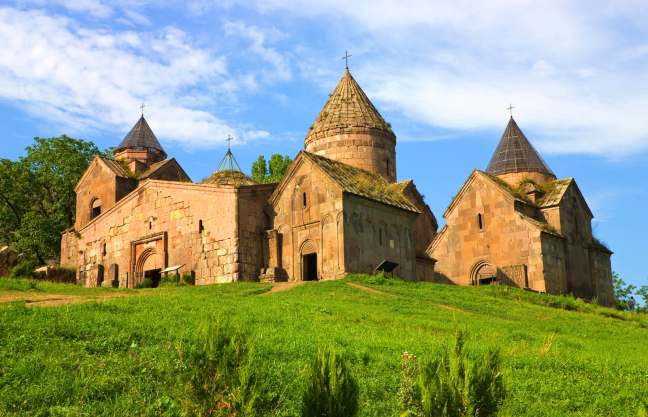
  • Parz Lake and the nearby monastery in Gosh
  • Sanahin and Haghpat monasteries (UNESCO heritage sites) near Alaverdi

I realize my words today aren’t particularly inspiring or fascinating. But this is the spot in which I find myself at the moment. I’m a little bit nostalgic, a tad bitter, but a whole lot of hopeful. For as the Armenians of the diaspora know all too well, I will one day find my way back home.

Main image courtesy of http://www.itinari.com blog.

Travel randomly

Just like a lot of people at the start of they year, I’ve decided to make a resolution.  This one involves sharing some of my global travel experiences with readers and, hopefully, connecting with other travel fans around the world who like to avoid typical destinations.  My goal is to post to this blog on a weekly basis and share experiences that range from roast lamb for Sunday lunch at an abandoned restaurant in Beja, Portugal to staring down into Poland from the highest peak in the Czech Republic.

My destinations are not the most exotic, but hopefully the stories about local contacts and lots of amazingly good food and wine will keep your attention.  So from ramblings about Curacao to the wines of Languedoc onto the bi bim bap on Korean Air … here’s to enjoying all the world has to show and teach us.